Every year between the first cookouts of late summer and the last of the fall, our emergency abdominal caseload changes shape. The socks and chew toys do not go away, but they get outnumbered by three specific objects that arrive off a plate.
If you live in Wilmington, Newtown Square, or Newark and you own a dog with an opportunistic streak, this is the season to be deliberate about it.
The three objects we remove most
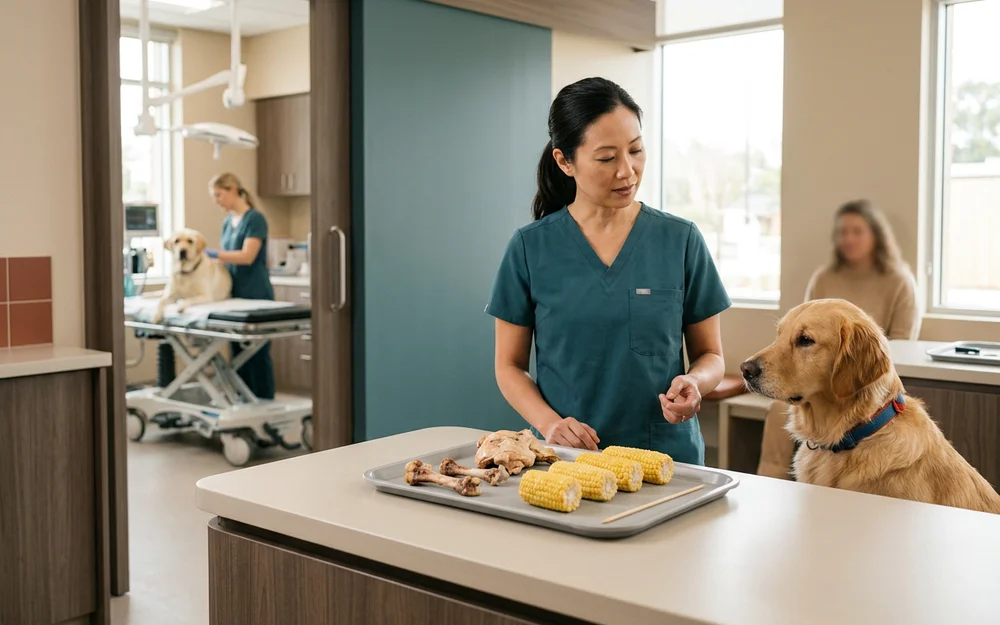
Corn cobs. The single most reliable cause of intestinal obstruction we see all year. A cob is almost exactly the wrong shape and density: too firm to break down, too large to pass, and just narrow enough to travel out of the stomach into the small intestine where it wedges. Corn cobs very rarely pass on their own. If your dog has eaten one, assume surgery is likely and call us the same day — our guide on what happens when a dog swallows a corn cob walks through the timeline.
Cooked bones. Raw bones are one conversation; cooked bones are another entirely. Cooking makes bone brittle, so instead of grinding down it splinters into sharp fragments. Those fragments can obstruct, but the more dangerous outcome is perforation of the stomach or intestinal wall, which spills gut contents into the abdomen and causes peritonitis. If your dog ate a bone, the fragment shape matters as much as the quantity.
Skewers. Less common than the other two but the most alarming when it happens, because a wooden or metal skewer is rigid and pointed and travels through tissue rather than around it. A skewer coated in meat juices is, from a dog’s perspective, food.
Do not induce vomiting for any of these three.
A corn cob or a bone fragment coming back up can tear the esophagus. Call us first — it takes two minutes and it changes the plan.
What the warning signs actually look like
Dogs often seem completely fine for the first few hours. Symptoms appear as the object moves and lodges, which can be six hours later or the following morning. The full picture is in our guide to the signs of intestinal blockage in dogs.
Call us if you see:
- Repeated vomiting, particularly vomiting that will not stop even for water
- Refusing food, or eating and immediately bringing it back up
- Lethargy, hiding, or a hunched posture
- Straining to defecate with nothing produced
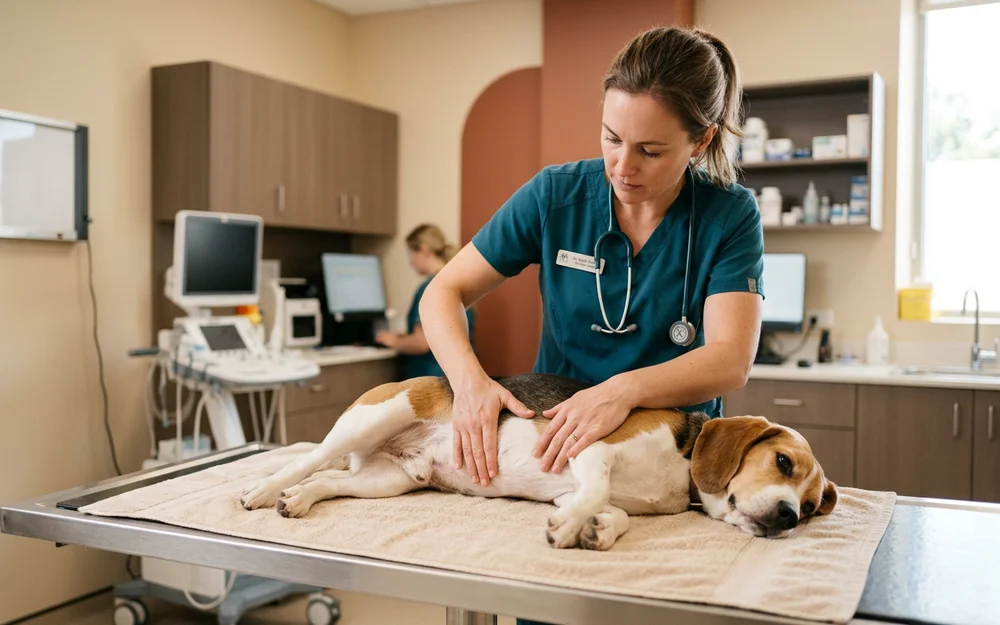
- A tense abdomen your dog does not want touched
- Dark or bloody stool
The dangerous middle ground is the dog who seems slightly off but not dramatically ill. Owners understandably wait to see. Meanwhile the object presses on the bowel wall, and after enough hours that section of intestine loses its blood supply — which converts a straightforward enterotomy into a resection and anastomosis.
Practical prevention that works
The advice that actually holds up in a real backyard with real people in it:
| Situation | What helps |
|---|---|
| Cookout in progress | Dog inside or on a lead with a designated person, not “supervised” by everyone and therefore no one |
| Plates left down | A rule that plates go straight into the kitchen, not onto the low table |
| Bin bags | Lidded bin, taken out the same evening rather than left by the door |
| Neighbours and guests | Tell them plainly: no scraps, no bones, not even a small one |
| After the event | Walk the yard before letting the dog back out |
The last one catches more than people expect. Cobs and bones end up in hedges, under chairs, and beyond the deck rail, and a dog with an hour alone in the yard the next morning will find every one of them.
If it has already happened
Call us straight away, even if your dog seems fine. Tell us what was eaten, roughly how much, and when. We triage foreign body calls ahead of routine work because the timing genuinely changes the surgery.
Foreign body removal starts at $1,200 including pre-op abdominal radiographs and IV fluid support, and urgent cases across the Brandywine Valley are scheduled within days — same day when the picture is time-critical. See the full dog surgery cost breakdown for what that figure covers.
Think your dog ate something from the table? — See our emergency foreign body removal service