
Why corn cobs are the object we most want you to call about
Of everything dogs swallow, the corn cob is the one with the highest probability of ending in surgery. It is not a close call.
A cob is fibrous and dense, so the stomach cannot break it down. It is roughly cylindrical and typically two to four inches long, which is small enough to leave the stomach and far too large to pass through the small intestine. It travels a certain distance and then stops, completely.
Cookout season across Delaware County and New Castle County produces a reliable annual spike, and foreign body removal surgery sees the results from June through October every year.
Assume surgery. Call the same day.
Unlike a small toy or a piece of fabric, a corn cob has almost no realistic chance of passing. Waiting to see rarely changes the outcome and frequently makes the surgery harder.
What happens inside
Once wedged, the cob obstructs completely. Nothing passes, so vomiting starts as the stomach tries to clear. Fluid backs up, your dog becomes dehydrated, and electrolytes drift out of balance.
Meanwhile the cob presses against the bowel wall from the inside. Sustained pressure compromises the blood supply to that segment, and after long enough that tissue dies. Dead bowel cannot simply be opened and closed — it has to be removed and the healthy ends joined, which is a longer and riskier surgery.
The signs
Symptoms usually start within 12 to 24 hours:
- Repeated vomiting, including vomiting water back up
- Refusing food entirely
- Lethargy, hiding, unwillingness to move
- Straining to defecate with nothing produced
- A hunched posture or a tense, painful abdomen
- Drooling or repeated swallowing
Never induce vomiting after a corn cob. A cob coming back up can tear the esophagus, which is a considerably more dangerous injury than an intestinal obstruction. Call us first.
Will it show on an X-ray?
Partially. Corn cobs are not as radiopaque as bone or stone, so they can be difficult to see directly. What we read instead is the obstruction pattern: gas accumulating behind the blockage, distended loops of intestine, and an abrupt change in bowel diameter.
That pattern is diagnostic to anyone who reads abdominal films regularly. Where it is ambiguous, abdominal ultrasound resolves it, and a cob’s dense fibrous structure has a characteristic ultrasound appearance.
The surgery and what it costs
Removal starts at $1,200, which includes the pre-op radiographs, pre-anesthetic bloodwork, IV fluid support, anesthesia with continuous SpO2, ECG, blood pressure, and temperature monitoring, the procedure, and post-operative medications.
Most cobs are retrieved through an enterotomy — a small incision in the affected loop of intestine, just past the object where the tissue is healthiest. We then check the entire tract by hand, because a dog that got one cob off the plate frequently got two.
Emergency hospitals in this region commonly quote $3,000 to $5,000 for the same procedure.
Right now
If your dog is collapsing, cannot keep water down, or has a rigid painful abdomen, go to your nearest emergency hospital first for stabilisation.
Otherwise contact us now with your dog’s breed and weight, roughly when the cob was eaten, and what you are seeing. We treat these as priority calls and schedule urgent cases within days, same day where the situation is time-critical.
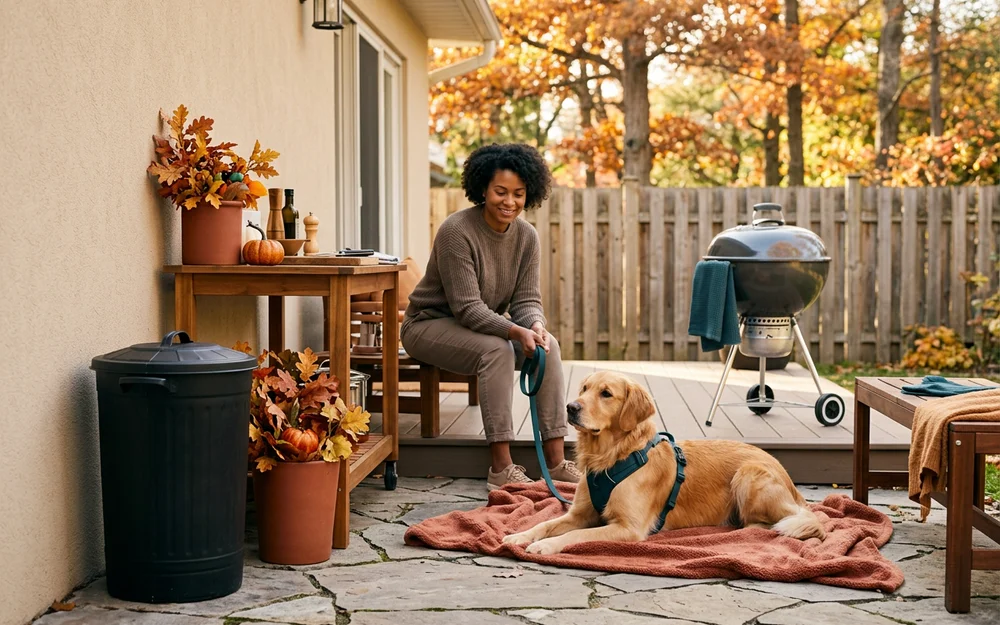
And for next summer: plates go straight to the kitchen, bins get lids, and the yard gets walked before the dog goes back out.