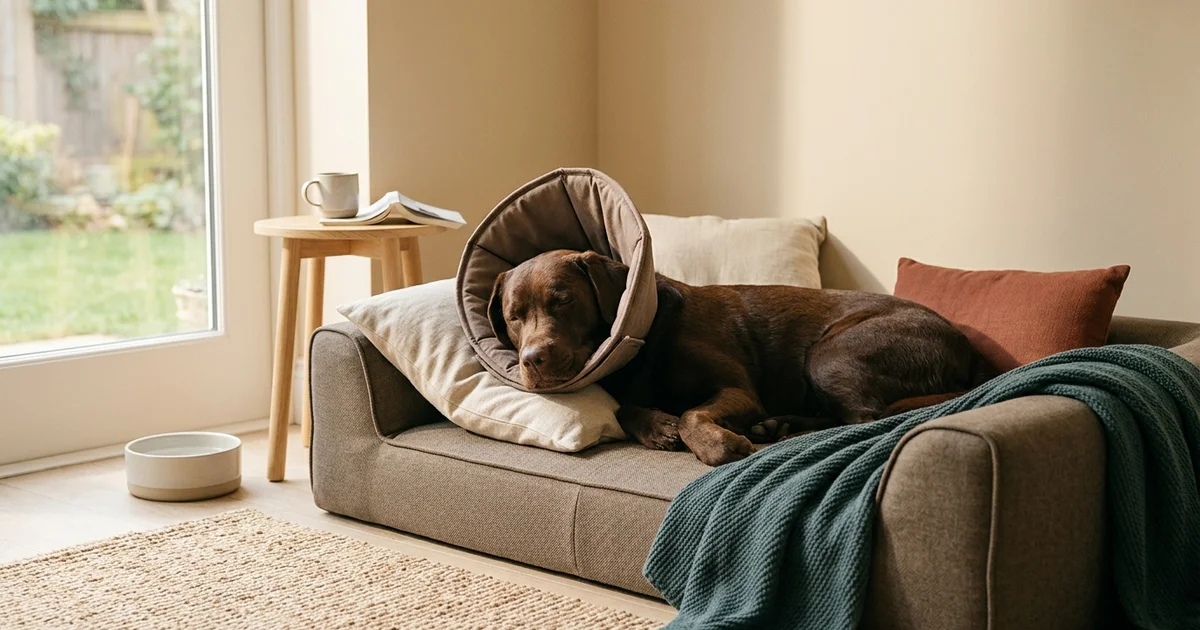
The two things healing at once
After foreign body surgery your dog has two separate healing jobs running in parallel: the abdominal incision on the outside, and the closure in the stomach or intestine on the inside.
The incision is the one you can see and the one owners worry about. The gut closure is the one that actually determines the recovery, and it is why the feeding instructions matter as much as the activity restriction.
Day 1: home and quiet
Your dog comes home awake but groggy, usually the same evening or the following day depending on the case.
Expect reduced appetite, more sleeping, and a subdued mood. Offer water in small amounts frequently rather than a full bowl, which a recovering stomach can bring straight back up. The first meal is small and bland, and it may be refused entirely — that is acceptable on day one.
Give the pain relief on schedule. Keep the house quiet: no visitors, no other dogs bouncing around, no stairs.
Days 2 to 3: small and frequent
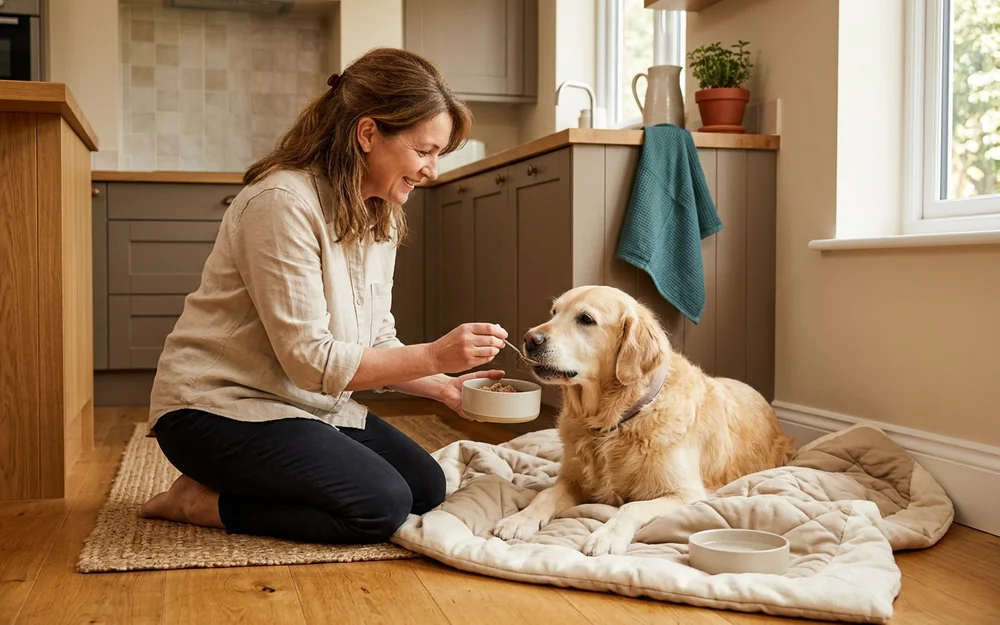
Four small bland meals a day rather than one or two normal ones. The principle is to give the gut the least possible work while the closure knits.
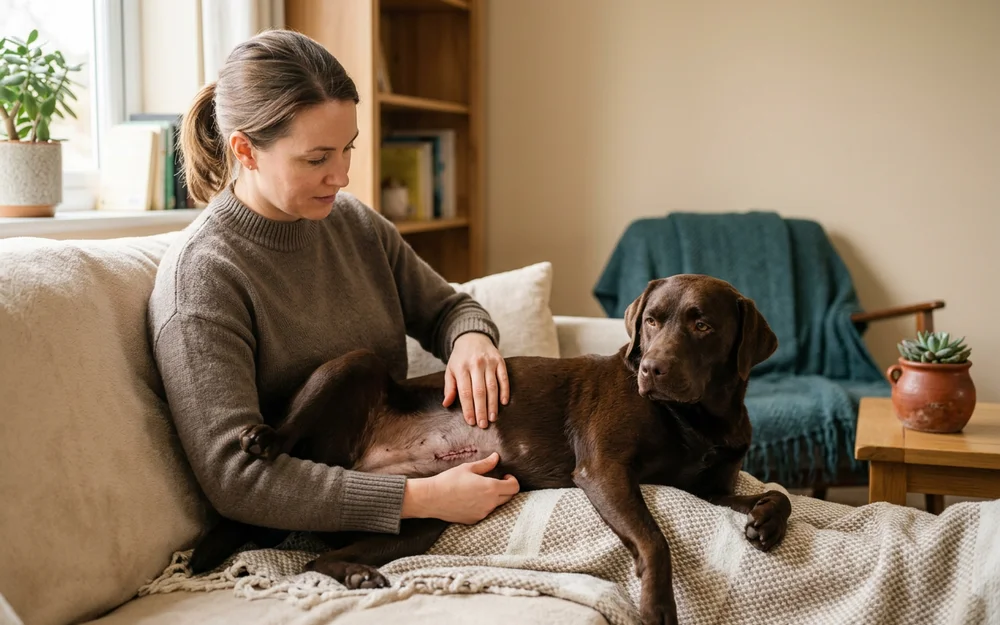
Your dog should be brighter each day. Toilet breaks on a lead only. Check the incision once daily in good light: a thin closed line with some bruising is normal; spreading redness, heat, discharge, or a gap is not.
Stools may be soft or absent for the first couple of days. That is expected.
Days 4 to 7: building back
Three slightly larger bland meals a day. Most dogs have their appetite back properly by now and will make it very clear they consider the portions inadequate.
Short lead walks are fine — five to ten minutes, for toileting and mental stimulation. No off-lead running, no jumping onto furniture or into the car, no stairs where avoidable.
The warning window is days 3 to 5.
If a gut closure is going to leak, this is usually when it declares itself. Renewed vomiting, refusing food after several days of eating well, lethargy, or a painful abdomen at this stage needs an immediate call.
Days 8 to 14: transition back
Begin mixing normal food into the bland diet, increasing the proportion over several days. A sudden switch back to normal food frequently causes a bout of diarrhoea that alarms owners unnecessarily.
Lead walks can lengthen. Still no running, jumping, rough play, or swimming, and the cone stays on whenever your dog is unsupervised.
The complimentary surgical healing evaluation happens somewhere in this window. We check the incision, assess how the recovery has gone, and clear your dog to return to normal activity.
Warning signs at any stage
Call the 24/7 recovery text line for:
- Vomiting that starts again after it had stopped
- Refusing food after several days of eating normally
- Lethargy that is getting worse rather than better
- Incision swelling, redness, heat, discharge, or a gap
- A tense or painful abdomen
- Pale gums, or breathing that seems laboured
Peritonitis from a leaking closure is the serious complication after intestinal surgery, and it is treatable when caught early. Nobody has ever annoyed us by sending a photograph of an incision at 11pm.
Beyond two weeks
Most dogs are back to entirely normal within a fortnight and show no lasting effects. Dogs who needed a resection and anastomosis occasionally have looser stools for a few weeks while the shortened intestine adapts.
The one lasting change worth making is preventive. Dogs who swallow one thing tend to swallow another, and the second surgery is always harder to justify than the first.