The short answer
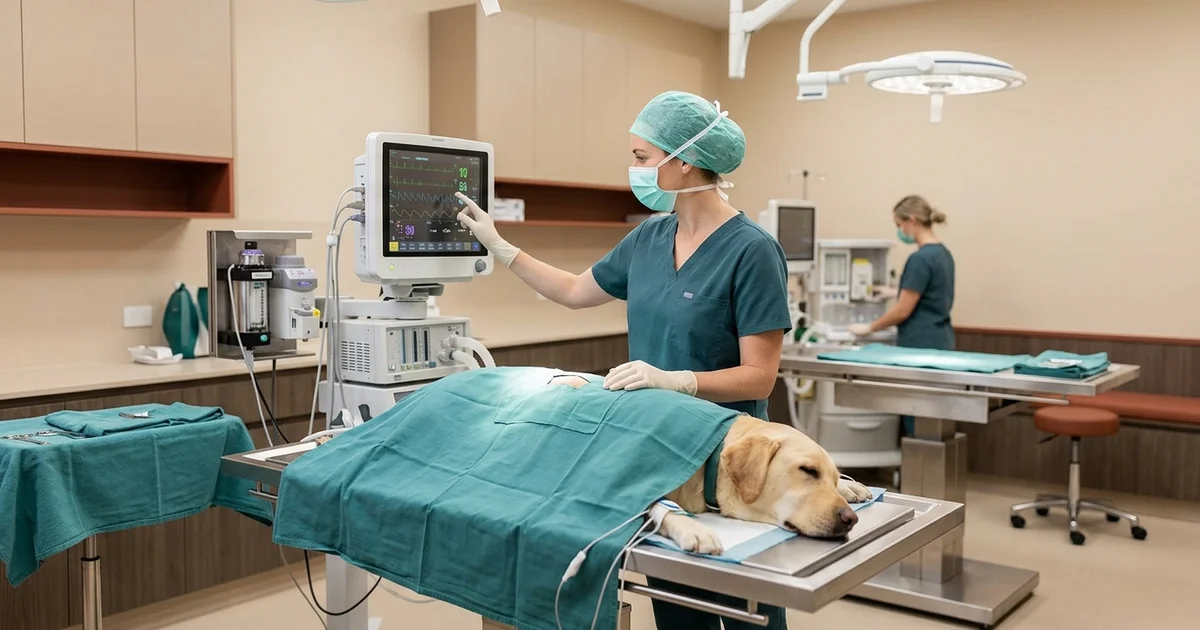
Foreign body surgery for a dog in Wilmington starts at $1,200 through our network, all-in for a straightforward case. Corporate referral and emergency hospitals in the same corridor routinely quote $3,000 to $5,000.
The operation is identical. The difference is the overhead of the building it happens in — and this page explains exactly what you are paying for, what changes the price, and what to check on any estimate you have been handed.
If your dog has swallowed something right now, skip to the bottom or go straight to our foreign body removal service.
What foreign body surgery actually is
When a dog swallows something that will not pass, the object has to be retrieved surgically. Which operation that means depends entirely on where it has ended up.
A gastrotomy is an incision into the stomach. This is the better scenario: the stomach is large, elastic, has an excellent blood supply, and heals reliably. An object can sit there for a while without doing structural damage.
An enterotomy is an incision into the small intestine, needed once the object has moved on and lodged. The intestine is narrower, thinner-walled, and has a less generous blood supply. A wedged object obstructs the passage of food and fluid, and it presses on the bowel wall from the inside, progressively cutting off circulation to that segment.
If that segment dies, it cannot be opened and closed. It has to be removed entirely and the healthy ends joined — an intestinal resection and anastomosis. Longer, riskier, and substantially more expensive.
Walking through a real case
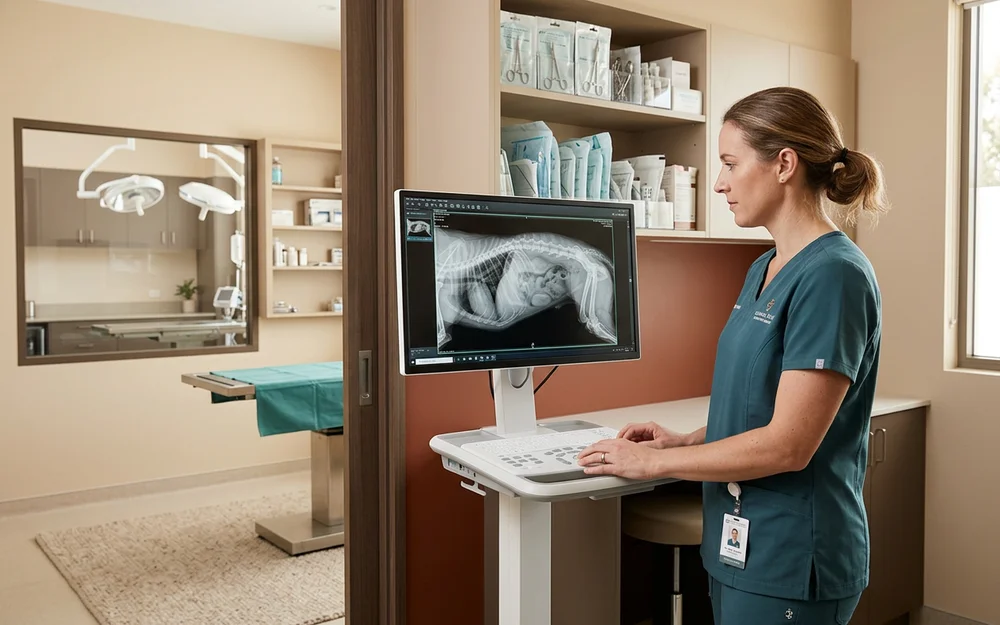
Assessment. We take the history — what was swallowed, when, and what symptoms have appeared — and examine your dog, including careful abdominal palpation.
Imaging. Pre-op abdominal radiographs come first. Rocks and bones show clearly. Fabric, rubber, and most plastics do not, so the films are read for the obstruction pattern instead: gas building behind the blockage, loops of bowel distended where they should be flat, an abrupt change in diameter, or the plicated pattern that indicates a linear foreign body. Where the films are ambiguous, abdominal ultrasound resolves it.
Stabilisation. Dogs who have been vomiting for a day arrive dehydrated with disturbed electrolytes. IV fluid resuscitation comes before anesthesia, not after. Pre-anesthetic bloodwork checks kidney and liver values and packed cell volume, which shapes the anesthetic protocol.
Surgery. A midline linea alba incision gives access to the whole abdomen with minimal muscle trauma. The object is located and removed through a gastrotomy or enterotomy, and then — always — the entire intestinal tract is run by hand from stomach to colon. Dogs who swallow one thing have frequently swallowed two, and finding the second one three days later helps nobody.
Closure. Layered closure with cefazolin cover, and abdominal lavage where any contamination has occurred. The genuine danger in intestinal surgery is not the incision on the outside; it is leakage from the closure on the inside.
Recovery. Continuous monitoring through to full consciousness, then home the same day or the following one with medications, a discharge checklist, and a 24/7 recovery text line.
The cost breakdown
| Case type | Our price | Typical Wilmington ER / referral quote |
|---|---|---|
| Gastrotomy — object in stomach | From $1,200 | $3,000 – $4,000 |
| Enterotomy — object in intestine | From $1,200 | $3,500 – $5,000 |
| With resection and anastomosis | Quoted after imaging | $5,000 – $7,000+ |
| Linear foreign body, multiple incisions | Quoted after imaging | $5,000 – $7,000+ |
Included in our $1,200 starting figure
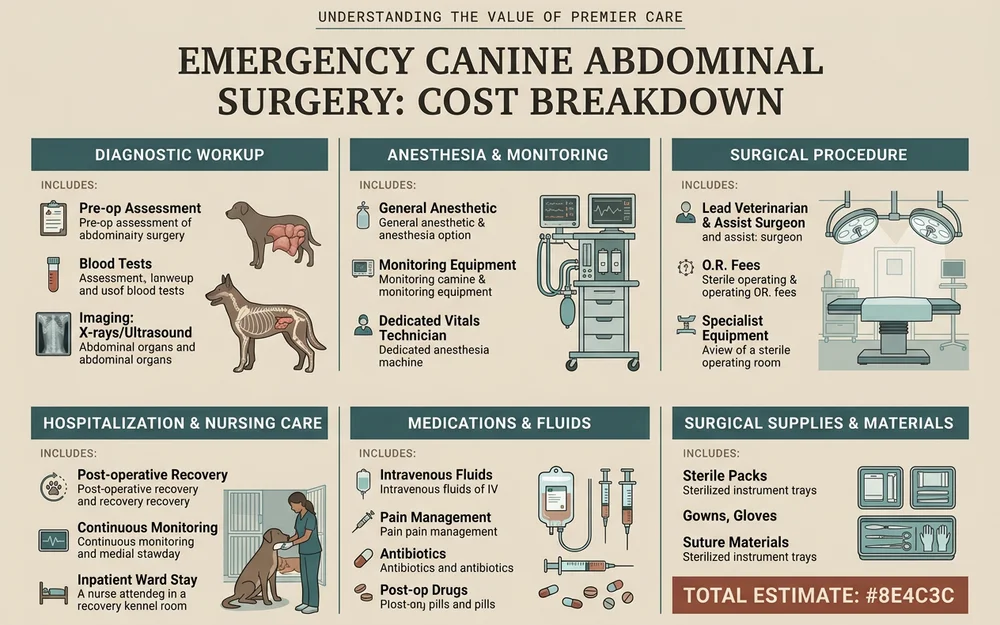
Pre-op abdominal radiographs · pre-anesthetic blood screening · IV fluid resuscitation and support · anesthesia · continuous SpO2, ECG, blood pressure and temperature monitoring · the surgery · perioperative antibiotics and pain control · home-recovery medications · structured discharge checklist · 24/7 post-op recovery text line · complimentary 10-to-14 day healing evaluation.
Quoted separately and never added without your approval: abdominal ultrasound where radiographs are inconclusive, intestinal resection where bowel is devitalised, and extended inpatient support for dogs who arrive septic.
Why delay is the most expensive decision
This is the part of the cost conversation nobody has with owners, and it matters more than any comparison between hospitals.
A dog seen on day one with an object still in the stomach gets a gastrotomy: shorter surgery, lower risk, bottom of the price range. The same dog on day three has an object lodged in the intestine and a section of bowel that has lost its blood supply. That needs a resection: longer anesthesia, higher complication risk, more intensive aftercare, and a considerably larger bill.
Nothing you can negotiate with any hospital will save you what acting on day one saves you.
What to check on any estimate
If you have a quote from another practice, compare it against these five points rather than the headline number:
- Is pre-anesthetic bloodwork included, or listed as optional and declinable?
- Who monitors your dog under anesthesia — a dedicated person, or the surgeon glancing over?
- Which parameters are monitored — a pulse oximeter alone is not the same as SpO2, ECG, blood pressure and temperature.
- Are radiographs and IV fluids included, or itemised on top?
- Is the follow-up recheck free, or another consultation fee?
An estimate that omits three of those five will always look cheaper on paper. It is not the same operation.
Payment and financing
We accept cash, credit card, and CareCredit, which spreads the cost across monthly payments and is widely used by owners across New Castle County. If cost is the barrier to treating your dog, say so at the point of booking. There is normally more flexibility available than owners assume, and none of it is available if we do not know.
Same-day and urgent scheduling
The reason owners across Wilmington choose our network for obstruction cases is scheduling. Because we coordinate across surgical calendars throughout the Brandywine Valley rather than relying on one building’s availability, urgent cases are typically operated on within days — and same day where the clinical picture is time-critical.
If your dog is collapsing, cannot keep water down, or has a rigid, painful abdomen, go to your nearest emergency hospital immediately for stabilisation, then contact us about the surgery.
For everything else — a swallowed object, symptoms that have started, or a dog who is simply not right — request same-day surgery and tell us what happened, when, and what you are seeing. For coverage and local access details, see our dog surgery in Wilmington service area page.