X-Rays Included
Wilmington, DE & the Brandywine Valley
Dog Dental and Oral Surgery in Wilmington, DE
Advanced surgical tooth extractions, oral tumor excision, and jaw fracture repair for dogs.
- 30-40% below referral hospitals
- Scheduled within days
- Full anesthetic monitoring
Starting Price
$150 – $950
Credential 01
4.9★ Google (150+ reviews)
Credential 02
Surgery Within Days
Credential 03
30-40% Below Referral Hospitals
Credential 04
Pre-Anesthetic Bloodwork & Full Monitoring
What dog dental surgery covers
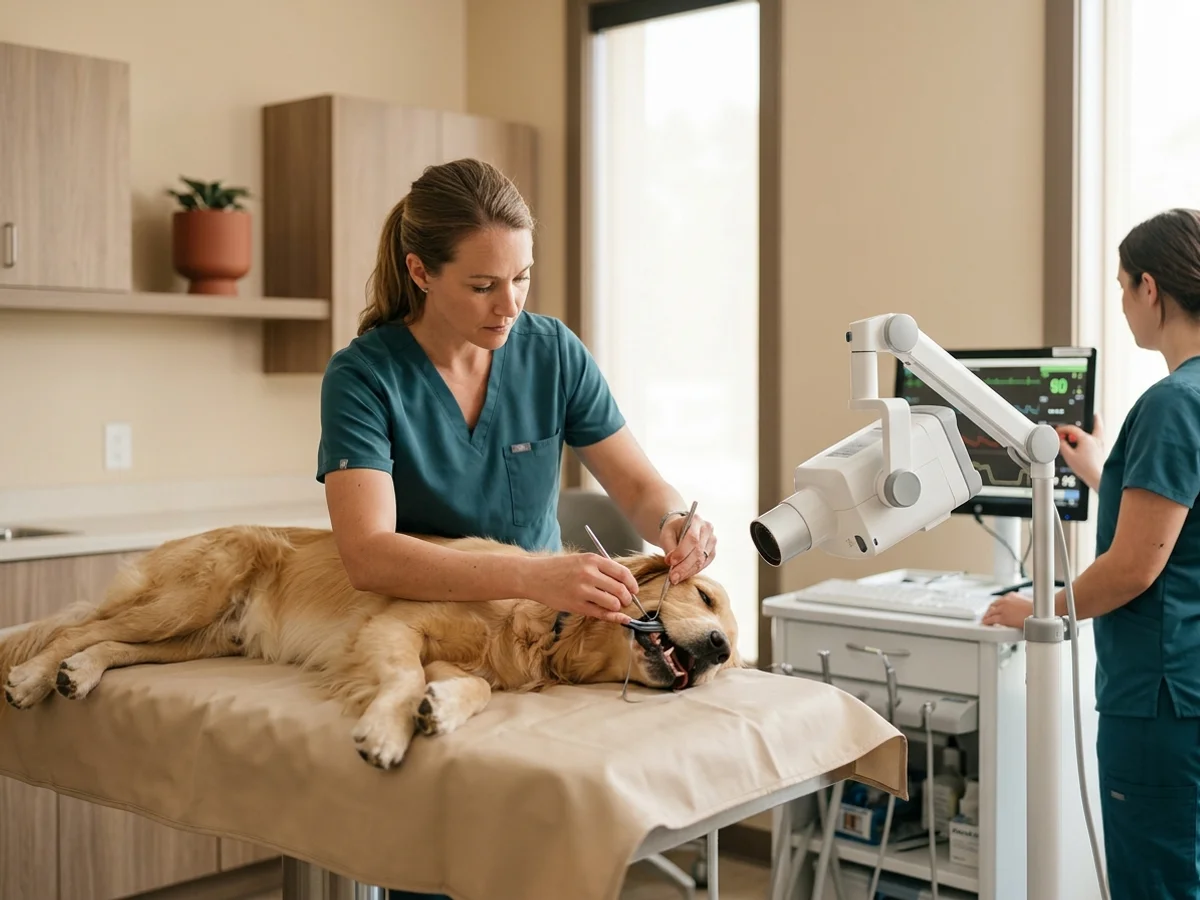
Brandywine Valley Dog Surgery provides advanced canine dental and oral surgery for dog owners in Wilmington, DE and across New Castle County. This includes surgical extraction of difficult teeth, excision of benign oral masses, canine jaw fracture repair, and deep periodontal flap closures - with nerve blocks and digital dental X-rays included on every procedure.
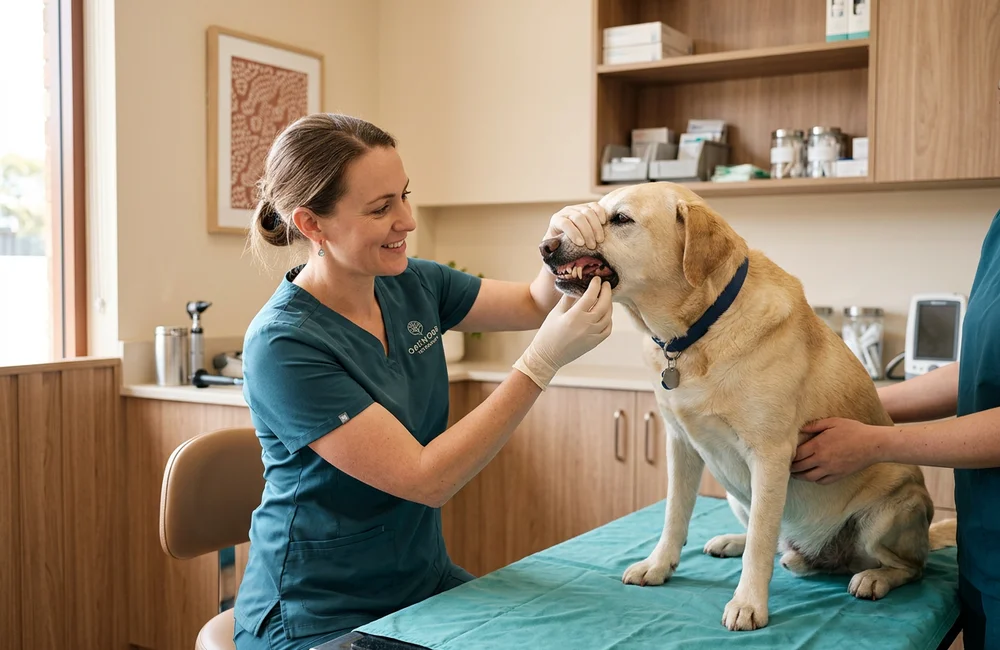
Most canine dental disease is invisible. By the time an owner notices bad breath or a dog favoring one side, the tooth causing it has usually been uncomfortable for months.
How dental X-rays change the treatment plan
Digital intraoral radiography is where the real assessment happens. A visual examination shows tartar, gum recession, and obviously broken teeth. What it cannot show is the two-thirds of each tooth that sits below the gumline.
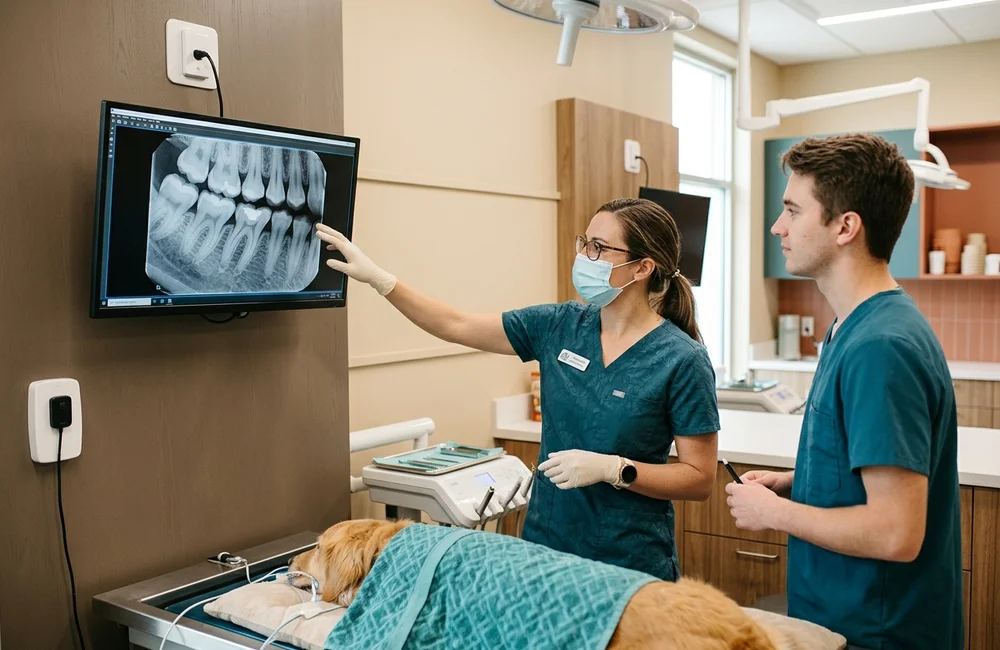
Radiographs reveal root abscesses under an apparently normal crown, loss of alveolar bone that determines periodontitis staging, resorptive lesions, and retained root fragments from extractions performed elsewhere. They also confirm, after the extraction, that the root came out whole.
A retained root is the most common cause of ongoing post-extraction pain
It is also entirely preventable with a post-extraction radiograph, which is why ours are included rather than offered as an upgrade.
When does your dog need a surgical extraction?
Single-rooted incisors and canines can often be carefully elevated and removed intact. Multi-rooted teeth cannot.
A multi-rooted carnassial extraction requires raising a mucoperiosteal flap of gum tissue, removing a small margin of alveolar bone, sectioning the tooth into individual root segments with a dental burr, elevating each root separately, performing subgingival curettage of the socket, and closing the flap over the site with dissolvable suture.
That is why a surgical extraction costs more than a simple pull. It takes longer, needs more equipment, and produces a far better outcome.
| Simple pull | Surgical extraction | |
|---|---|---|
| Typical teeth | Single-rooted incisors and canines | Multi-rooted premolars and carnassials |
| Gum flap required? | No | Yes — a mucoperiosteal flap is raised |
| Bone removed | None | A small margin of alveolar bone |
| Tooth sectioned? | No, elevated and removed intact | Yes, divided into individual root segments |
| Closure | Socket left to granulate | Flap closed over the site with dissolvable suture |
Are nerve blocks safer for older dogs?
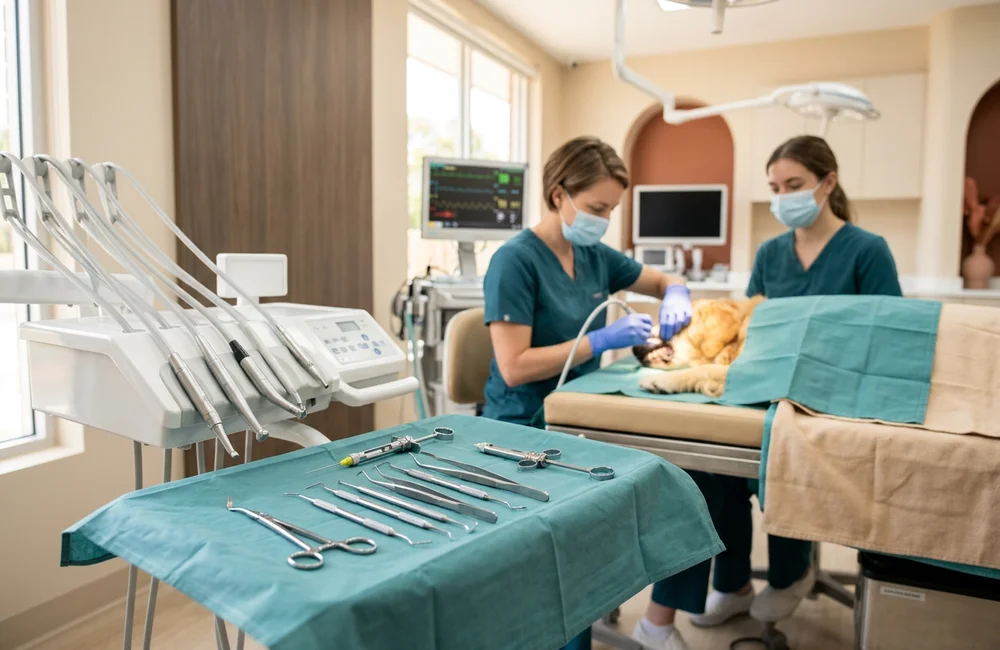
Every extraction gets a regional block. An infraorbital nerve block numbs the upper jaw on that side; an inferior alveolar (mandibular) nerve block numbs the lower.
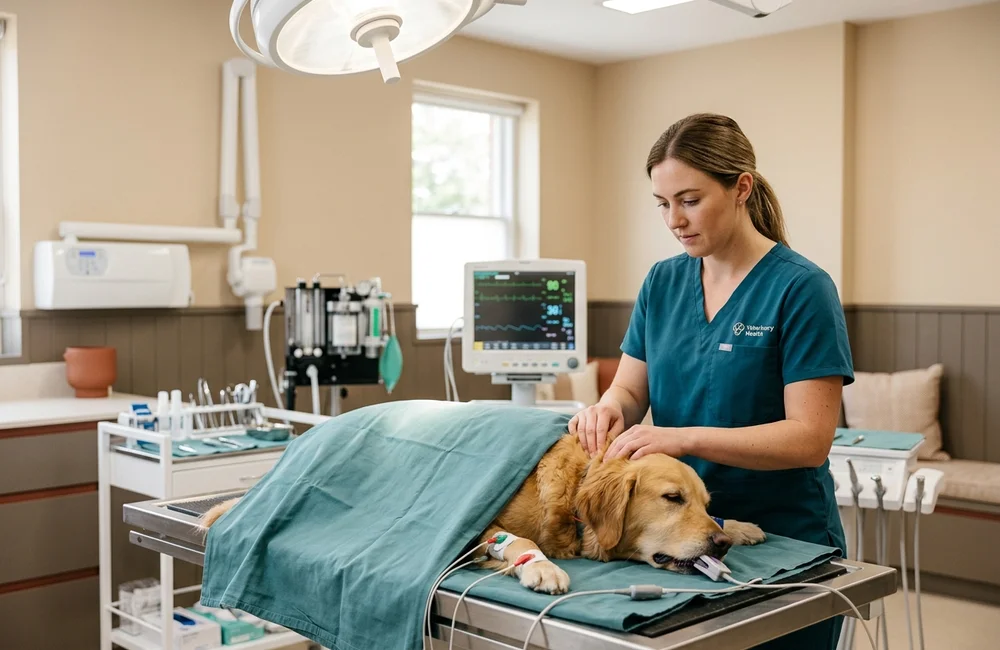
Two things follow from that. First, with the region properly numb, the general anesthetic can run lighter, which matters enormously in the senior dogs who need most of this work. Second, your dog wakes up comfortable instead of in a pain surge. Dental procedures are also long by veterinary standards, so patients are kept warm and monitored continuously for blood oxygen, ECG rhythm, blood pressure, and core temperature.
Oral tumor excision and jaw fracture repair
Brandywine Valley Dog Surgery excises benign oral tumors, repairs canine jaw fractures, and performs oroantral fistula closure where an upper extraction has opened a communication into the nasal cavity. Dog owners from Brandywine Hundred, Greenville, and Hockessin choose us for these procedures because referral hospitals in Delaware and Chester counties often quote significantly more. Where an oral mass looks malignant and needs oncological staging before any surgery, we will tell you that rather than proceeding.
How we compare to referral hospitals
| Feature | Typical Referral Hospital | Brandywine Valley Dog Surgery |
|---|---|---|
| Dental X-rays | Often an add-on charge | Included on every procedure |
| Nerve blocks | Not always standard | Infraorbital and mandibular blocks on every extraction |
| Wait time | 4-6 weeks typical | Surgery scheduled within days |
| Pre-anesthetic bloodwork | May be optional | Included and required before every anesthesia |
| Follow-up evaluation | Separate appointment fee | Complimentary 10-14 day healing evaluation |
| Pricing transparency | Bill finalized after procedure | Realistic range given before anesthesia |
What to expect during recovery
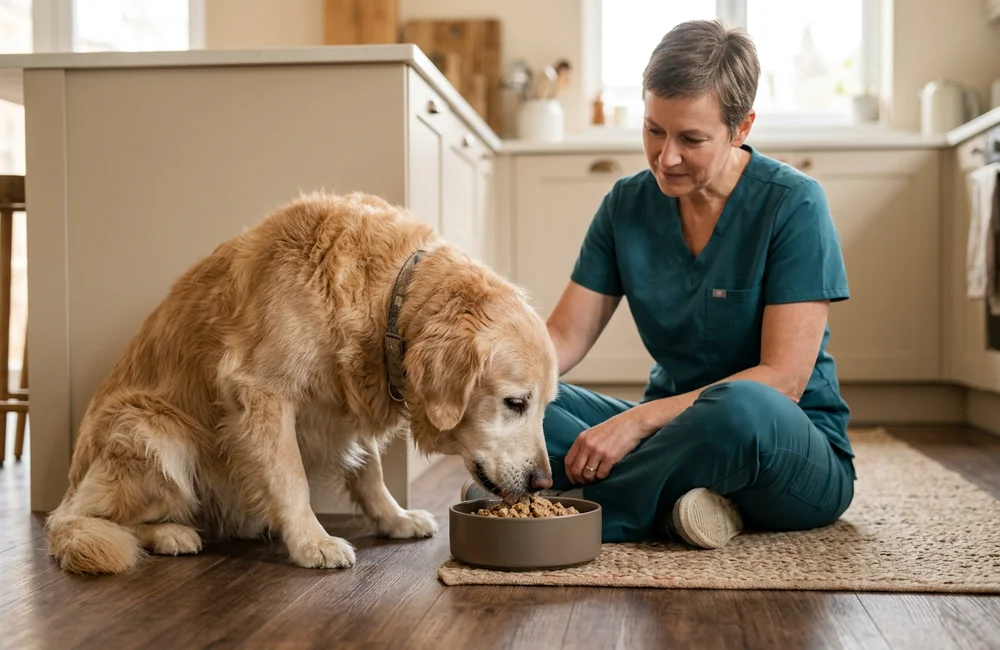
Softened food for about a week, no hard chews or tug toys during that period, and the full course of prescribed pain relief even once your dog seems fine. Dissolvable sutures do not need removing. Most owners report their dog is brighter and more playful within two weeks - which is usually the clearest evidence of how much those teeth were hurting. Every dental surgery patient receives a structured discharge checklist and access to our 24/7 post-op recovery text line.
Price Ledger
How much does dental & oral surgery cost?
The range reflects how many teeth are involved and how difficult they are. A single simple extraction sits at the bottom; multiple surgical extractions of multi-rooted teeth sit at the top.
Starting From
$150 – $950
per procedure (anesthesia, nerve blocks, and dental X-rays included; complete cleanings from $295)
Included in the price
- Pre-anesthetic blood screening
- Anesthesia with continuous multi-parameter monitoring
- Infraorbital and mandibular nerve blocks
- Digital intraoral dental radiography
- Surgical extraction with mucoperiosteal flap closure
- Home-recovery medications and discharge checklist
Quoted separately
- Complete dental cleaning (from $295 when combined)
- Histopathology of excised oral masses
- Advanced imaging for jaw fracture planning
Nothing gets added to your bill without your approval first. Ask for the written estimate before you commit.
We accept cash, credit card, and CareCredit financing. If cost is the barrier to treating your dog, tell us when you request a booking.
Why Us For This Surgery
Why owners choose us for dental & oral surgery
01
Dental X-rays are included, not upsold
Most canine dental disease is below the gumline. Extracting without radiographs means guessing at root anatomy and risking retained fragments.
02
Nerve blocks on every extraction
Regional blocks let us run the anesthetic lighter, which is safer, and they mean your dog wakes up comfortable rather than sore.
03
Multi-rooted teeth done properly
Carnassials and premolars cannot be pulled intact. They need a flap, sectioning, and closure. Shortcuts here are what cause chronic post-extraction pain.
04
Honest scope on oral masses
We excise benign oral tumors and repair jaw fractures. Where a mass looks malignant and needs oncological planning, we will say so.
Procedure Ledger
How dental & oral surgery works
What happens from your first booking request through to your dog's follow-up evaluation.
Step 01
Oral assessment
We examine the mouth awake as far as your dog tolerates, note the obvious problems, and give you a realistic range before anesthesia.
Step 02
Full-mouth radiographs
Under anesthesia, digital intraoral X-rays reveal what is happening below the gumline. This is where the real treatment plan gets made.
Step 03
Nerve blocks and extraction
Infraorbital or mandibular blocks numb the region so anesthetic depth stays low. Multi-rooted teeth are sectioned and lifted individually under a mucoperiosteal flap.
Step 04
Closure and recovery
Extraction sites are closed with dissolvable sutures. Most dogs eat softened food within a day and are back to normal within a week.
Need dental & oral surgery for your dog?
Send us the details and we will confirm honest pricing and the soonest surgical date, usually within days.
Deeper Reading
Dental & Oral Surgery guides
Plain-language answers to the questions owners ask before booking this surgery.
cost
Dog Tooth Extraction Surgery Cost in Wilmington, DE
Canine dental surgery pricing in the Wilmington corridor ($150-$950), what's included, and the dental cleaning add-on.
Read guidecomparison
Surgical Tooth Extraction vs Simple Pull in Dogs
Why some canine teeth need surgical extraction with a flap technique, when a simple pull isn't enough, and what it means for cost.
Read guidedefinition
Why Canine Dental X-Rays and Nerve Blocks Matter
How digital dental X-rays and nerve blocks make canine oral surgery safer and more thorough, and why retained roots are a risk without them.
Read guideFrom the Practice Journal
Real dental & oral surgery cases and safety standards
Case write-ups and practice updates covering what owners most often want reassurance about.
Owner Ledger
What owners say about our dental & oral surgery
Rated 4.9 across 150+ reviews from dog owners across the Brandywine Valley.
Review 01
“Honest pricing and no upselling. They told us exactly what the tooth extractions would cost, nerve blocks and dental X-rays included. Our senior dog is eating comfortably again.”
Sofia M.
Media, PA
Review 02
“Our terrier had been off his food for months. The X-rays showed two abscessed roots nobody had spotted. Different dog now.”
Brendan C.
Wilmington, DE
Review 03
“They talked us through why a surgical extraction costs more than a simple pull instead of just presenting a bill. That went a long way.”
Yvonne A.
Newark, DE
Service FAQ
Dental & Oral Surgery questions
01How much does dog dental surgery cost in Wilmington, DE?
Between $150 and $950 per procedure (2026 pricing), depending on how many teeth are involved and how difficult they are to remove. That range includes anesthesia, pre-anesthetic blood screening, continuous monitoring, infraorbital or mandibular nerve blocks, and digital intraoral dental X-rays. Complete dental cleanings start at $295. We give you a realistic range before anesthesia and confirm it once the radiographs show what is actually happening below the gumline.
02Why does my dog need a surgical extraction instead of a simple pull?
Single-rooted teeth at the front of the mouth can often be elevated and lifted out intact. Multi-rooted teeth (premolars and the large carnassials) cannot. They have two or three roots that diverge, so the tooth has to be sectioned into individual root segments, each elevated separately, usually under a raised mucoperiosteal flap with a small amount of alveolar bone removed. Then the site is closed. That is a genuine surgical procedure, and it is why the price differs.
03Are dental X-rays actually necessary?
Yes, and this is not an upsell. They are included in our pricing. The majority of canine dental disease sits below the gumline where no visual examination can reach: root abscesses, bone loss, resorptive lesions, and retained root fragments from previous extractions. X-rays also confirm after the fact that a root has been fully removed. A retained root fragment is the most common cause of ongoing pain after an extraction performed elsewhere.
04Do nerve blocks really make a difference?
A significant one. An infraorbital block numbs the upper jaw on that side; an inferior alveolar block numbs the lower. With the region genuinely numb we can run the general anesthetic lighter, which is safer for older dogs, and your dog wakes up without the pain surge that otherwise follows an extraction. They are included on every extraction we perform.
05How will I know my dog has dental pain?
Dogs almost never stop eating from dental pain. They adapt. Watch instead for chewing on one side, dropping food or toys, bad breath that has got noticeably worse, pawing at the face, reluctance to have the head touched, or a sudden preference for soft food. Many owners only realize how uncomfortable their dog was once the problem teeth are gone.
06Is anesthesia safe for my older dog?
Pre-anesthetic blood screening checks liver and kidney function before we agree a date, so the protocol is built around your dog's actual values. Nerve blocks keep the anesthetic depth low. Continuous SpO2, ECG, blood pressure, and core temperature monitoring runs throughout, and your dog is kept warm on a heated table. Leaving painful, infected teeth in place carries its own risks, which is the comparison that matters.
07How long is recovery after a canine tooth extraction?
Most dogs eat softened food comfortably within a day or two and are fully back to normal within a week. Extraction sites are closed with dissolvable sutures that do not need removing. Feed soft food for about a week, avoid hard chews and toys during that period, and give the prescribed pain relief even if your dog seems fine.
08Do you handle oral tumors and jaw fractures?
Yes. We surgically excise benign oral tumors and repair canine jaw fractures, alongside deep periodontal flap closures and oroantral fistula closure where an extraction has communicated with the nasal cavity. Where a mass appears malignant and needs oncological staging, we will tell you that directly.
Still have questions about your dog?
Send us the details and we will come back with a straight answer, an honest price, and the soonest surgical date we can offer.
Request Surgery BookingCross Reference
Related surgeries
Canine Mass & Tumor Removal
Precision surgical removal of lumps, skin masses, and lipomas with oncological margin planning and cosmetic skin-flap closures.
View surgery
Traumatic Fracture Repair
Alignment and stabilization of traumatic canine bone fractures using plating, pinning, or external fixation.
View surgery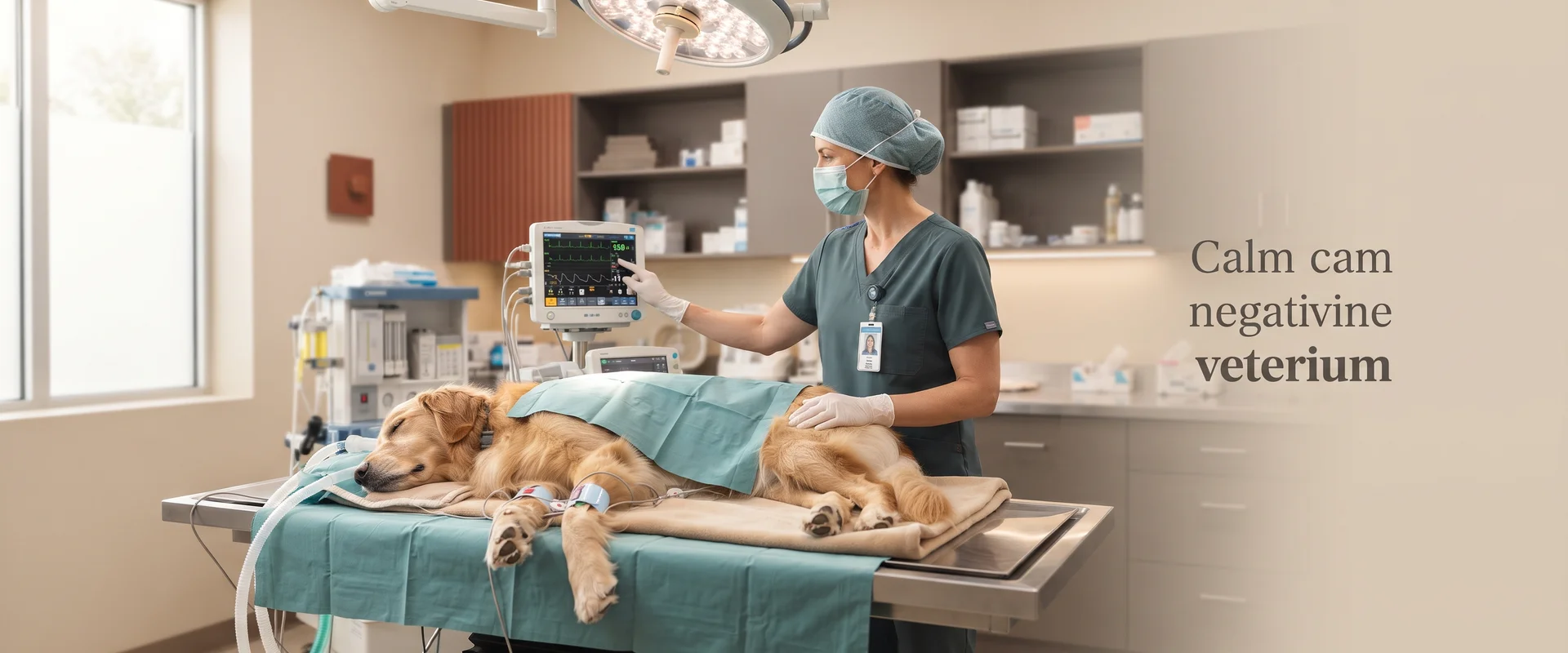
Urgent surgeries scheduled within days
Ready to book dental & oral surgery?
Honest pricing, full anesthetic monitoring, and a surgical date in days. Serving Wilmington DE, Newtown Square PA, and Newark DE.
- 30-40% below referral hospitals
- Scheduled in days, not weeks
- Full monitoring on every case