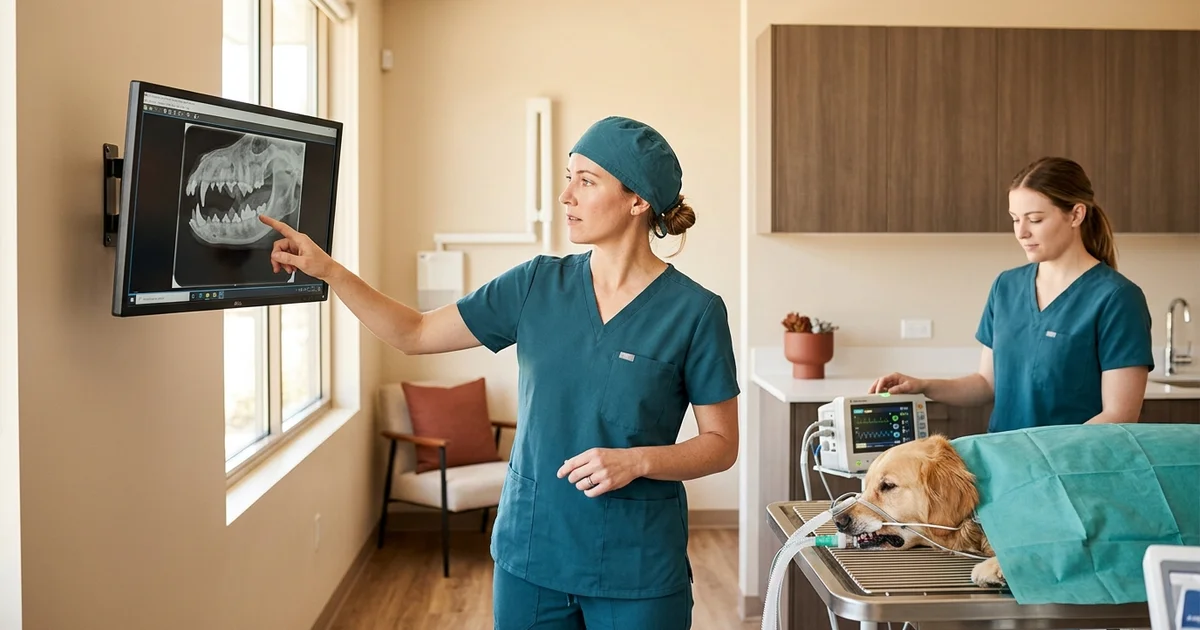
Two things that separate good canine dentistry from adequate
If you take one thing from this page, take this: when comparing dental quotes for your dog, the two questions that matter most are whether X-rays are included and whether nerve blocks are included.
Both are standard in our dental and oral surgery service. Both are frequently absent elsewhere, and their absence is usually why the headline number is lower.
What lives below the gumline
A visual examination of a dog’s mouth shows the crowns: tartar, gum recession, obviously broken or discoloured teeth.
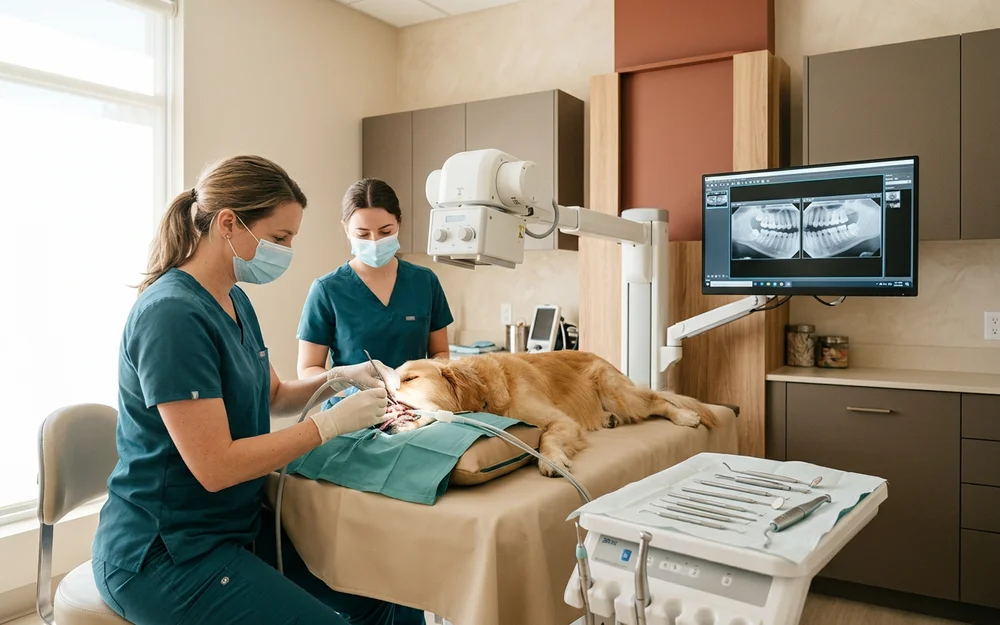
Roughly two-thirds of each tooth is below the gumline, and so is most canine dental disease. Digital intraoral radiography reveals:
- Root abscesses sitting beneath a crown that looks entirely normal from above
- Alveolar bone loss, which determines periodontitis staging and whether a tooth can be saved
- Resorptive lesions, where the tooth structure is being broken down from within
- Retained root fragments left behind by extractions performed previously elsewhere
- Root fractures invisible above the gumline
- Unerupted or malformed teeth, particularly in small breeds
Without radiographs, a dental procedure treats what can be seen and leaves what cannot. Owners report that the mouth looks better and the dog still will not chew on that side.
X-rays are also taken after the extraction, not just before.
A post-extraction film confirms the root came out whole. A retained root fragment is the single most common cause of ongoing pain after a dental performed without radiography.
What nerve blocks actually do
A regional nerve block places local anesthetic alongside the nerve that supplies a whole section of the jaw. An infraorbital block numbs the upper jaw on that side; an inferior alveolar (mandibular) block numbs the lower.
Three consequences follow.
The general anesthetic can run lighter. If the surgical site is genuinely numb, the dog does not need to be as deeply anesthetised to remain comfortable. Lighter anesthesia means better blood pressure, better perfusion, and a faster recovery — which matters most in the senior dogs who need most of this work.
The dog wakes up comfortable. Without a block, pain arrives as a surge exactly when the anesthetic clears. With one, the block is still working through recovery and the oral pain relief has time to take effect.
Less anesthetic drug overall means less to metabolise and clear, which is directly relevant for dogs with reduced liver or kidney function.
The anesthetic conversation
Dental procedures are long by veterinary standards, which makes the supporting protocol matter more, not less.
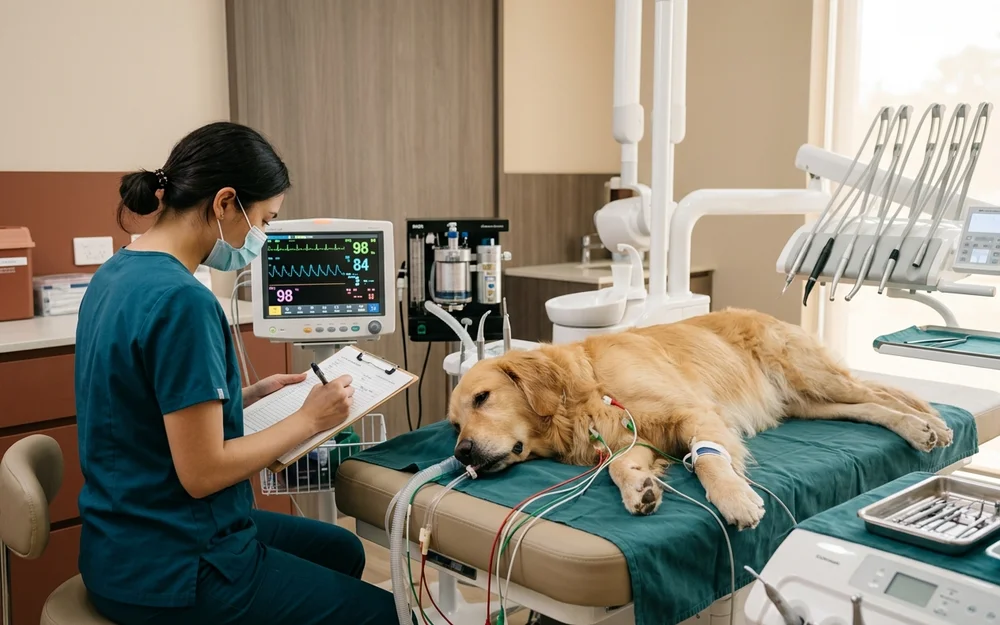
Pre-anesthetic blood screening happens before we confirm a date, so the protocol is built around your dog’s actual liver and kidney values. Patients are kept warm on a heated table, because heat loss during a long open-mouth procedure slows drug metabolism and prolongs recovery. Blood oxygen, ECG rhythm, blood pressure, and core temperature are monitored continuously.
Owners frequently worry about anesthetising an older dog for dental work. The comparison worth making is against leaving painful, infected teeth in place — which is not a neutral alternative.
What to ask when comparing quotes
- Are full-mouth dental radiographs included, or charged separately?
- Are post-extraction radiographs taken to confirm complete removal?
- Are regional nerve blocks included on every extraction?
- Is pre-anesthetic bloodwork included?
- Who monitors the dog, and which parameters?
Our pricing runs from $150 to $950 per procedure with all five included, and complete cleanings from $295. A cheaper quote missing three of those five is not the same procedure.