Emergency Priority
Wilmington, DE & the Brandywine Valley
Emergency Pyometra Surgery for Dogs in Wilmington, DE
Urgent, life-saving surgery to remove a severely infected, pus-filled uterus in unspayed female dogs.
- 30-40% below referral hospitals
- Scheduled within days
- Full anesthetic monitoring
Starting Price
$1,100
Credential 01
4.9★ Google (150+ reviews)
Credential 02
Surgery Within Days
Credential 03
30-40% Below Referral Hospitals
Credential 04
Pre-Anesthetic Bloodwork & Full Monitoring
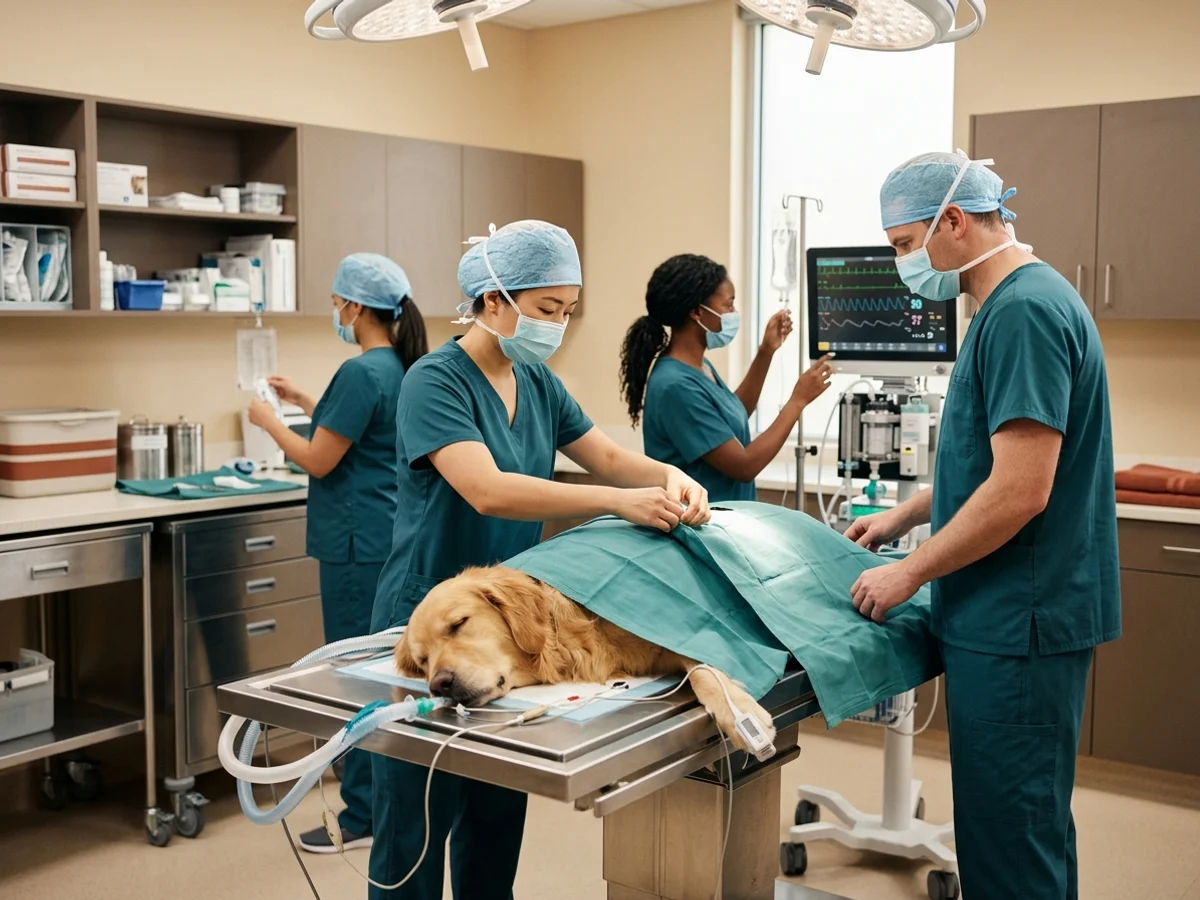
Brandywine Valley Dog Surgery performs emergency pyometra surgery for dogs across Wilmington, Newark, and Newtown Square. This canine soft tissue surgery is handled by state-licensed veterinarians (DVMs) and scheduled same or next day - a delayed pyometra can turn fatal within days.
What is pyometra?
Pyometra is a bacterial infection that fills the uterus with pus. It happens in unspayed female dogs, usually two to eight weeks after a heat cycle, when the hormonal environment leaves the uterine lining thickened and receptive to bacteria that would normally be cleared.
The underlying change is endometrial hyperplasia - a progressive thickening of the uterine lining with each cycle. It builds silently over years, which is why pyometra is far more common in middle-aged and older intact females than in young ones.
This is a surgical emergency
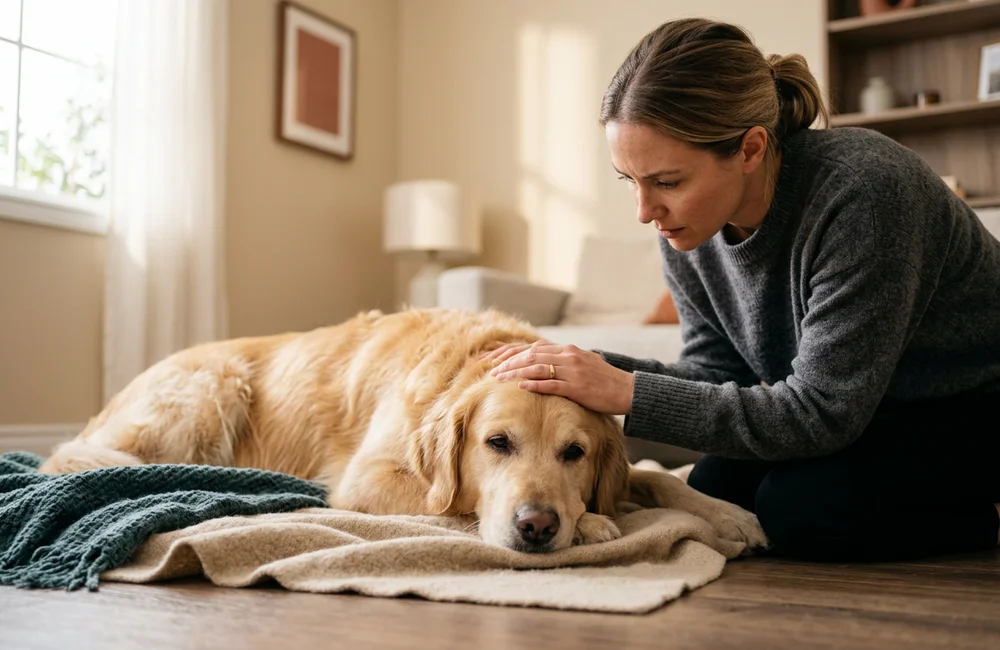
Once pyometra is diagnosed, surgery cannot safely wait. The infection releases toxins into the bloodstream, and a distended uterus can rupture into the abdomen.
Recognizing the Warning Signs
If your female dog is unspayed and finished a season in the last two months, these signs need a call today:
- Lethargy, or simply not being herself
- Refusing food
- Drinking and urinating noticeably more than usual
- Vomiting
- A distended or tender abdomen
- Foul-smelling discharge from the vulva - present in open pyometra, absent in closed pyometra
Open vs closed pyometra
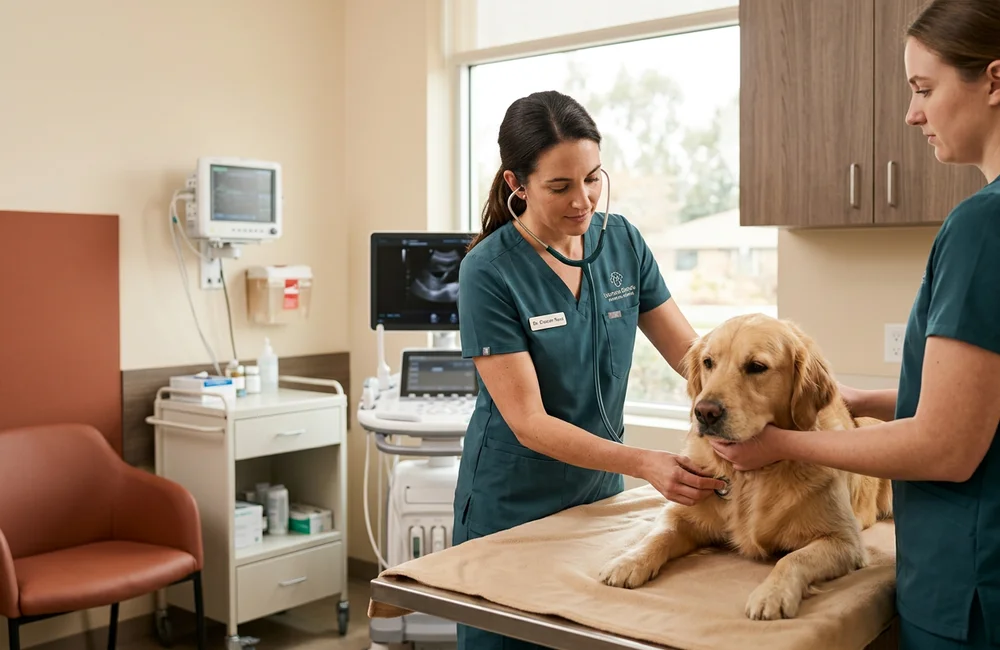
Open pyometra means the cervix is open and infected material drains out. It smells terrible, but the discharge is a warning sign that gets owners to a vet, and the pressure inside the uterus is partially relieved.
Closed pyometra means the cervix is sealed. There is no discharge and no obvious external sign, so owners often present later, by which point the uterus is severely distended and the dog is systemically ill. Closed cases progress to sepsis and endotoxemia faster and carry a genuine risk of uterine rupture. If your intact female is unwell after a season and there is no discharge, that does not rule pyometra out - it raises the concern.
| Open pyometra | Closed pyometra | |
|---|---|---|
| Cervix | Open, infected material drains | Sealed, nothing escapes |
| Visible sign | Foul-smelling vaginal discharge | None - only systemic illness |
| Typical presentation | Earlier, prompted by the discharge | Later, once the dog is visibly unwell |
| Pressure in the uterus | Partially relieved by drainage | Builds, with genuine rupture risk |
| Progression to sepsis | Slower | Faster |
How Emergency Ovariohysterectomy Works
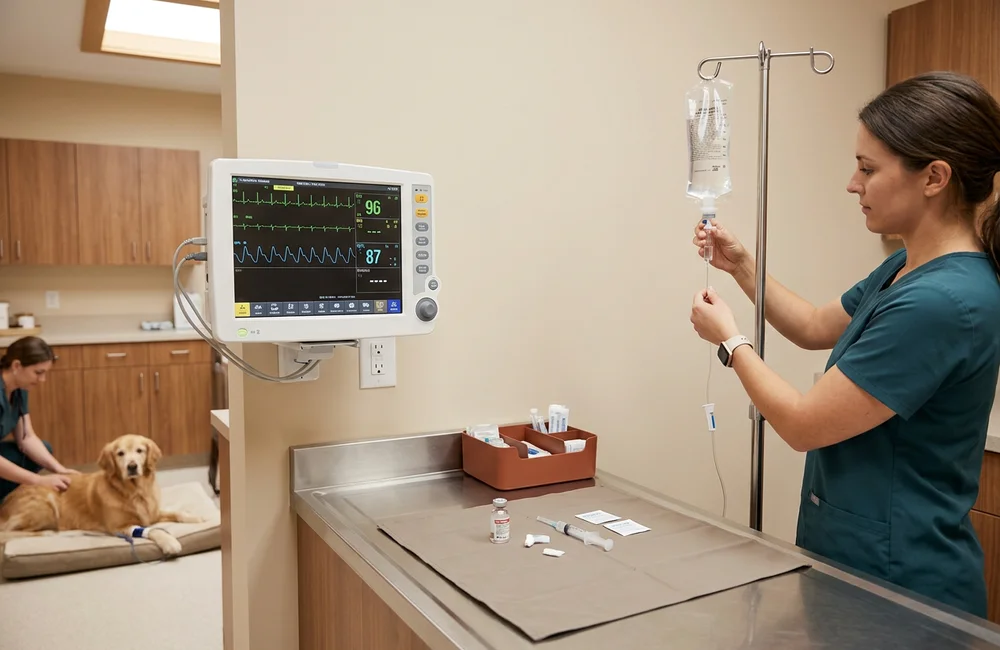
Stabilization and anesthesia planning come first. Pre-anesthetic packed cell volume (PCV) and total protein tell us about dehydration and blood loss; BUN and creatinine elevation tells us whether the kidneys are already affected by the toxins. Broad-spectrum IV antibiotics and fluid resuscitation start before induction, not after.
The surgery itself is an ovariohysterectomy - removal of both ovaries and the entire infected uterus. The difference from a routine spay is that the uterus is fragile, heavy, and full of infected material, so it has to be handled and lifted without rupturing. Uterine stump ligation is done carefully, because a leaking stump is the main post-operative complication in these cases. Where any contamination has occurred, sterile abdominal lavage flushes the abdomen before closure.
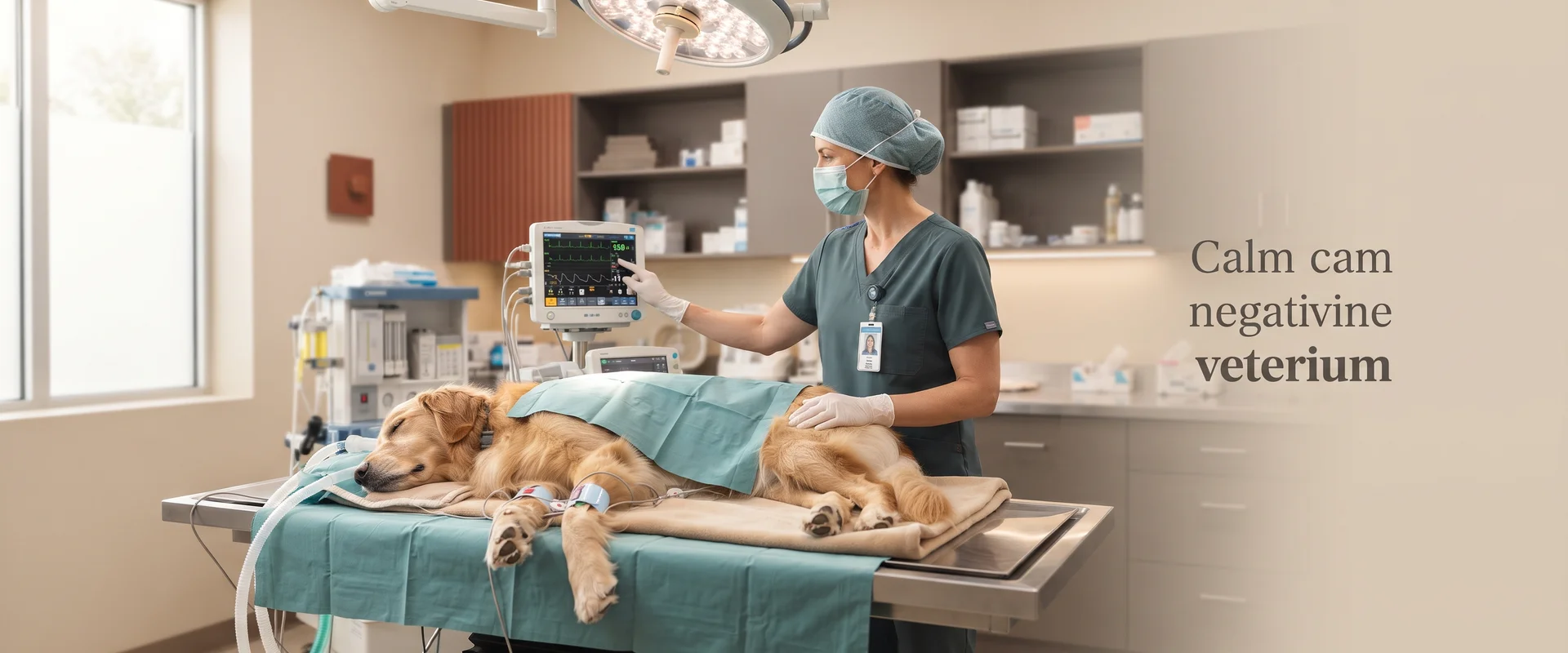
Throughout, continuous monitoring tracks blood oxygen, ECG rhythm, blood pressure, and core temperature. Septic dogs are prone to hypotension under anesthesia, and blood pressure is the number that matters most.
Recovery After Pyometra Surgery
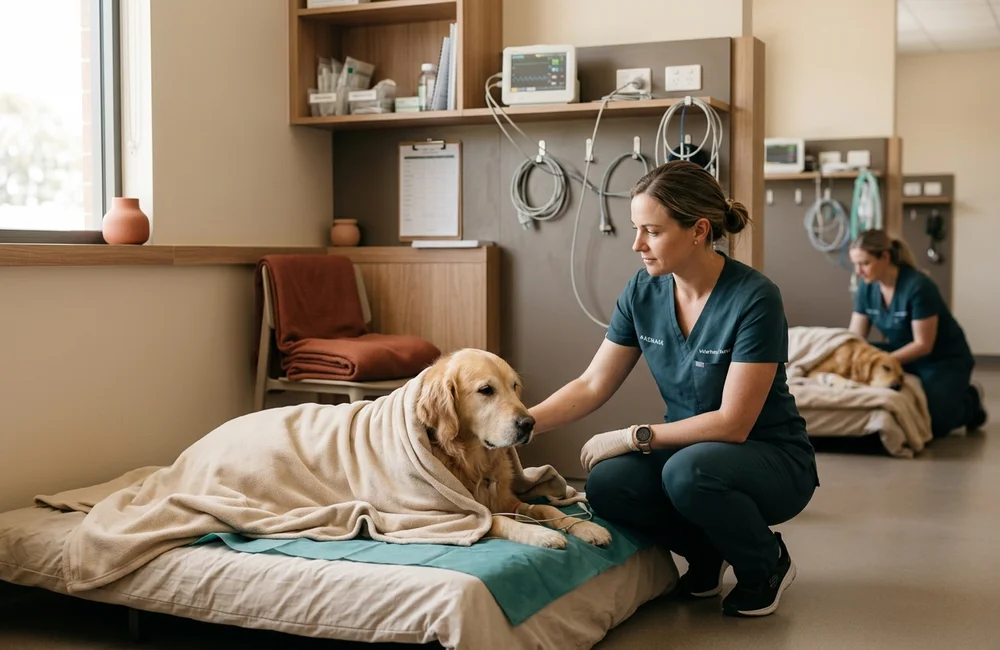
The improvement is usually dramatic. Removing the source of infection often turns a flat, unwell dog into a visibly better one within 24 hours. She goes home with a full antibiotic course, pain relief, and instructions to restrict activity for two weeks.
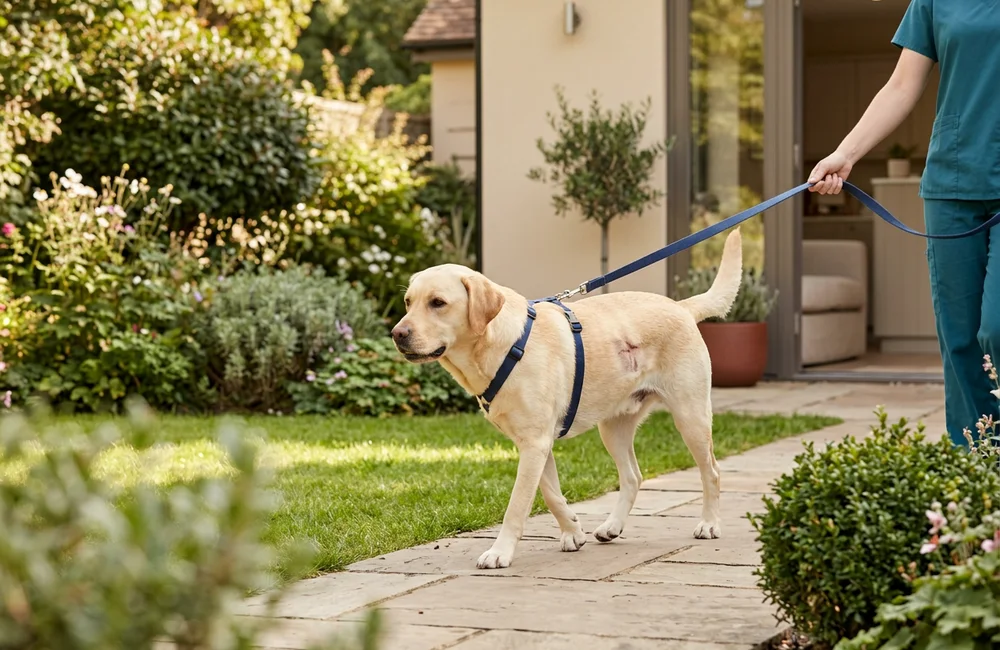
Finish the antibiotics even after she looks well, keep the incision dry and checked daily, and bring her to the complimentary 10-to-14 day healing evaluation. Because the uterus and ovaries are gone, pyometra cannot happen again.
How Brandywine Valley Dog Surgery Compares
| Feature | Corporate ER Hospital | Brandywine Valley Dog Surgery |
|---|---|---|
| Pyometra surgery cost | $2,500 - $4,000+ | From $1,100 (2026 pricing) |
| Scheduling | Walk-in with long waits | Same or next day booking |
| Pre-anesthetic bloodwork | Often billed separately | Included (PCV/TP, BUN/creatinine) |
| Post-op follow-up | Separate office visit fee | Complimentary healing evaluation |
| Post-op support | Business-hours callbacks | 24/7 recovery text line |
Why Spaying Is the Best Prevention
Spaying a female dog you do not intend to breed from removes the risk entirely. Dog owners across Brandywine Hundred, Hockessin, and Greenville choose Brandywine Valley Dog Surgery’s Premium Spay and Neuter packages, which include pre-anesthetic blood panels, continuous monitoring, multi-modal pain control, and cosmetic subcuticular closures with no external staples - from $245 (2026 pricing). That is a fraction of what an emergency pyometra costs, financially and otherwise.
Price Ledger
How much does pyometra surgery cost?
Pyometra pricing depends on how sick your dog is on arrival. A stable open pyometra sits at the bottom of the range; a septic closed pyometra needs more support.
Starting From
$1,100
starting
Included in the price
- Pre-anesthetic PCV/TP and BUN/creatinine screening
- IV fluid resuscitation and broad-spectrum antibiotic support
- Emergency ovariohysterectomy with uterine stump ligation
- Sterile abdominal lavage where indicated
- Continuous multi-parameter vital sign monitoring
- Home-recovery medications, discharge checklist, and healing evaluation
Quoted separately
- Diagnostic imaging (radiographs or ultrasound) where required
- Extended inpatient support for severely septic cases
- Additional laboratory panels beyond the pre-anesthetic screen
Nothing gets added to your bill without your approval first. Ask for the written estimate before you commit.
We accept cash, credit card, and CareCredit financing. If cost is the barrier to treating your dog, tell us when you request a booking.
Why Us For This Surgery
Why owners choose us for pyometra surgery
01
Treated as the emergency it is
Pyometra does not wait for a routine slot. These cases are scheduled same or next day, because a closed pyometra can rupture.
02
Stabilisation before the scalpel
Anesthetising a septic, dehydrated dog without correcting fluids and electrolytes first is where pyometra cases go wrong. We do not skip that step.
03
Around $1,100 rather than an ER quote
Corporate emergency hospitals price this as a crisis. We price it as surgery, at 30-40% less, with the same antibiotic and monitoring standards.
04
Honest about the risk
Pyometra is serious and we will tell you plainly where your dog sits on that spectrum, before you consent, rather than after.
Procedure Ledger
How pyometra surgery works
What happens from your first booking request through to your dog's follow-up evaluation.
Step 01
Call immediately
Pyometra is diagnosed on history and examination and confirmed with bloodwork and imaging. Once suspected, it becomes the priority case of the day.
Step 02
Stabilise before anesthesia
IV fluids and broad-spectrum antibiotics start before surgery. Packed cell volume, total protein, and kidney values tell us how sick your dog actually is.
Step 03
Emergency ovariohysterectomy
The infected uterus and both ovaries are removed intact where possible, with careful uterine stump ligation to prevent leakage into the abdomen.
Step 04
Recovery and antibiotic course
Most dogs improve dramatically within 24 hours. A full antibiotic course, restricted activity, and the follow-up evaluation complete the recovery.
Need pyometra surgery for your dog?
Send us the details and we will confirm honest pricing and the soonest surgical date, usually within days.
Deeper Reading
Pyometra Surgery guides
Plain-language answers to the questions owners ask before booking this surgery.
cost
Dog Pyometra Surgery Cost Near Newark, DE
Pyometra surgery pricing for the Northern DE corridor, emergency add-ons, and how a GP network saves you money versus ER hospitals.
Read guidedefinition
Open vs Closed Pyometra: Why Emergency Surgery Is Urgent
The difference between open and closed pyometra in dogs, why closed cases are more dangerous, and why surgery beats medical management.
Read guideconcern
Recognizing Pyometra Symptoms in Intact Female Dogs
Discharge, lethargy, excessive drinking after a heat cycle: the pyometra symptoms every owner of an intact female dog must know.
Read guideFrom the Practice Journal
Real pyometra surgery cases and safety standards
Case write-ups and practice updates covering what owners most often want reassurance about.
Owner Ledger
What owners say about our pyometra surgery
Rated 4.9 across 150+ reviews from dog owners across the Brandywine Valley.
Review 01
“Pyometra is terrifying. They explained everything calmly, got our girl into emergency surgery fast, and the 24/7 recovery text line was a lifesaver those first nights.”
James T.
Hockessin, DE
Review 02
“Our girl had pyometra and we had no idea how serious it was. They took the call, explained it calmly, and she was in surgery the next morning.”
Tanya B.
Bear, DE
Review 03
“We were quoted almost double at an emergency hospital. Same antibiotics, same monitoring, and our dog was home and eating within two days.”
Nadia F.
Chadds Ford, PA
Service FAQ
Pyometra Surgery questions
01What is pyometra and why is it an emergency?
Pyometra is a bacterial infection of the uterus that fills it with pus. It develops in unspayed female dogs, typically two to eight weeks after a heat cycle, when hormonal changes make the uterine lining hospitable to bacteria. It is an emergency because the infection releases toxins into the bloodstream, causing sepsis and endotoxemia, and because a distended uterus can rupture and spill infected material into the abdomen. Untreated pyometra is frequently fatal within days.
02What are the warning signs of pyometra?
The classic picture is a female dog who finished a heat cycle in the last two months and is now lethargic, off her food, drinking and urinating far more than usual, and possibly vomiting. Open pyometra also produces a foul-smelling discharge from the vulva. Closed pyometra produces no discharge at all, which is why it is more dangerous. The pus has nowhere to go, and owners have no obvious sign to act on.
03How much does pyometra surgery cost in Wilmington?
From around $1,100 (2026 pricing), including pre-anesthetic blood screening, IV fluids, broad-spectrum antibiotics, the ovariohysterectomy itself, continuous monitoring, and post-operative medications. Corporate emergency hospitals in the Wilmington and Newark corridors routinely quote considerably more for the same procedure. Dogs that arrive severely septic need more intensive support and cost more, and we will tell you that up front rather than after. CareCredit financing is accepted.
04Can pyometra be treated without surgery?
Medical management with prostaglandins exists, but it is unreliable, slow, only appropriate for a subset of open pyometra cases in otherwise stable dogs, and carries a high recurrence rate at the next heat cycle. Surgery is the standard of care because it removes the source of infection completely and permanently.
05What is the difference between open and closed pyometra?
In open pyometra the cervix is open, so infected material drains out through the vulva. That discharge is unpleasant but it is a warning sign and it relieves pressure. In closed pyometra the cervix is sealed, so the pus accumulates under increasing pressure with no external sign. Closed cases become critically ill faster and carry a real risk of uterine rupture.
06Is my dog too sick for surgery?
Sick is exactly why surgery is needed. The infection will not resolve while the uterus remains. What changes is the preparation. We stabilise with IV fluid resuscitation and antibiotics before induction, monitor continuously throughout, and adjust the anesthetic protocol to the packed cell volume and kidney values we measure. Waiting until a septic dog is stronger is not an option, because she will not get stronger.
07How long is recovery after pyometra surgery?
Most dogs look dramatically better within 24 hours of the source of infection being removed. Full recovery takes about two weeks with restricted activity while the abdominal incision heals, plus a complete course of antibiotics. The complimentary healing evaluation at 10 to 14 days checks the incision and confirms she is back to normal.
08Will this happen again?
No. An ovariohysterectomy removes both ovaries and the uterus, so pyometra cannot recur. This is also why spaying a female dog you do not intend to breed from is the single most effective prevention there is.
Still have questions about your dog?
Send us the details and we will come back with a straight answer, an honest price, and the soonest surgical date we can offer.
Request Surgery BookingCross Reference
Related surgeries
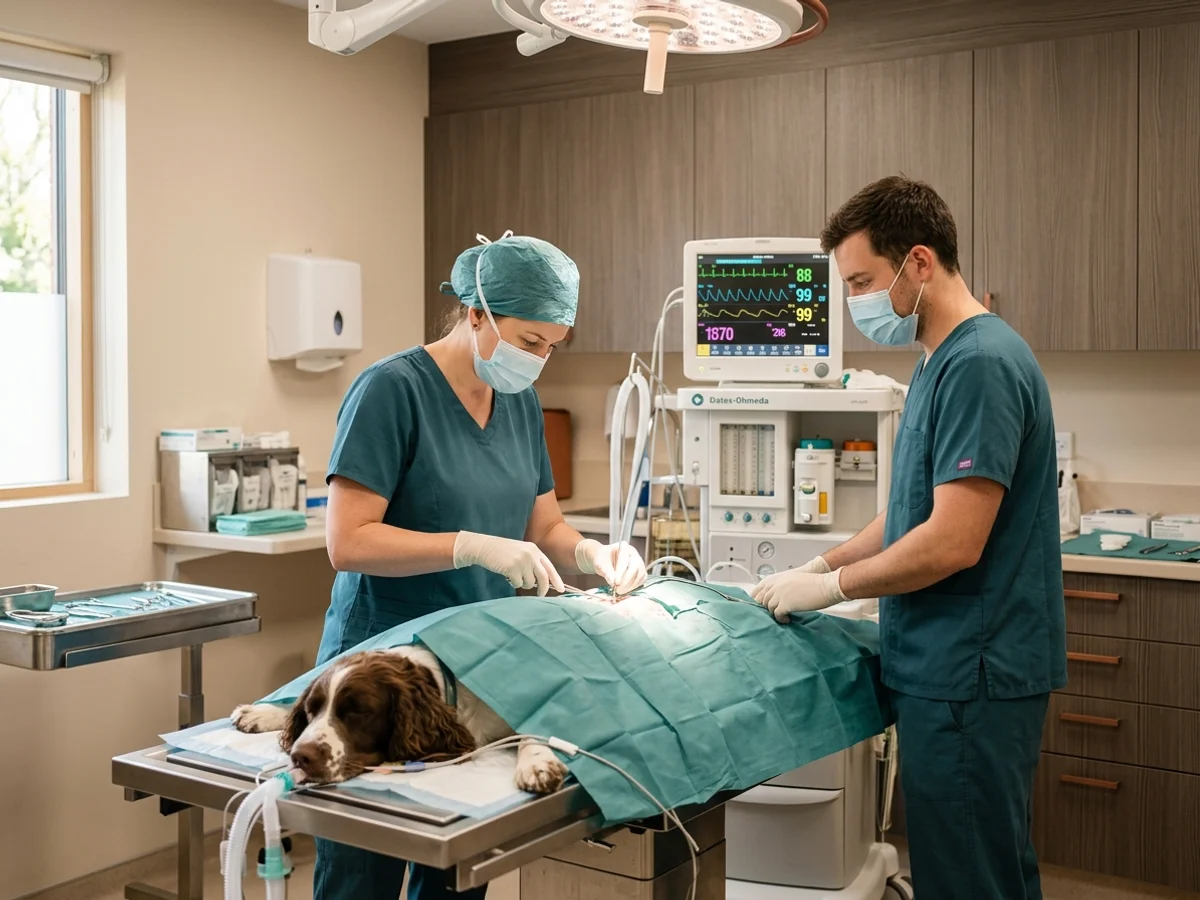
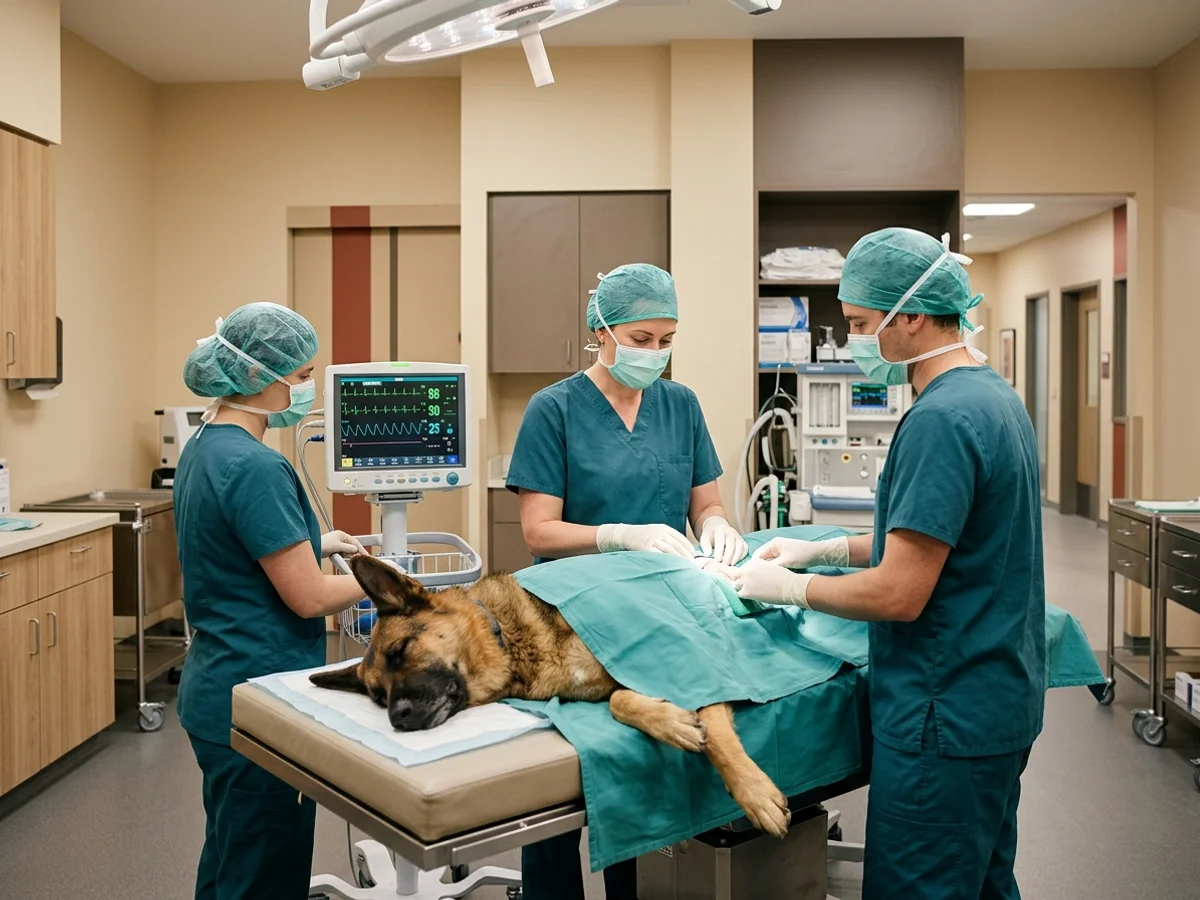
Urgent surgeries scheduled within days
Ready to book pyometra surgery?
Honest pricing, full anesthetic monitoring, and a surgical date in days. Serving Wilmington DE, Newtown Square PA, and Newark DE.
- 30-40% below referral hospitals
- Scheduled in days, not weeks
- Full monitoring on every case