Same disease, two very different presentations
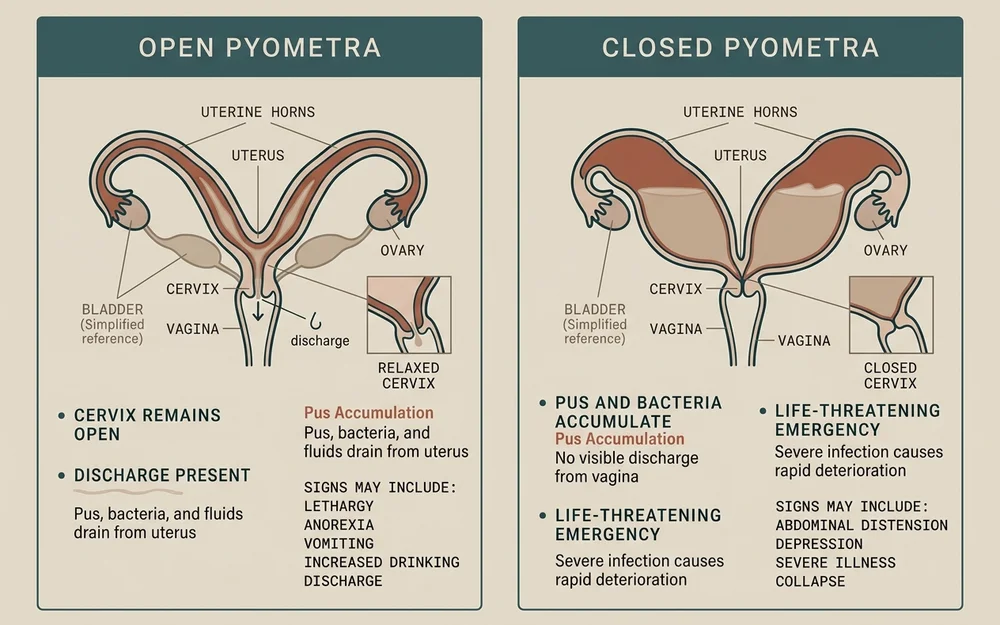
Pyometra is a bacterial infection that fills the uterus with pus in unspayed female dogs, usually two to eight weeks after a season. Whether it presents as “open” or “closed” depends on one anatomical detail: the cervix.
That detail changes how the disease looks, how quickly it becomes critical, and how likely an owner is to recognise it in time. Our pyometra surgery service sees both, and the closed cases arrive later and sicker.
Open pyometra
The cervix remains open, so infected material drains out through the vulva. Owners notice a foul-smelling discharge, sometimes bloody, sometimes creamy, and usually on bedding before anywhere else.
It is unpleasant and it is also genuinely helpful. The discharge is an unmistakable warning sign, and it relieves some of the pressure building inside the uterus. Open cases are typically presented earlier and are usually less critically ill on arrival.
They are still an emergency. Open pyometra progresses to sepsis exactly like the closed form; it just gives you more warning.
Closed pyometra
The cervix is sealed. Nothing drains, nothing smells, and there is nothing on the bedding.
The pus continues to accumulate inside a uterus that has no way to empty. Pressure rises, the uterine wall thins and stretches, and the risk of rupture becomes real. If the uterus ruptures, infected material spills into the abdominal cavity and causes peritonitis, which is a substantially worse situation than the pyometra itself.
Meanwhile the dog’s only signs are systemic: lethargy, going off her food, drinking and urinating more, sometimes vomiting. These are non-specific, they are easy to attribute to something minor, and owners understandably wait a day or two.
The absence of discharge is not reassurance. It is a reason to look harder.
Why we do not attempt medical management
Prostaglandin treatment exists. It works by causing uterine contraction to expel the infected contents, and it is occasionally used in valuable breeding females with open pyometra who are otherwise stable.
The reasons we recommend surgery instead in almost every case:
- It is unreliable — it fails often enough that time is lost while the dog deteriorates
- It is slow, taking days during which the infection continues
- It is inappropriate for closed pyometra, where forcing contraction against a sealed cervix risks rupture
- It has a high recurrence rate at the next season, because the underlying endometrial hyperplasia remains
- It carries significant side effects including vomiting, restlessness, and abdominal pain
Surgery removes the source of infection completely and permanently, in one procedure, with an immediate improvement in most dogs.
What the surgery involves
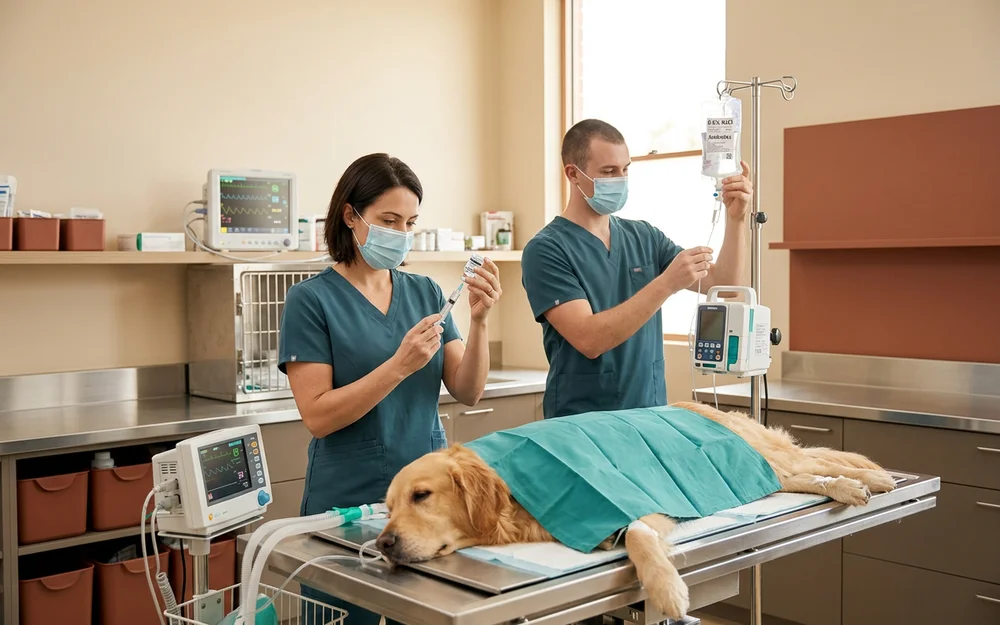
Stabilisation first: intravenous fluid resuscitation and broad-spectrum antibiotics, with bloodwork to establish packed cell volume, total protein, and kidney values before anesthesia.
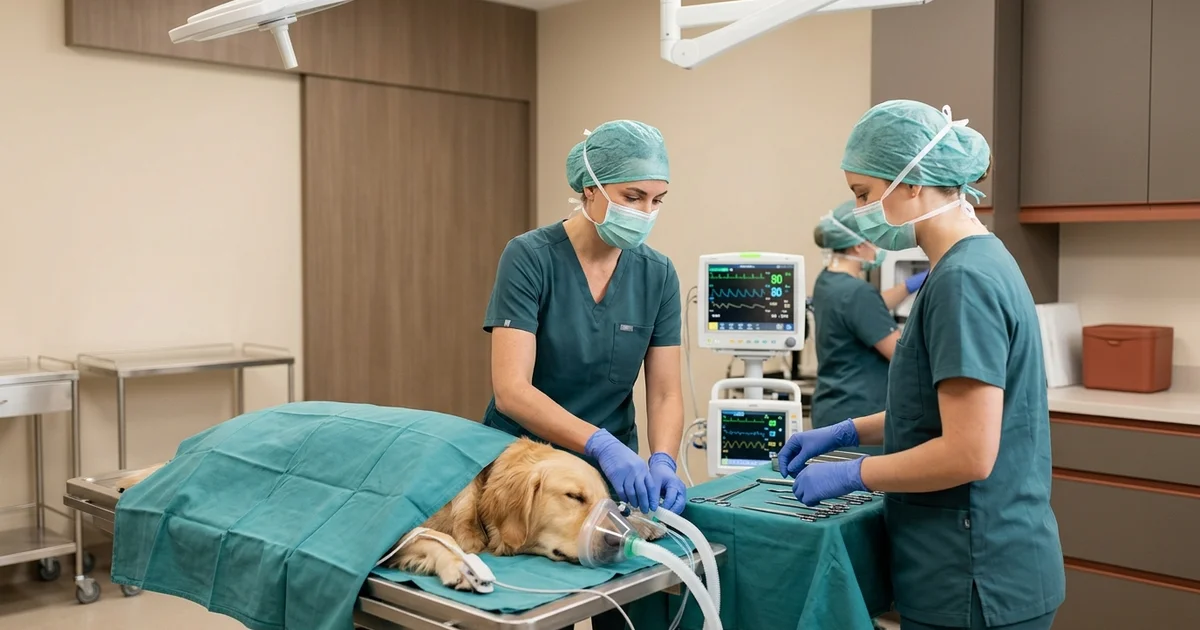
Then an ovariohysterectomy — removal of both ovaries and the entire infected uterus. The difference from a routine spay is that the uterus is heavy, fragile, and full of infected material, so it has to be lifted and removed without rupturing. Uterine stump ligation is done carefully, because a leaking stump is the main post-operative complication in these cases. Where any contamination has occurred, the abdomen is lavaged before closure.
Throughout, continuous monitoring tracks blood oxygen, ECG, blood pressure, and temperature. Septic dogs are prone to hypotension under anesthesia, and blood pressure is the number that matters most.
Afterwards
Most dogs look dramatically better within 24 hours of the infected uterus being removed. Recovery takes about two weeks with restricted activity, plus a full course of antibiotics.
Pyometra cannot recur, because the uterus is gone. Surgery starts at $1,100 through our network, and urgent cases across the Brandywine Valley are scheduled same or next day.