Wilmington, DE & the Brandywine Valley
Dog Broken Leg Surgery in Wilmington, DE
Alignment and stabilization of traumatic canine bone fractures using plating, pinning, or external fixation.
- 30-40% below referral hospitals
- Scheduled within days
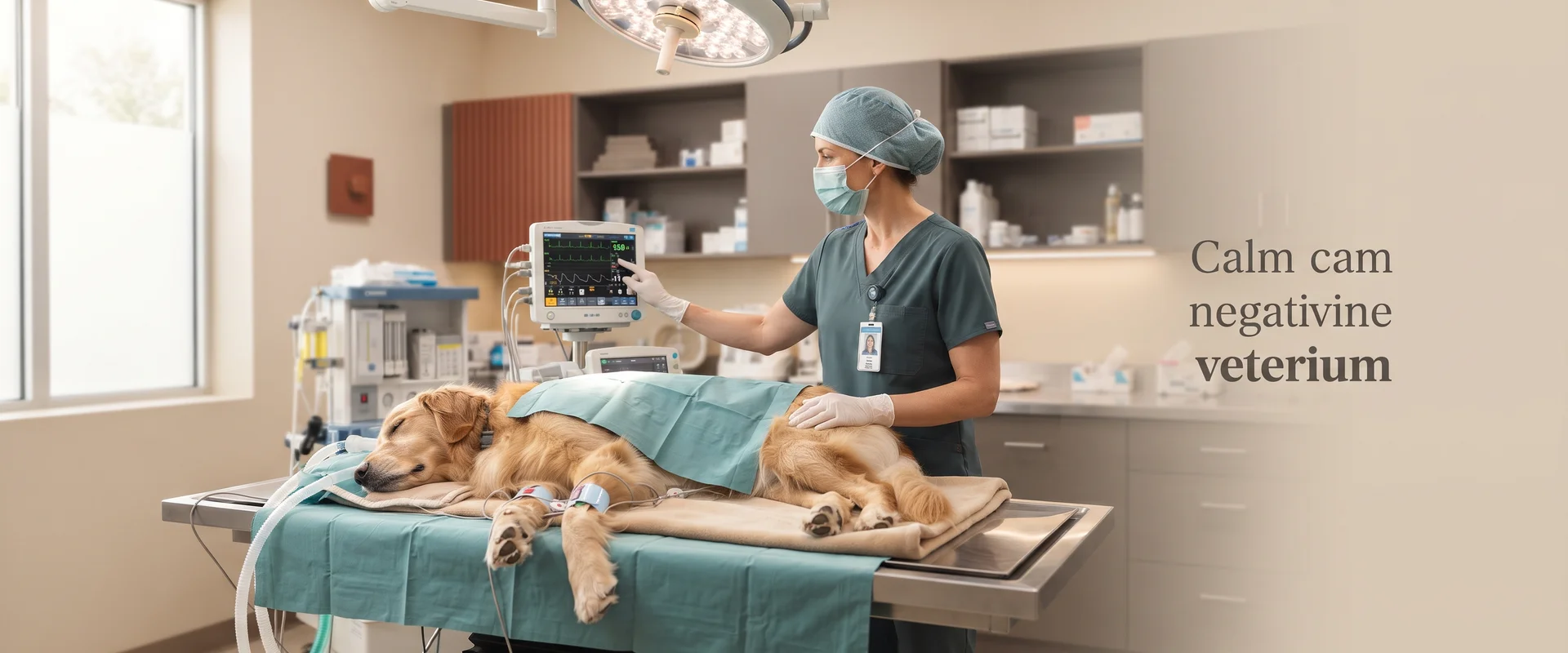
- Full anesthetic monitoring
Starting Price
$1,800
Credential 01
4.9★ Google (150+ reviews)
Credential 02
Surgery Within Days
Credential 03
30-40% Below Referral Hospitals
Credential 04
Pre-Anesthetic Bloodwork & Full Monitoring
What traumatic fracture repair covers
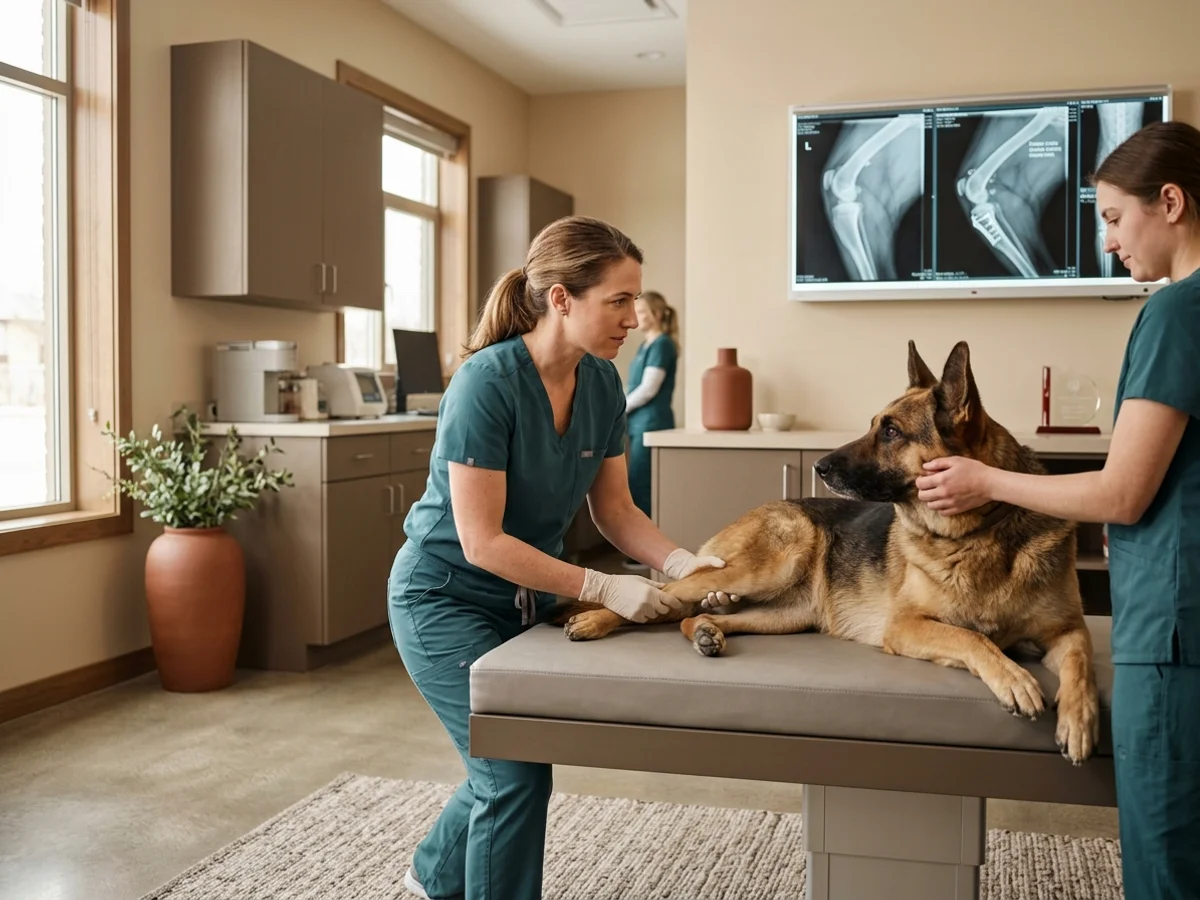
Brandywine Valley Dog Surgery provides surgical alignment and stabilization of broken bones in dogs after trauma - a fall, a road accident, a bad landing, or a limb caught somewhere it should not have been. Our Wilmington, DE surgical network has completed over 2,000 canine surgeries, with traumatic fracture repair starting from $1,800 (2026 pricing) - consistently 30-40% below corporate referral hospitals.
This service is deliberately scoped. We repair traumatic fractures. We do not perform elective orthopedic surgery such as TPLO, cruciate repair, or patellar luxation correction. Being clear about that is more useful to you than pretending otherwise.
A dog hit by a car goes to an emergency hospital first
Chest injury, abdominal bleeding, and shock kill in the first hours. The leg is visible and frightening, but it is rarely the priority. Get your dog stabilized, then contact Brandywine Valley Dog Surgery about the repair.
Does your dog’s fracture need surgery?
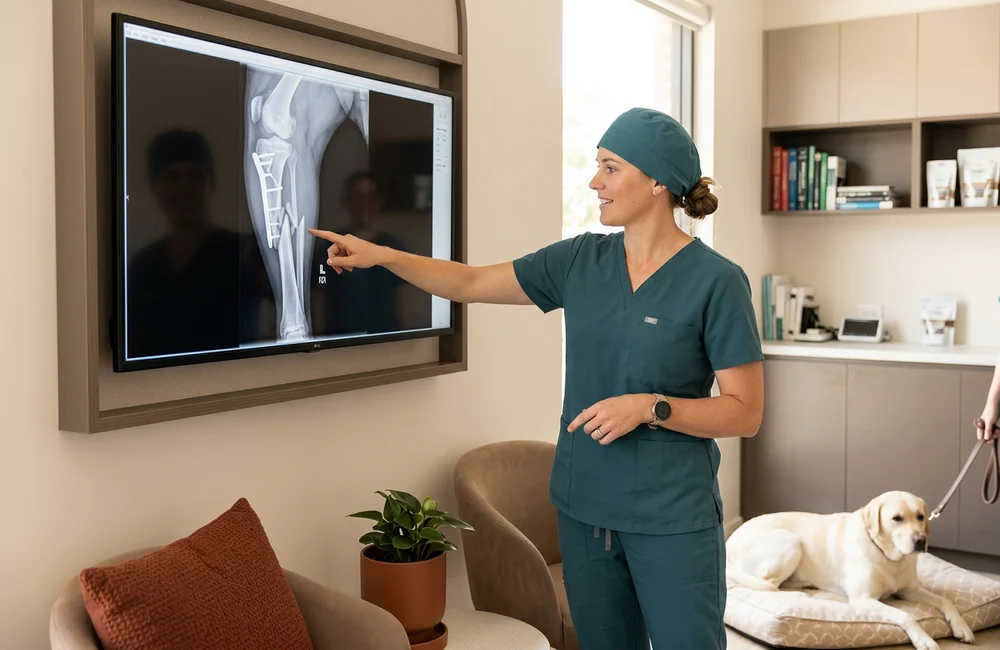
Radiographs answer this, using orthogonal views - two images at right angles - because a fracture that looks aligned from one direction is frequently displaced from the other.
Stable, non-displaced fractures in young dogs can sometimes heal in external coaptation, a Robert Jones bandage or a cast, with strict rest. Displaced fractures, comminuted fractures with multiple fragments, and fractures involving a joint surface need internal fixation to heal in the right position and preserve function.
Closed reduction realigns the bone ends without opening the fracture site, which preserves the surrounding blood supply. Open reduction exposes the site directly, which is necessary when fragments must be positioned individually.
Choosing the right fixation method
| Method | Best suited to | Key characteristic |
|---|---|---|
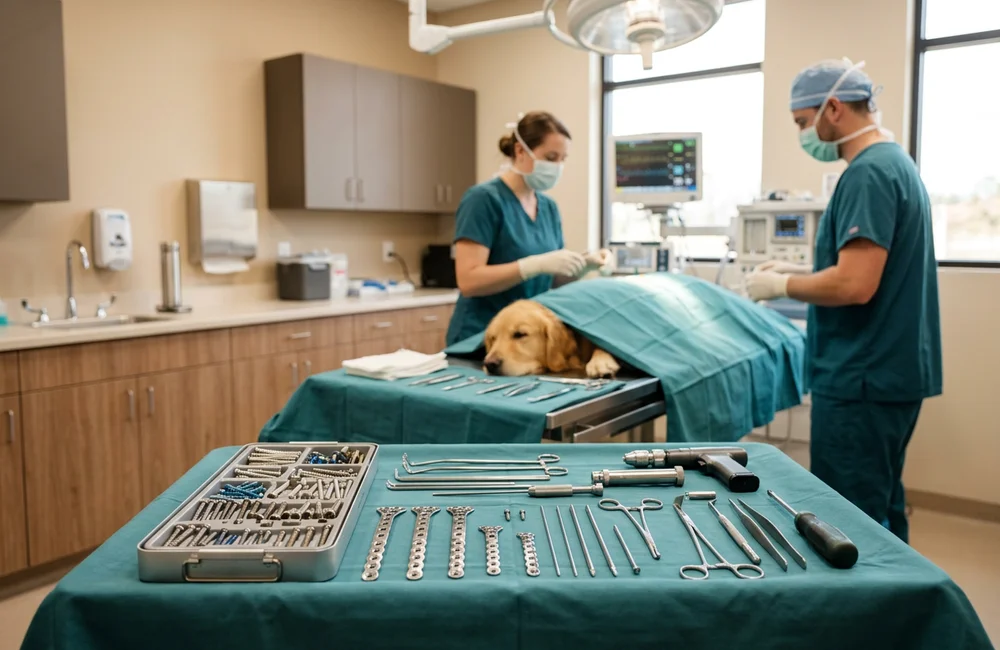
| Dynamic compression plating (DCP / LC-DCP) | Long-bone fractures under load | Rigid stability; stainless steel cortical screws compress the fragments together |
| Intramedullary (IM) pin | Transverse mid-shaft fractures | Resists bending well, rotation poorly - usually combined with other fixation |
| Kirschner wires (K-wires) | Small bones, fragments, young dogs | Fine wires used alone or to supplement a pin |
| External fixation | Open or contaminated fractures | Pins through the skin into bone, connected to an external frame - no implant left at the fracture site |
How canine bone healing works
Bone does not heal like skin. After the initial inflammatory phase, a soft cartilage bridge forms across the fracture, then mineralizes into hard callus formation, and finally remodels over months into normal bone architecture.
That sequence takes six to twelve weeks before the bone is reliably load-bearing, and it happens only if the fragments stay still. Movement at the fracture site is the primary cause of non-union - a fracture that simply fails to knit.
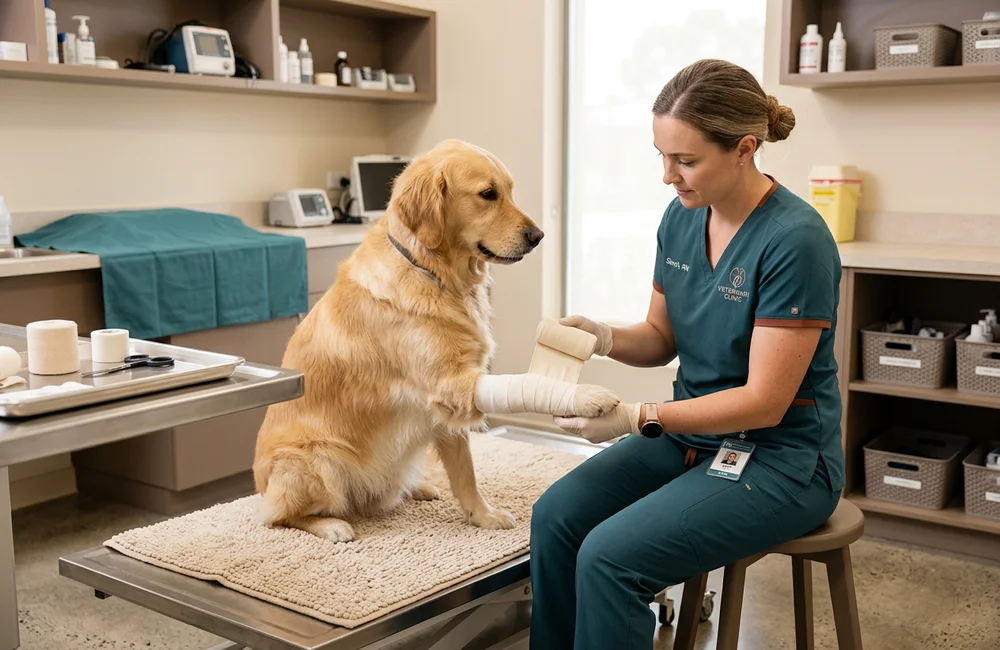
Recovery: the part owners underestimate
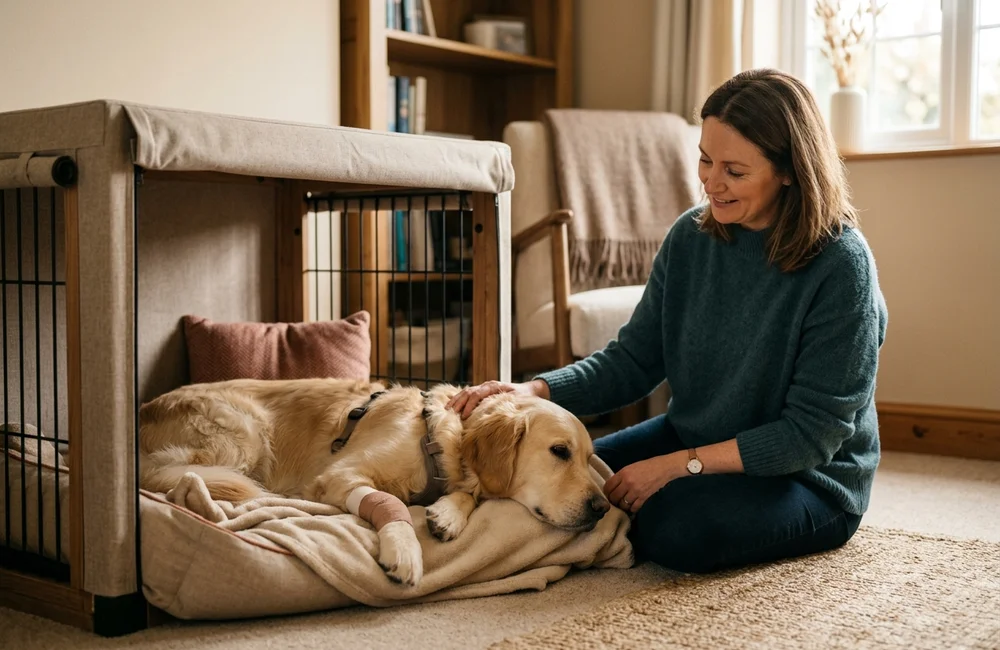
Non-union prevention is almost entirely about confinement. Crate or single-room rest, lead-only toilet breaks, no stairs, no furniture, no off-lead running. Dogs feel better long before their bones are healed, and a dog that feels better will happily do something that undoes eight weeks of progress.
Orthogonal recheck radiographs at set intervals show us where callus formation has reached. Restrictions come off when the images say so, not when your dog looks keen. It is a long few weeks, but it is what separates a leg that works normally for the next decade from one that does not. Our Wilmington surgical team follows every fracture case through full healing, whether your dog lives in Brandywine Hundred, Hockessin, or across New Castle County.
How fracture repair pricing compares
| Feature | Typical referral hospital | Brandywine Valley Dog Surgery |
|---|---|---|
| Fracture repair starting price | $3,000+ | From $1,800 |
| Surgical scheduling | 4-6 week wait | Within days |
| Pre-anesthetic blood screening | Often billed separately | Included |
| Multi-parameter monitoring (SpO2, ECG, BP, temp) | Varies by facility | Standard on every case |
| Post-op recovery support | Office hours only | 24/7 text line |
| Follow-up healing evaluation | Separate charge | Complimentary 10-14 day evaluation |
Price Ledger
How much does fracture repair cost?
Fracture pricing is driven by the fracture pattern and the implants required. Simple single-bone fractures sit at the bottom of the range.
Starting From
$1,800
starting (traumatic fractures only)
Included in the price
- Pre-anesthetic blood screening
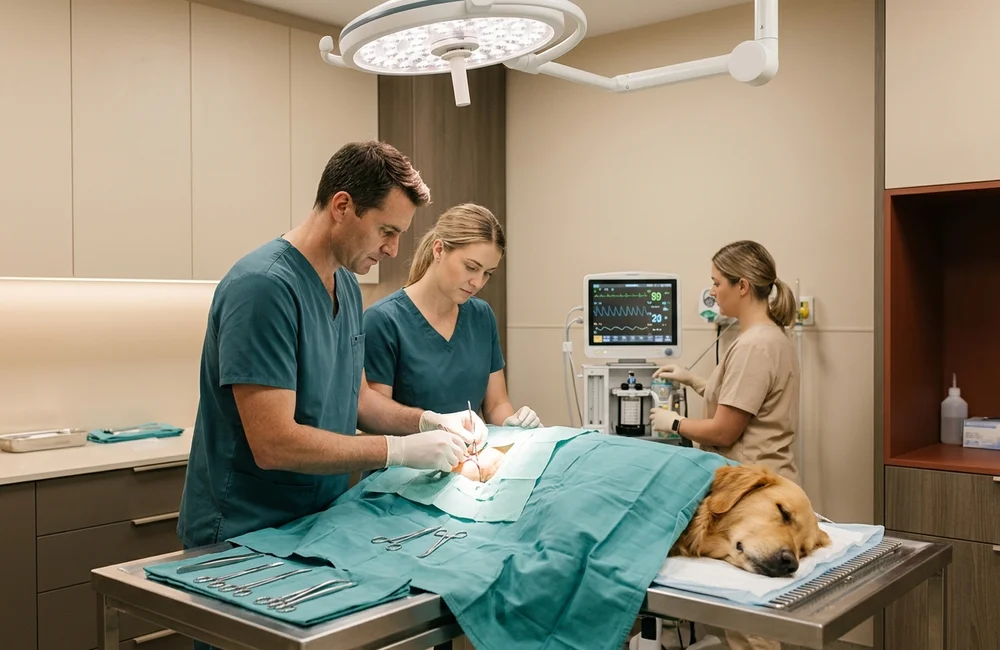
- Anesthesia with continuous multi-parameter monitoring
- Open or closed reduction and internal fixation
- Implants: plate, screws, IM pin, or K-wires as required
- Immediate post-operative radiographs
- Home-recovery medications, discharge checklist, and healing evaluation
Quoted separately
- Initial diagnostic radiographs
- External fixator frames for complex or open fractures
- Serial recheck radiographs through the healing period
Nothing gets added to your bill without your approval first. Ask for the written estimate before you commit.
We accept cash, credit card, and CareCredit financing. If cost is the barrier to treating your dog, tell us when you request a booking.
Why Us For This Surgery
Why owners choose us for fracture repair
01
The fixation method matches the fracture
Plates, pins, K-wires, and external fixators each suit different patterns. We choose the most stable option for your dog rather than the one we prefer.
02
Recheck radiographs are non-negotiable
Bone healing cannot be judged by how well a dog is walking. Orthogonal views confirm callus formation before we lift restrictions.
03
Honest about scope
We repair traumatic fractures. We do not perform TPLO, cruciate repair, or patellar luxation correction, and we will refer you rather than stretch.
04
From $1,800 against referral pricing
Orthopedic work in a corporate referral hospital carries a substantial premium. The implants and the technique are the same; the invoice is not.
Procedure Ledger
How fracture repair works
What happens from your first booking request through to your dog's follow-up evaluation.
Step 01
Radiographs first
Orthogonal views show the fracture pattern, whether it is displaced, whether a joint is involved, and how many fragments there are. Everything else follows from that.
Step 02
Stabilise and plan
A traumatic fracture rarely arrives alone. We check for chest and abdominal injury, control pain, and support the limb before planning fixation.
Step 03
Reduction and fixation
Open or closed reduction realigns the bone ends, then a plate, intramedullary pin, K-wires, or an external fixator holds them in position while they heal.
Step 04
Rest and recheck radiographs
Strict activity restriction for weeks, with orthogonal recheck radiographs to confirm callus formation before your dog returns to normal movement.
Need fracture repair for your dog?
Send us the details and we will confirm honest pricing and the soonest surgical date, usually within days.
Deeper Reading
Fracture Repair guides
Plain-language answers to the questions owners ask before booking this surgery.
qualifier
Does My Dog's Fracture Need Surgery?
When a dog's fracture needs surgical fixation vs a splint: displaced vs stable breaks, open vs closed reduction, and next steps.
Read guidecost
Dog Bone Fracture Surgery Cost in Wilmington, DE
Traumatic canine fracture repair pricing (from $1,800), implant and imaging factors, and GP-network savings in Wilmington DE.
Read guideprocess
Dog Broken Leg Surgery: Pinning, Plating, and Bone Healing
How canine fracture repair works: IM pins, plates, and K-wires, plus the bone-healing stages and recheck radiograph timeline.
Read guideFrom the Practice Journal
Real fracture repair cases and safety standards
Case write-ups and practice updates covering what owners most often want reassurance about.
Owner Ledger
What owners say about our fracture repair
Rated 4.9 across 150+ reviews from dog owners across the Brandywine Valley.
Review 01
“Our collie broke a foreleg on the farm road. Clear explanation of pin versus plate, a straight price, and recheck X-rays that showed exactly where healing was up to.”
Nathan D.
Chadds Ford, PA
Review 02
“The eight weeks of crate rest were harder on us than on the dog. They were patient with every worried phone call and she walks perfectly now.”
Simone V.
Glasgow, DE
Review 03
“Told us upfront they don't do knee surgery and pointed us elsewhere for the other dog. That honesty is exactly why we came back for this one.”
Peter L.
Wilmington, DE
Service FAQ
Fracture Repair questions
01How much does dog fracture surgery cost in Wilmington, DE?
From around $1,800. The figure includes pre-anesthetic blood screening, anesthesia with continuous monitoring, the reduction and fixation, the implants themselves, immediate post-operative radiographs, and medications. What drives it higher is complexity: comminuted fractures with multiple fragments, fractures involving a joint surface, open fractures requiring an external fixator, and cases needing serial recheck radiographs over a longer healing period.
02Does every dog fracture need surgery?
No. Stable, non-displaced fractures (particularly in young dogs with strong healing potential) can heal in external coaptation such as a Robert Jones bandage or a cast, with strict rest. Surgery becomes necessary when the fracture is displaced, when it is comminuted into multiple fragments, when it involves a joint surface, or when the bone will not stay aligned in a cast. Radiographs make that decision, not guesswork.
03Plate, pin, or external fixator: which does my dog need?
It depends on the bone and the fracture pattern. Dynamic compression plating (DCP or LC-DCP) gives rigid stability and is well suited to long-bone fractures under load. An intramedullary pin runs down the marrow cavity and resists bending but not rotation, so it is often combined with K-wires or a cerclage. External fixation places pins through the skin into the bone connected to an external frame, which is valuable for open or heavily contaminated fractures where implanting hardware at the site carries infection risk.
04How long does a dog's fracture take to heal?
Typically six to twelve weeks. Young dogs heal at the fast end, older dogs at the slow end. Healing progresses through inflammation, soft callus, hard callus formation, and finally remodelling. We confirm progress with orthogonal recheck radiographs rather than by how well your dog appears to be walking, because dogs will happily bear weight on a bone that is nowhere near healed.
05Will my dog walk normally again?
Most traumatic fractures that are repaired promptly and rested properly heal to full function. The two biggest predictors of a poor result are delay in getting the bone stabilized and activity too early during healing. Fractures involving a joint surface carry a higher risk of later arthritis in that joint, and we will tell you if your dog's fracture falls into that category.
06What does recovery actually involve at home?
Strict confinement, and considerably more of it than most owners expect. Crate or small-room rest, lead-only toilet breaks, no stairs, no jumping onto furniture, and no off-lead running until we clear it on radiographs. Non-union, a fracture that fails to knit, is most often caused by movement at the fracture site, which is exactly what activity restriction prevents.
07Do you perform TPLO or cruciate surgery?
No. Our orthopedic scope is strictly traumatic bone fracture repair. We do not perform elective orthopedic procedures such as TPLO, extracapsular cruciate repair, or patellar luxation correction. If that is what your dog needs, we will tell you plainly and point you toward a surgeon who does that work regularly.
08My dog was hit by a car: what should I do first?
Go to your nearest emergency veterinary hospital immediately. A dog that has been hit by a car needs assessment for chest and abdominal injury, internal bleeding, and shock before anyone thinks about the leg. Fractures are visible and alarming, but they are rarely the thing that kills a dog in the first hours. Once your dog is stable, contact us about the repair.
Still have questions about your dog?
Send us the details and we will come back with a straight answer, an honest price, and the soonest surgical date we can offer.
Request Surgery Booking
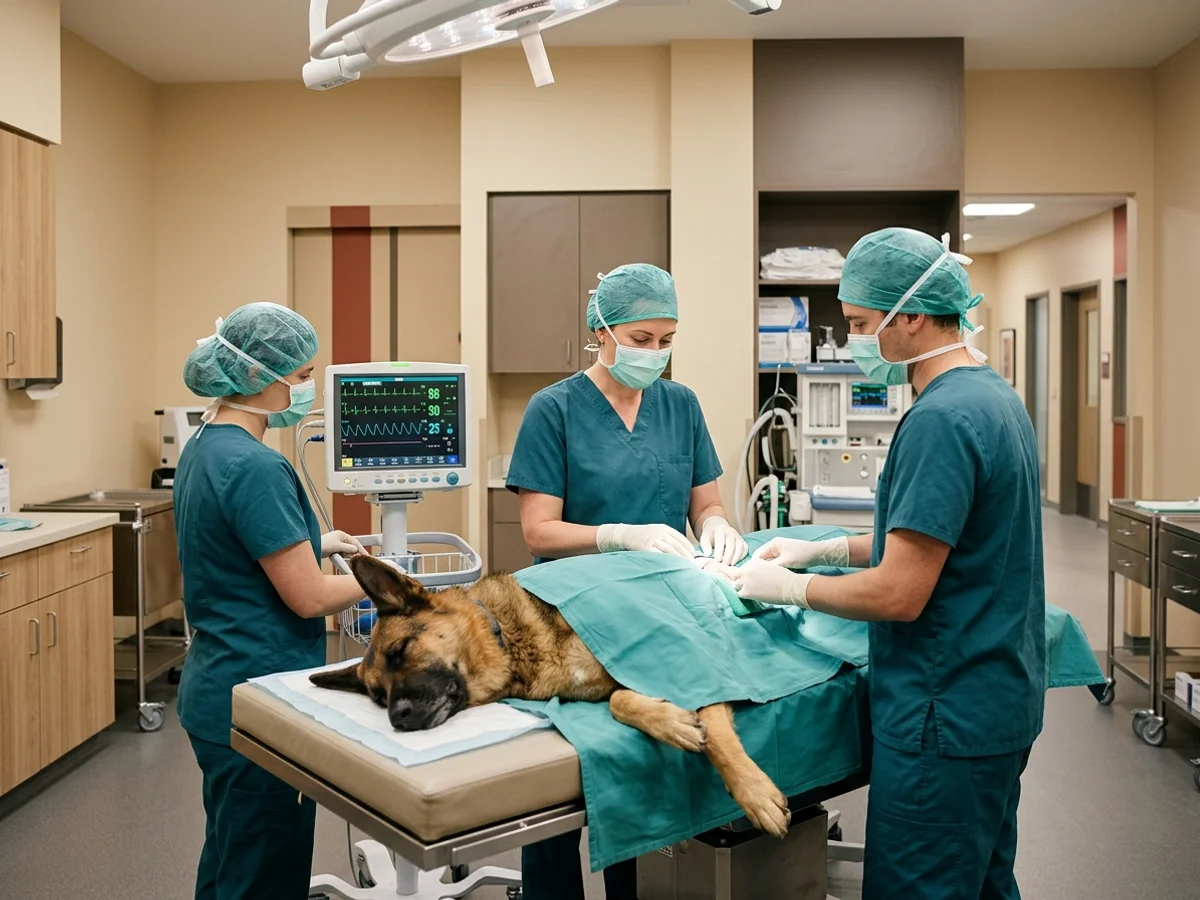
Urgent surgeries scheduled within days
Ready to book fracture repair?
Honest pricing, full anesthetic monitoring, and a surgical date in days. Serving Wilmington DE, Newtown Square PA, and Newark DE.
- 30-40% below referral hospitals
- Scheduled in days, not weeks
- Full monitoring on every case