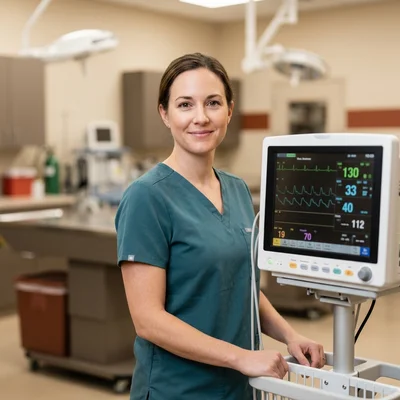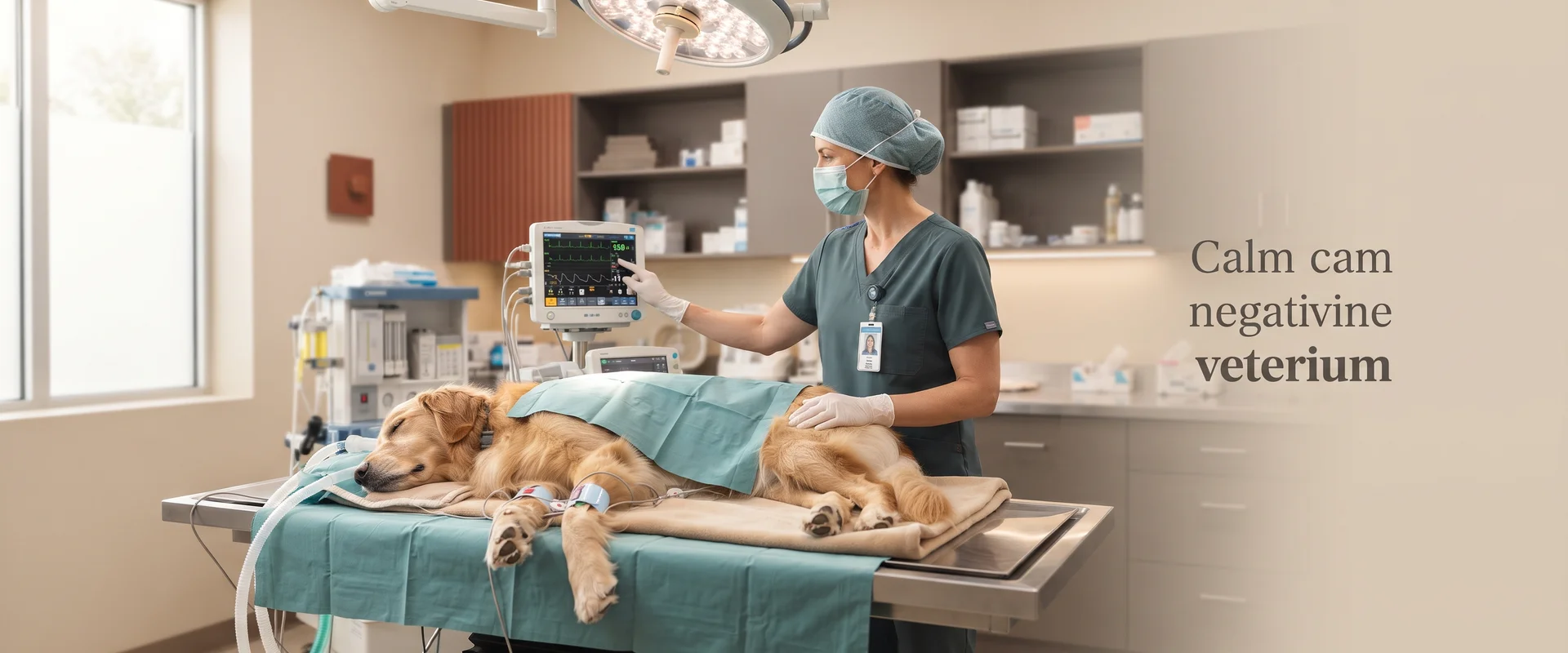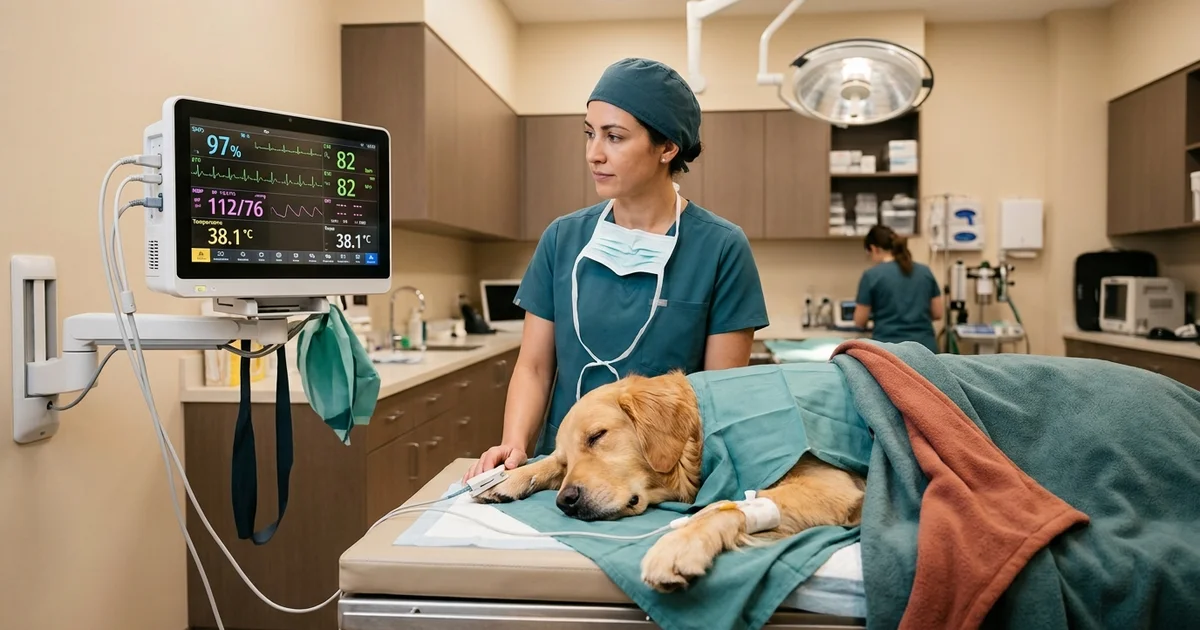
We are confirming a standard that has quietly been in place across our surgical network and is now formally documented for every practice we work with: every canine surgery booked through Brandywine Valley Dog Surgery includes comprehensive pre-anesthetic blood screening and continuous multi-parameter vital sign monitoring.
Not as an upgrade. Not as an optional line on the estimate. On every procedure, from a $450 lump removal to a $1,500 splenectomy.
What “multi-parameter” actually means
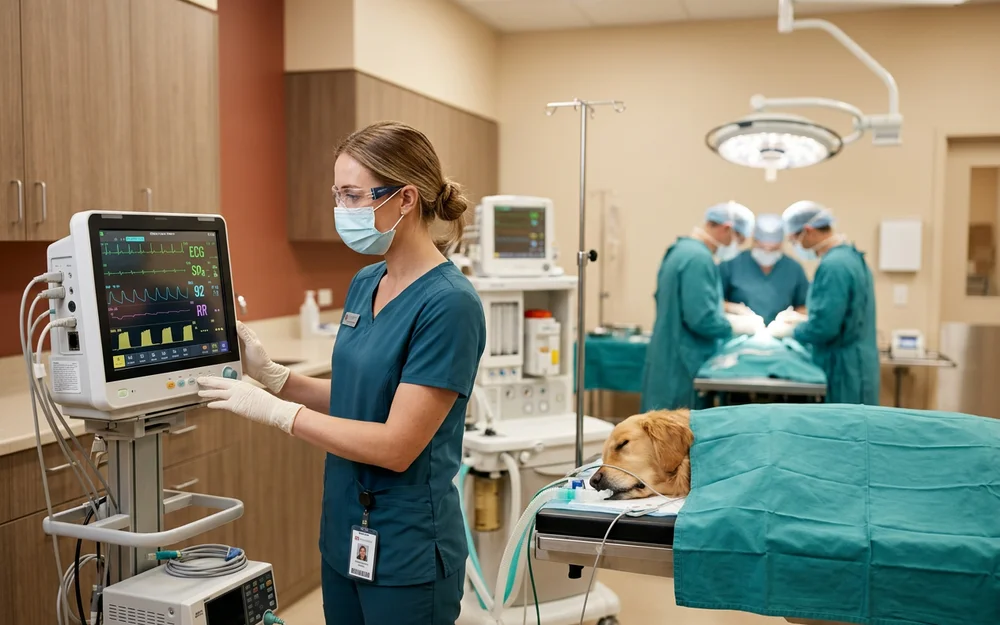
Four things are tracked continuously from induction through to recovery:
Blood oxygen saturation (SpO2) shows how well oxygen is reaching the tissues. A falling saturation is the earliest warning that ventilation needs adjusting, and it appears well before anything visible changes.
ECG rhythm matters more in some procedures than others. Splenic cases in particular are associated with ventricular premature contractions, which can appear during surgery and in the 24 to 48 hours afterwards. Most are self-limiting, some need treatment, and none can be treated if nobody is watching.
Non-invasive blood pressure (NIBP) is the parameter that most often prompts an intervention. Anesthesia lowers blood pressure, and prolonged hypotension is what puts kidneys at risk in older patients. Measuring it means we can correct it with fluid rate or drug adjustment.
Core body temperature. Dogs lose heat quickly under anesthesia, especially small dogs and dogs having abdominal surgery with an open body cavity. Hypothermia slows drug metabolism and prolongs recovery, so patients are actively warmed rather than passively covered.
Why the bloodwork comes first
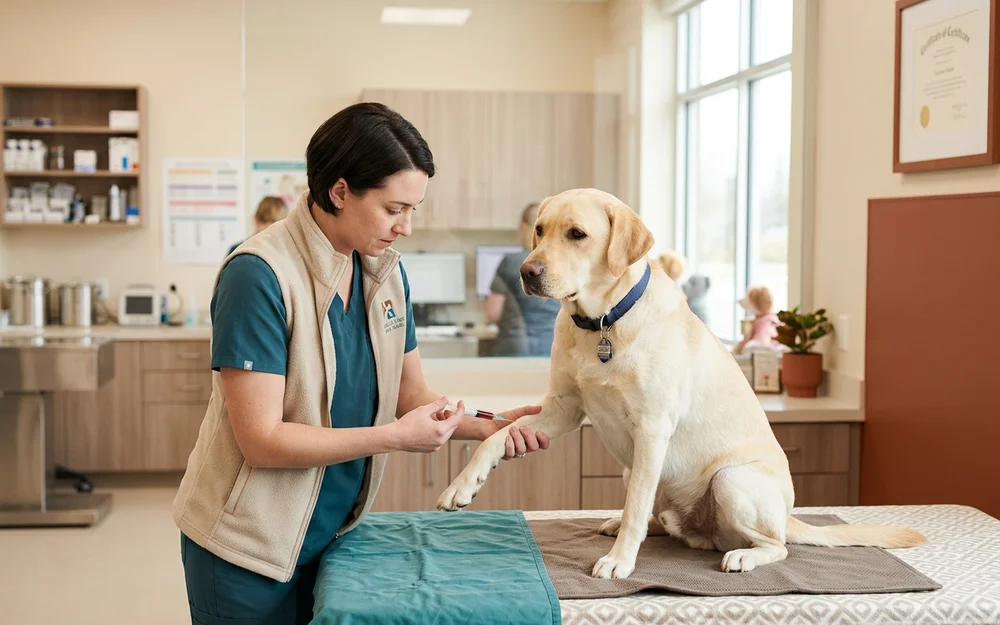
Pre-anesthetic blood screening happens before we confirm a surgical date, not on the morning of surgery. Liver and kidney values determine how anesthetic drugs are metabolised and cleared. Packed cell volume and total protein reveal anaemia or dehydration that changes the fluid plan.
This matters most in exactly the patients who need surgery most: senior dogs with lumps, older intact females with pyometra, and dogs with splenic disease. Building the anesthetic protocol around measured values rather than a standard template is not an optional refinement in those cases.
A safety standard is only a standard if it applies to the cheapest procedure on the list.
Nerve blocks and multi-modal pain control
Alongside monitoring, localized nerve blocks are used wherever the procedure allows — infraorbital and mandibular blocks for dental and oral surgery, local blocks for mass removal, line blocks for abdominal incisions. Why this matters for extractions specifically is covered in our guide on dental X-rays and nerve blocks.
The benefit is twofold. A properly numbed region means the general anesthetic can run lighter, which is safer. And it means your dog wakes without the pain surge that otherwise arrives as the anesthetic wears off. Multi-modal pain control continues at home with the medications supplied at discharge.
What has not changed
Pricing. This standard has always been included in our figures, and confirming it formally does not add anything to the cost of surgery in Wilmington, Newtown Square, or Newark. Mass removal still starts at $450, cystotomy at $950, pyometra surgery at $1,100, foreign body removal at $1,200, splenectomy at $1,500, and fracture repair at $1,800. The full breakdown sits in our dog surgery cost guide.
Recovery support has not changed either: home-recovery medications, a structured discharge checklist, a 24/7 post-op recovery text line, and a complimentary 10-to-14 day surgical healing evaluation on every case.
Want to know what is included in your dog’s quote? — See our mass and tumor removal service