We review hundreds of post-operative healing evaluations each year as a professional service team. The true success of a canine surgery is often decided in the living room, not just the operating suite. You know how challenging it is to balance a demanding schedule as a homeowner or business owner with a recovering pet.
Our team noticed a consistent pattern among the dogs that bounce back the fastest. These successful recoveries always involve owners who commit to a specific set of simple routines.
Let’s look at the actual data behind these healing timelines and explore the practical steps that make the biggest difference.
1. Feed bland food on schedule, not when the dog asks
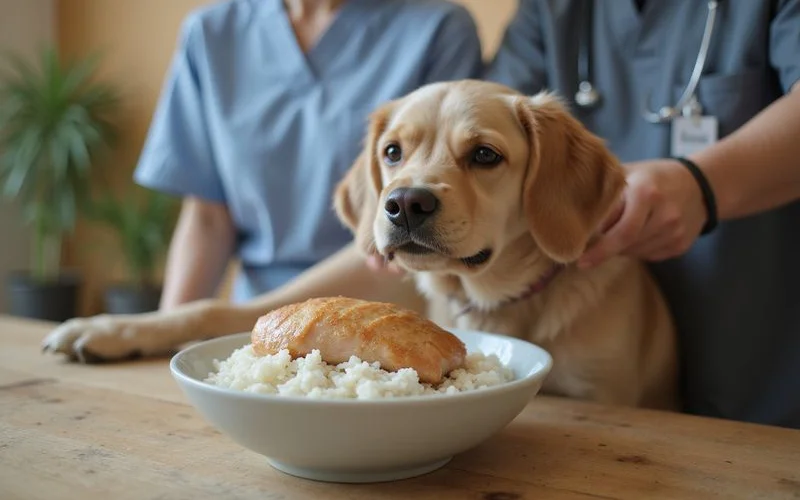
We always emphasize that a dog’s gastrointestinal tract slows down significantly after anesthesia. The first 24 to 48 hours post-op require small meals of bland food four times a day. Most dogs will act ravenously hungry long before their gut is truly ready to process a heavy meal.
Our clinical experience shows that giving in to those begging eyes often leads to severe digestive upset. A heavy meal can trigger vomiting, which places dangerous tension on fresh abdominal sutures. Sticking strictly to the schedule keeps the stomach calm while the body focuses on healing.
Recommended Bland Diet Options
- Boiled Chicken and White Rice: A standard 1:2 or 1:3 ratio provides easily digestible protein without fat.
- Prescription Recovery Diets: US veterinarians frequently recommend calorie-dense formulas like Purina Pro Plan EN or Hill’s Prescription Diet i/d.
- Boiled Sweet Potatoes: A great source of soluble fiber to help firm up loose stools after surgery.
- Plain Bone Broth: Adding low-sodium, onion-free broth encourages hydration without upsetting the stomach.
2. Use the e-collar every hour of every day
We see the most complications when owners bend the rules regarding the Elizabethan collar. A dog’s mouth is filled with bacteria, which can infect a fresh incision in mere minutes. Recent US veterinary data shows that surgical site infections still complicate up to 5.5% of clean procedures.
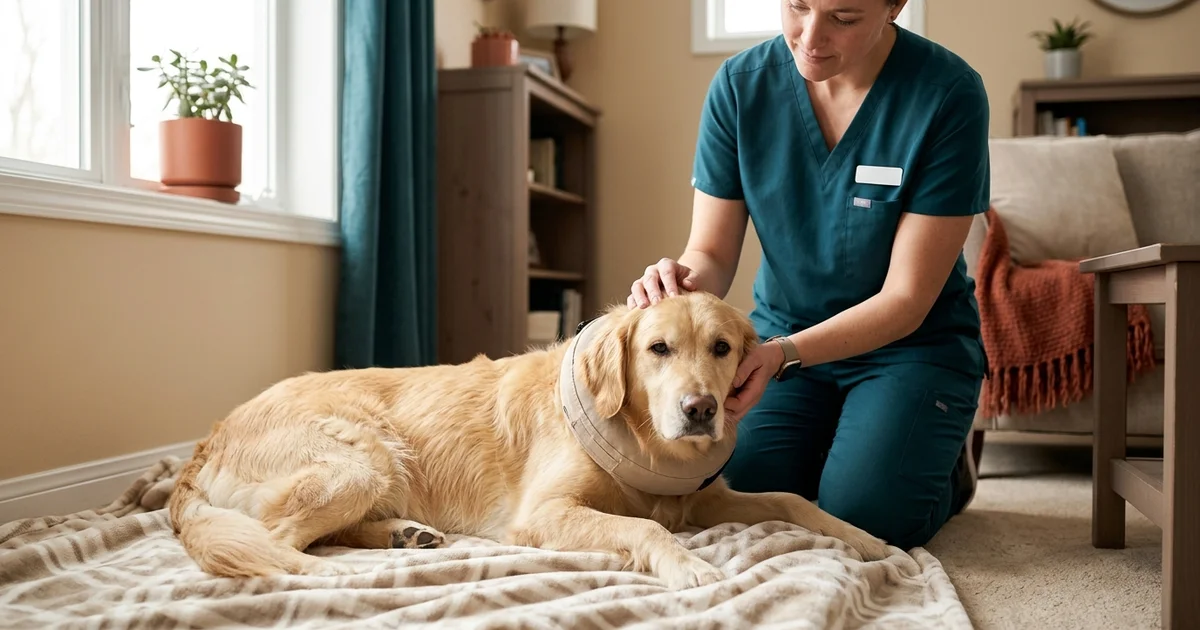
Our recommendation is to keep the protective collar on for a minimum of fourteen consecutive days. Some complex closures require an even longer period of protection. If a traditional plastic cone damages your walls or disrupts your household, you have other verified options.
Top E-Collar Alternatives in the US
| Product Name | Best Feature | Ideal For |
|---|---|---|
| Suitical Recovery Suit | Full torso coverage | Spays, neuters, and abdominal surgeries |
| KONG Cloud Collar | Inflatable comfort | Dogs that panic in rigid plastic cones |
| All Four Paws Comfy Cone | Soft, flexible fabric | Calm dogs needing mild deterrents |
3. Cut activity harder than feels necessary
We know it feels difficult to restrict a high-energy dog to a small space. The discharge instructions say to restrict activity, which strictly means lead-only toilet trips and no stairs. Internal soft tissue healing relies entirely on absorbable sutures to hold layers together during the first critical week.
Our experts warn that a sudden bolt after a squirrel on day three can snap those internal layers instantly. This tension causes dehiscence, which is the complete separation of the wound beneath the skin. A dog can pull these layers apart long before you see any outward sign of a problem.
Mandatory Activity Restrictions
- No jumping: Keep dogs off couches, beds, and all other household furniture.
- Stair limitation: Carry smaller dogs up and down stairs, or use physical barriers to block access.
- Leash only: Every single bathroom trip in the yard requires a short, sturdy leash.
- Crate resting: Utilize a crate or a small, barricaded room with non-slip flooring when you cannot supervise directly.
4. Check the incision site twice a day
We ask every owner to spend thirty seconds examining the incision site every morning and evening. You are looking closely for swelling, excessive heat, and unusual discharge. Small amounts of clear fluid in the first 48 hours are a normal part of the inflammatory phase.
Our most common post-operative finding is a seroma, which is a soft fluid pocket caused by too much early activity. These fluid pockets typically form between 24 and 72 hours after surgery if the dog moves too much.
Three Things to Check Daily
- Swelling: A minor, firm bump is normal, but a soft, expanding fluid pocket is a seroma.
- Heat: The incision should not feel significantly warmer than the rest of the dog’s skin after day three.
- Discharge: Clear fluid is acceptable initially, but yellow, green, or foul-smelling liquid requires immediate attention.
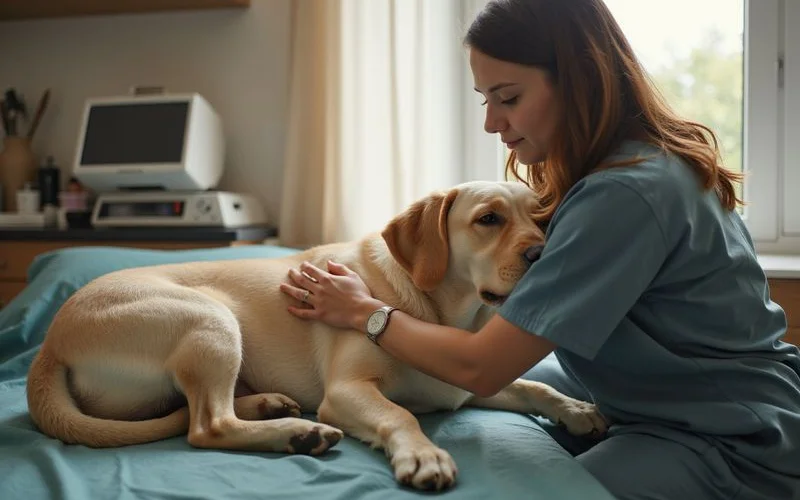
You do not need to be a vet to notice blood, pus, or a foul odor.
5. Use the recovery text line before the problem gets worse
We include a 24/7 post-op recovery text line with every surgery booked through our network. The main point of this service is early intervention rather than last-resort crisis management. A 2026 industry report highlights that veterinary telemedicine usage has grown tremendously in the US for exactly this reason.
Our fastest-healing patients belong to owners who text a photo of a minor concern on day two. A quick, reassuring answer prevents a small question from growing into a real complication by day six. If something looks off or you are uncertain, send a message immediately.
Clinical Tip: Telemedicine triage is highly effective for post-operative care. Sending a clear, well-lit photo of an incision allows a professional to distinguish normal healing from a developing infection in minutes.
6. Give every medication at the correct interval
We prescribe post-surgical pain medications and antibiotics for very specific physiological reasons. Missing a dose creates an uneven pain-control window that causes dogs to become restless. Common US veterinary medications like Carprofen have a strict elimination half-life of roughly eight hours in dogs.
Our staff sees an immediate spike in dangerous mobility when an owner skips a scheduled dose. This fluctuating pain relief causes the dog to move around trying to find a comfortable position, which strains the incision. Antibiotic concentrations in the blood also fluctuate dangerously when doses are missed.
Best Practices for Medication Management
- Set phone alarms: Create specific alerts for every single dose, especially those middle-of-the-night requirements.
- Create a visible station: Keep the medication in one obvious spot on the kitchen counter so it is never forgotten.
- Track with a chart: Use a simple paper checklist to mark off doses, preventing accidental double-dosing in busy households.
7. Attend the complimentary healing evaluation
We include a 10-to-14 day healing evaluation with every surgery booked through our network. This visit is the vital clinical check that confirms the internal closure is holding perfectly. By day twelve, a dog’s tissue has usually regained enough tensile strength to withstand normal indoor walking.
Our veterinarians use this time to identify any silent complications before they require a second surgery. It is not optional extra paperwork. Dogs cleared at the 12-day mark with no issues have almost always been owned by people who treated that appointment as non-negotiable.
The 12-Day Milestone: By day twelve, most dogs have progressed from the fragile inflammatory phase to the stronger remodeling phase of tissue healing.
Where most post-op setbacks actually begin
We rarely see post-operative setbacks that are truly mysterious. The same causes appear repeatedly when cases require a return visit inside the first two weeks. These variables include removing the e-collar early, increasing activity prematurely, or ignoring a day-three symptom until day seven.
Our team can clearly see the difference between strict compliance and loose interpretation at the final evaluation. The seven steps above are not a guarantee of a clean recovery, as surgery has variables outside anyone’s control, but they represent the full range of things an owner can actually influence.
If you are preparing for your dog’s surgery and want to know what post-operative support is included with every procedure, see our surgical services overview.