On a Saturday afternoon in Brandywine Hundred, a four-year-old golden retriever called Baxter ate a sock. His owner watched it happen, which is more than most owners get. If you are in the same position right now, our guide on what to do when a dog swallows a sock covers the decision points below in more detail.
By Sunday morning Baxter had vomited three times and turned down breakfast. His owner called the emergency hospital nearest the Christiana corridor and was told the surgery could be done — for a quote north of $3,000, and not for six weeks unless his condition deteriorated enough to qualify as an emergency admission.
She called us on Monday. Baxter was in surgery on Wednesday.
Why the six-week answer was the wrong answer
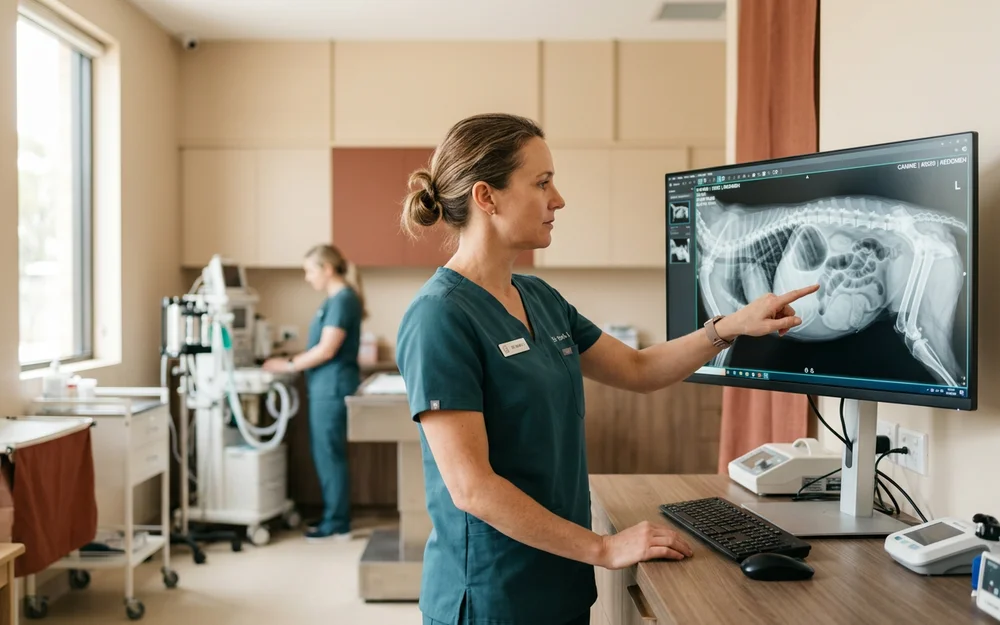
Fabric does not show up on an X-ray. What shows up is the consequence: gas building behind the obstruction, loops of intestine distended where they should be flat, and a pattern that reads clearly to anyone who looks at abdominal radiographs regularly. Baxter’s films showed exactly that on Monday afternoon.
The problem with waiting on an intestinal obstruction is not just discomfort. A lodged object presses against the bowel wall from the inside. Given enough time, that pressure cuts off the blood supply to that section of intestine, and dead bowel cannot simply be opened, emptied, and closed. It has to be removed, and the healthy ends joined — a resection and anastomosis, which is a longer surgery, a riskier one, and a more expensive one.
Baxter’s sock had moved out of his stomach and into the jejunum. Two days earlier it would have been a gastrotomy. Two days later it might have been a resection. On Wednesday it was a straightforward enterotomy — the difference between those two operations is explained in our guide to gastrotomy vs enterotomy surgery.
The variable that decides which surgery your dog gets is usually time, not luck.
An obstruction operated on today is a smaller, safer, cheaper procedure than the same obstruction operated on next week.
What the surgery involved
Baxter had been vomiting for two days, so he arrived dehydrated with disturbed electrolytes. IV fluid resuscitation came before anesthesia, not after. Pre-anesthetic bloodwork confirmed his kidney values were still normal, which is not always the case in dogs who have been unable to keep water down.
The surgery took under an hour of operative time. A midline incision, the affected loop of jejunum isolated, a small enterotomy incision, the sock removed intact, and the rest of the intestinal tract run by hand from stomach to colon. That last step matters: dogs who eat one sock have frequently eaten two, and finding the second one three days later is nobody’s idea of a good outcome. Baxter had eaten only the one.
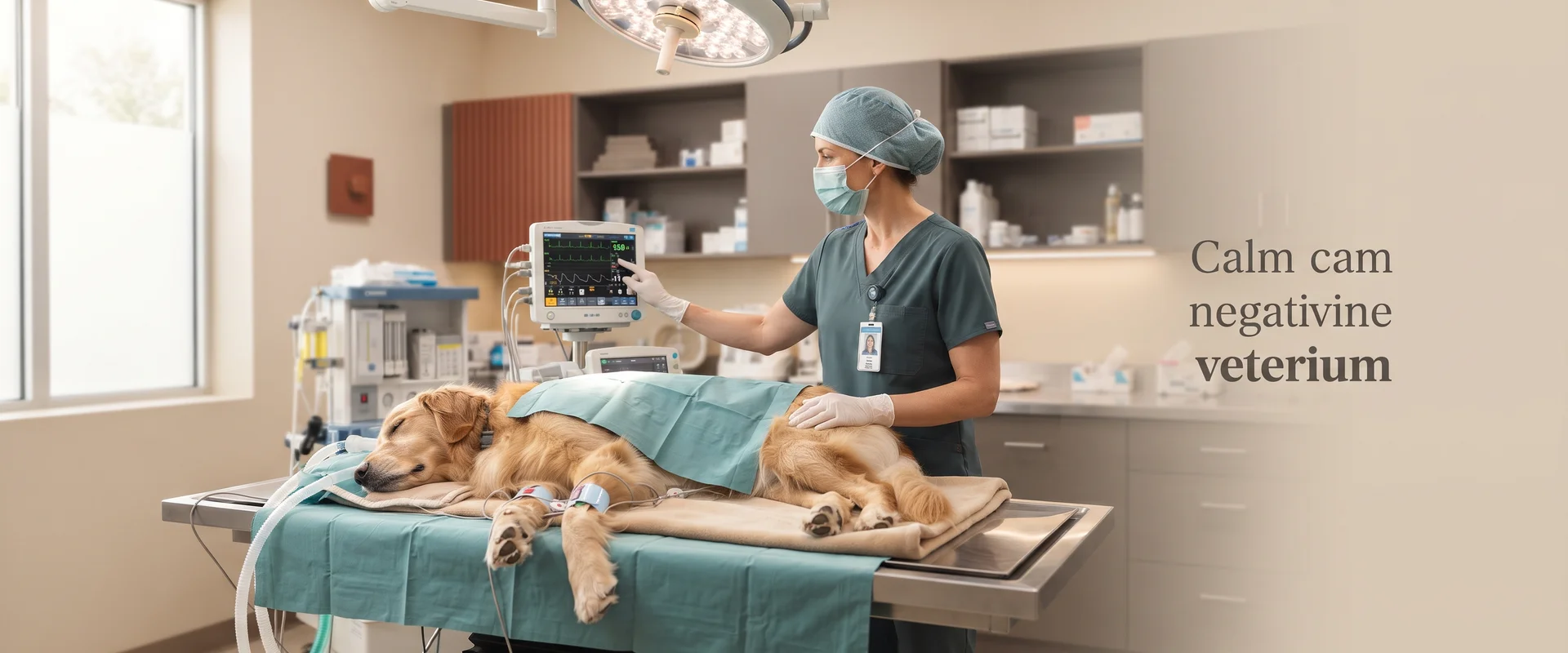
Throughout, his blood oxygen saturation, ECG rhythm, blood pressure, and core temperature were monitored continuously. The closure was done in layers with cefazolin cover.
Total: $1,200, which included the radiographs and the fluid support — the same figure published in our dog surgery cost guide for Wilmington.
The first fortnight at home
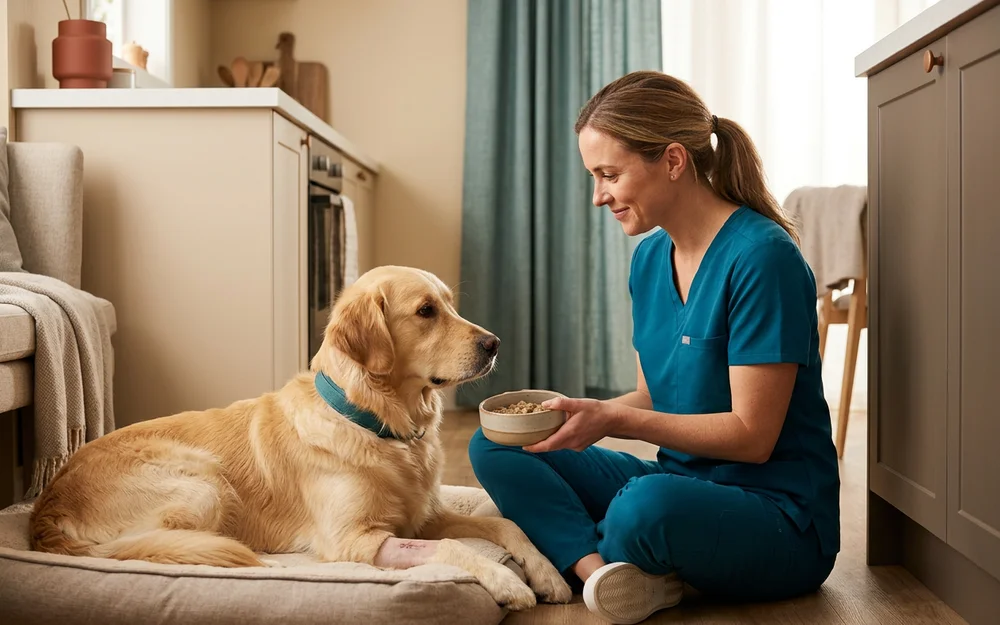
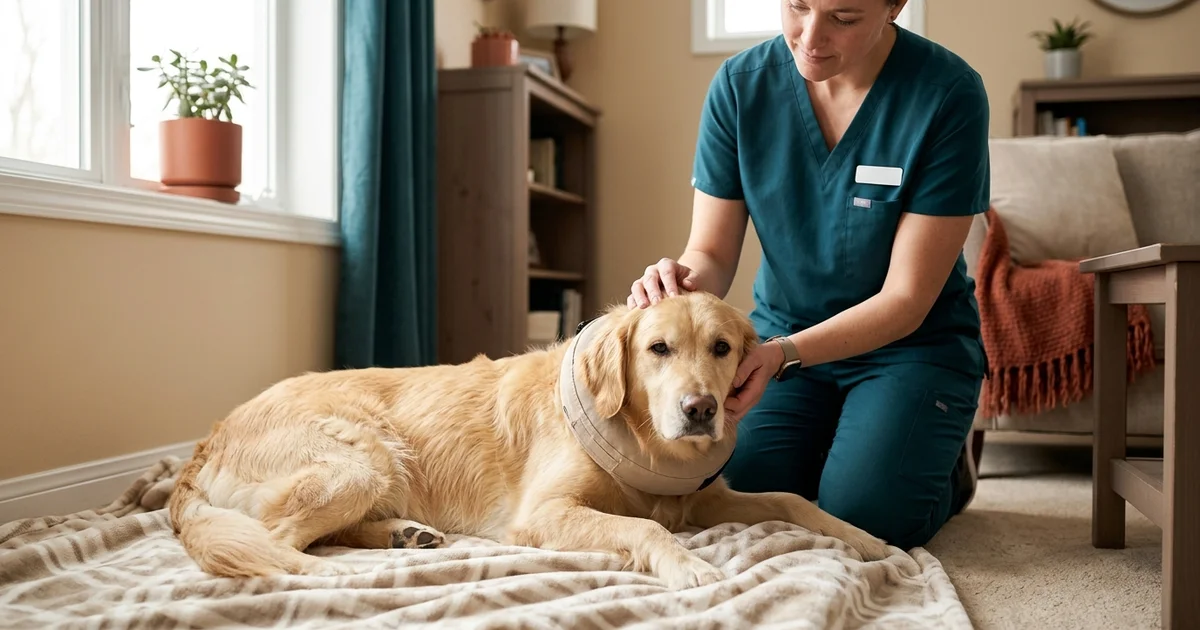
Baxter went home Wednesday evening, awake and walking. The recovery instructions were the ones that matter most after intestinal surgery, and they are less about the incision than the gut. Our foreign body surgery recovery timeline sets out the same fortnight week by week:
| Days | Food | Activity |
|---|---|---|
| 1–3 | Small bland meals, four times a day | Lead only for toilet breaks |
| 4–7 | Gradually larger bland meals, three times a day | Short lead walks |
| 8–14 | Transition back to normal food | Lead walks, no running or jumping |
His owner texted the recovery line twice in the first week — once at 11pm on day two about whether a small amount of clear fluid at the incision was normal (it was), and once on day five to check that a slightly reduced appetite was expected (it was). That is exactly what the line is for.
At the 12-day healing evaluation the incision had closed cleanly and Baxter was cleared to return to normal activity.
What we would tell any owner in the same position
If you know your dog swallowed something, call the same day. Do not wait to see whether it passes, and do not induce vomiting without speaking to a vet first — bringing a sharp object or a corn cob back up can do more damage than leaving it.
If you do not know but your dog is vomiting repeatedly, refusing food, straining, lethargic, or guarding a painful abdomen, treat it as urgent regardless.
And if you are told the wait is six weeks, that is the wait at that particular building. It is not a clinical fact about your dog.
Worried your dog has swallowed something? — See our emergency foreign body removal service