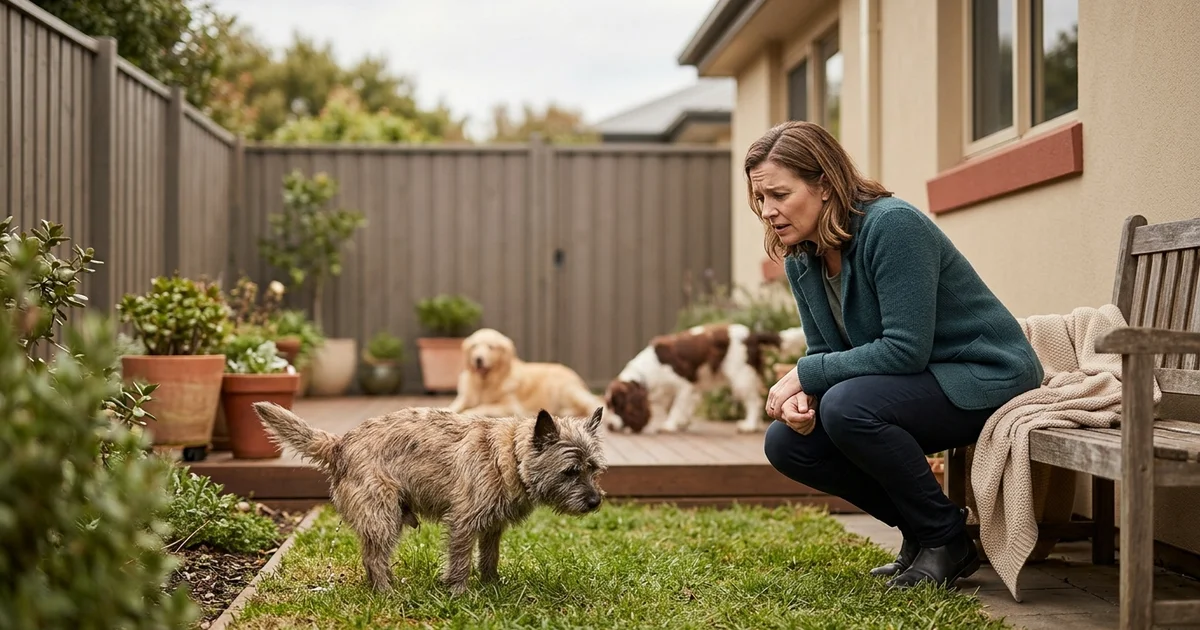
The signs owners notice first
Bladder stones are painful, and dogs are extremely good at not showing pain. What owners notice instead is a change in behaviour around urinating.
- Straining — taking noticeably longer, or adopting the posture repeatedly with little result
- Frequent small urinations rather than one normal-volume one
- Blood in the urine, sometimes only visible on light-coloured paving or snow
- Accidents indoors from a dog who has been reliably house-trained for years
- Licking at the genital area more than usual
- Vocalising or clear discomfort while urinating
- Asking to go out repeatedly, particularly overnight
Any one of these on its own can have several explanations. Two or three together in the same week warrant an appointment.
The one that is an emergency
A dog straining and producing no urine at all needs emergency treatment immediately.
A complete urethral obstruction means urine cannot leave the bladder. Pressure backs up into the kidneys, waste products accumulate in the bloodstream, and the situation becomes life-threatening within roughly a day.
This is more common in male dogs, because the male urethra narrows considerably as it passes through the os penis, and a stone that moved comfortably through the bladder neck can lodge there completely.
Go to your nearest emergency veterinary hospital for decompression, then contact us about the surgery itself.
What causes stones to form
Urine is a solution, and like any solution it can only hold so much dissolved mineral. When the concentration rises past that point, crystals precipitate out and gradually aggregate into stones.
Several things push concentration up: not drinking enough, urinary tract infections that alter urine pH, diets that produce highly concentrated urine, and individual metabolic differences that make some breeds far more prone than others.
That is why prevention after surgery rests on two unglamorous measures — the right diet and plenty of water — rather than anything more sophisticated.
Why the stone type matters
Struvite stones are commonly associated with urinary tract infection, which alkalinises the urine and creates the conditions for them to form. They often dissolve with a therapeutic diet plus treatment of the infection, over a period of weeks.
Calcium oxalate uroliths form in acidic urine, are more common in male dogs and certain small breeds, and do not dissolve under any dietary regime. They require surgical removal.
You cannot tell which is which from symptoms. Diagnosis needs urinalysis and imaging, and definitive identification comes from analysing the stones after they are removed.
What happens at the appointment
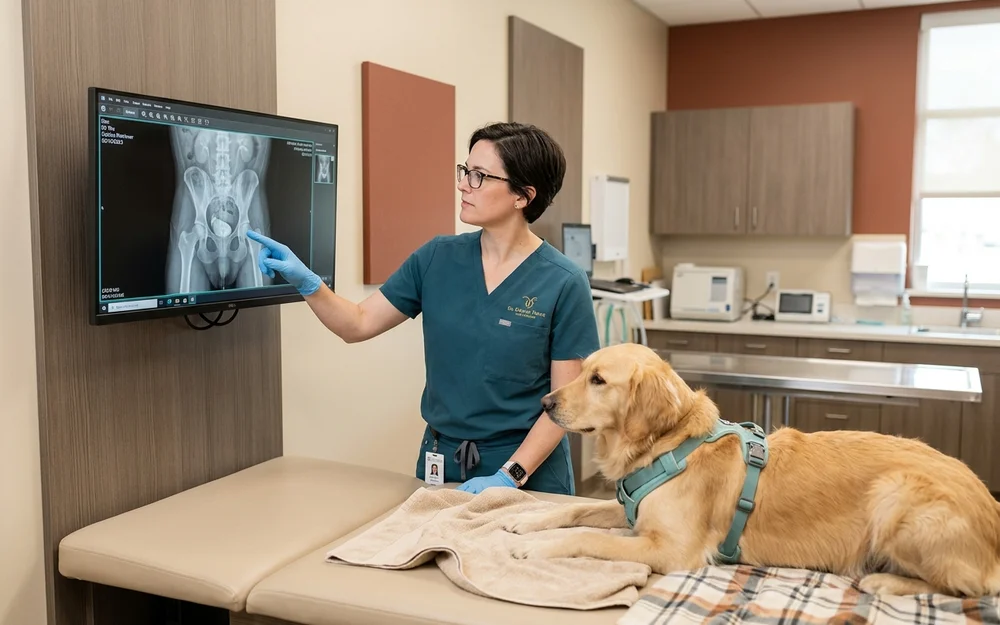
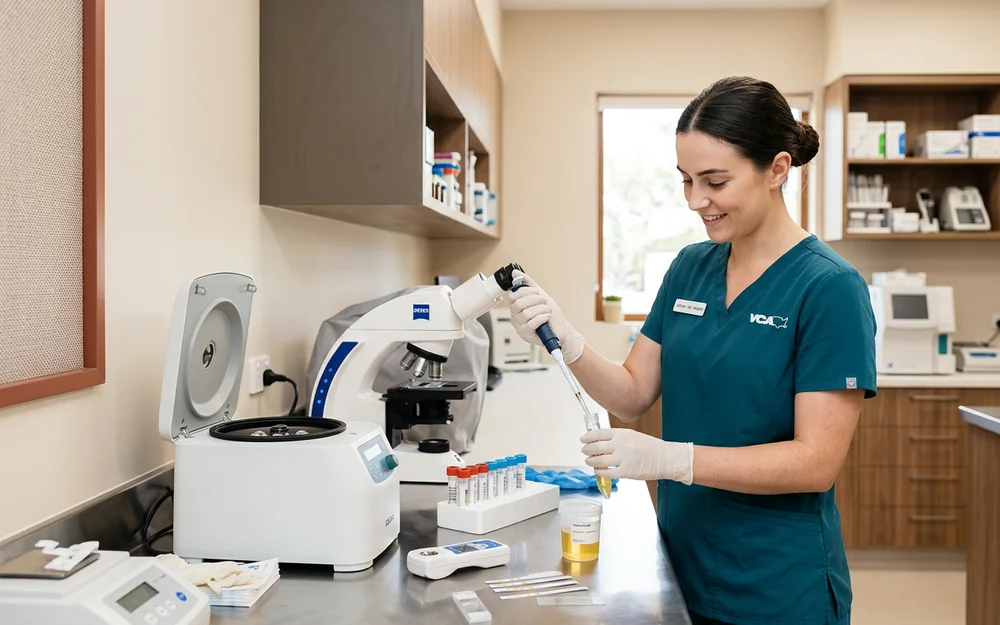
Urinalysis and culture identify infection, pH, and crystal type. Radiographs show most stones clearly; ultrasound picks up less radiopaque types and shows whether the bladder wall has thickened.
Together those tell us how many stones there are, how large, whether any have moved into the urethra, and whether dissolution is a realistic option or surgery is required.
Where surgery is needed, bladder stone surgery starts at $950 and is normally scheduled within days. Where dissolution is a genuine option, we will tell you that instead — it is slower, it needs strict dietary compliance, and it does not work for every stone type, but it avoids an operation.
Either way, the sooner your dog is assessed, the fewer options are closed off by a stone lodging where it should not.