The first few days
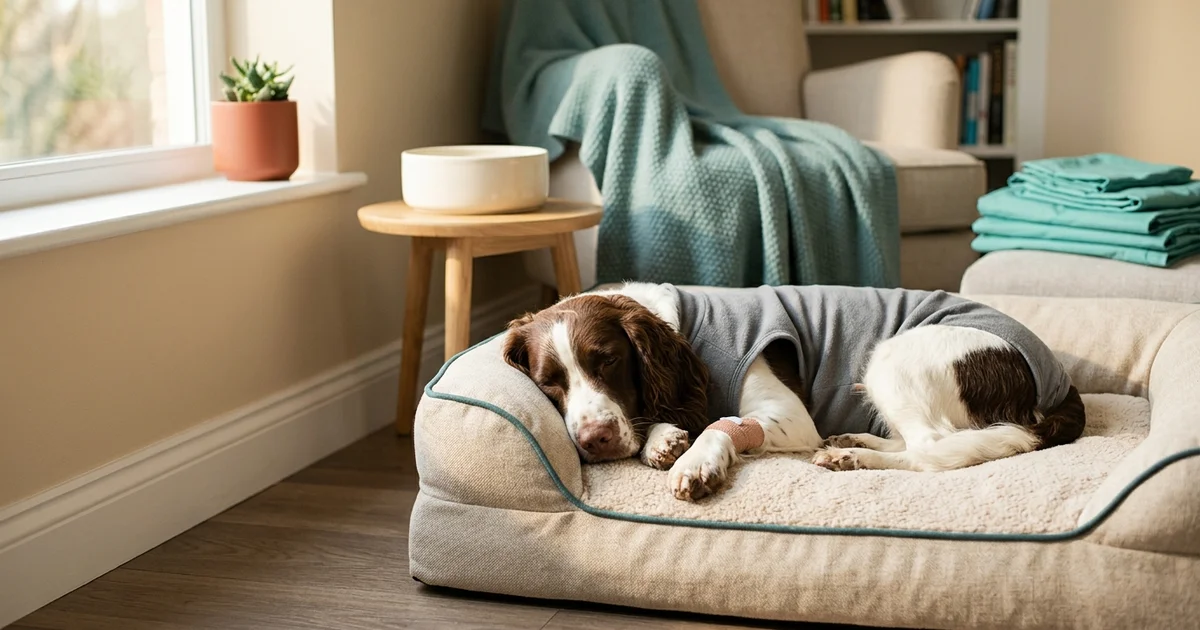
Most dogs go home the same evening after bladder stone surgery, tired but comfortable. Expect a subdued first night and a normal appetite returning within a day or two.
The thing that alarms owners most is entirely expected: blood in the urine. The bladder lining has been incised and sutured, and it takes several days to seal. Mild, gradually decreasing haematuria for three to five days is normal.
The important word is decreasing. Urine that is lighter each day is healing. Urine that is getting heavier, contains visible clots, or is accompanied by straining is not.
What needs an immediate call
Contact the recovery line straight away if your dog:
cannot urinate at all, is straining without producing urine, is passing heavy fresh blood or clots, has a swollen or leaking incision, becomes lethargic, or stops eating after initially eating well.
An inability to urinate after bladder surgery is an emergency. It can indicate a fragment that has moved into the urethra, or swelling that has narrowed it.
Water is the whole prevention strategy
Every bladder stone begins with urine that is too concentrated. Dilute urine physically cannot supersaturate, which means it cannot precipitate crystals.
Practical measures that work:
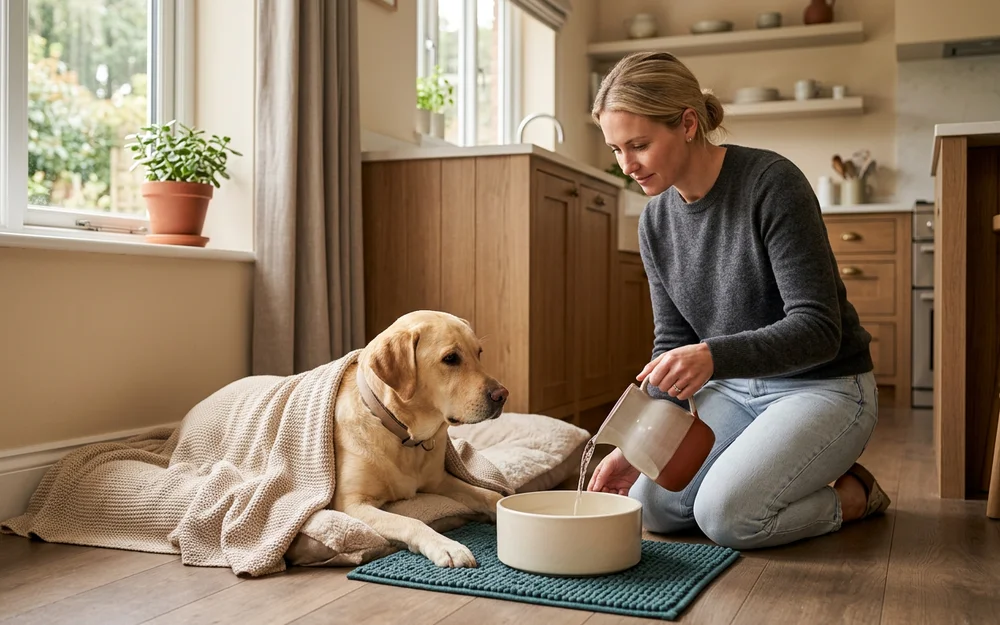
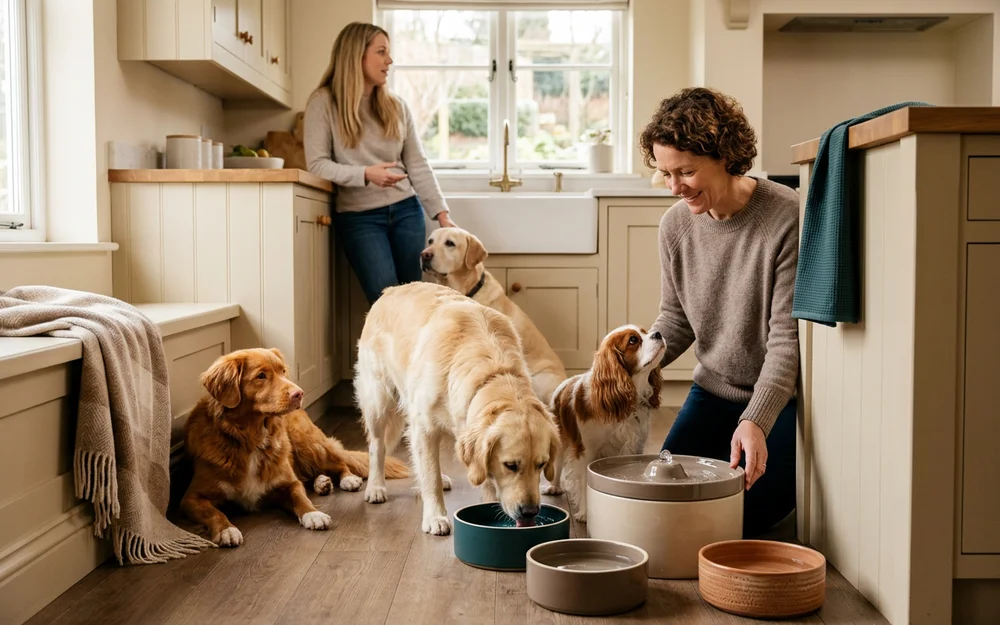
- Multiple water bowls around the house, refreshed daily
- A pet water fountain if your dog prefers moving water — many do
- Wet food, or water added to dry food at every meal
- Water on walks, particularly in warm weather
- More toilet opportunities, so urine is not held and concentrated all day
Owners frequently underestimate how much difference this makes. It is the least sophisticated part of the plan and one of the most effective.
Activity and incision care
Restrict activity for about two weeks: lead walks only, no jumping, no rough play, and no swimming or bathing while the incision heals.
Check the incision daily. A thin closed line with mild bruising is normal. Spreading redness, heat, discharge, a bad smell, or a gap opening needs a call. Keep the site dry and do not apply anything to it unless we have specifically asked you to.
Keep the cone on whenever your dog is unsupervised. Abdominal incisions are within easy reach.
The diet, and why it is not optional
Once the stone analysis comes back, we will prescribe a diet matched to the type your dog forms — an acidifying formulation for struvite, a urine-diluting one for calcium oxalate.
That diet only works if it is the only thing your dog eats. Treats, dental chews, and table scraps alter the mineral load and the urine pH the diet is engineered to control. Owners are routinely surprised at how much a single daily biscuit can undo.
If your dog finds the prescribed diet unappealing, tell us rather than supplementing it. There are usually several formulations and formats available.
The follow-up
The complimentary surgical healing evaluation happens at 10 to 14 days. We check the incision, review how recovery has gone, and discuss the stone analysis result and the long-term diet.
Where there is any question about complete clearance — a large stone burden, or a difficult flush — a follow-up cystogram confirms the bladder is genuinely empty. It is better to know now than to discover a retained fragment in six months when it has grown into a new stone.
After that, periodic urinalysis at intervals we will suggest catches a returning infection or a pH shift long before another stone appears on a radiograph.