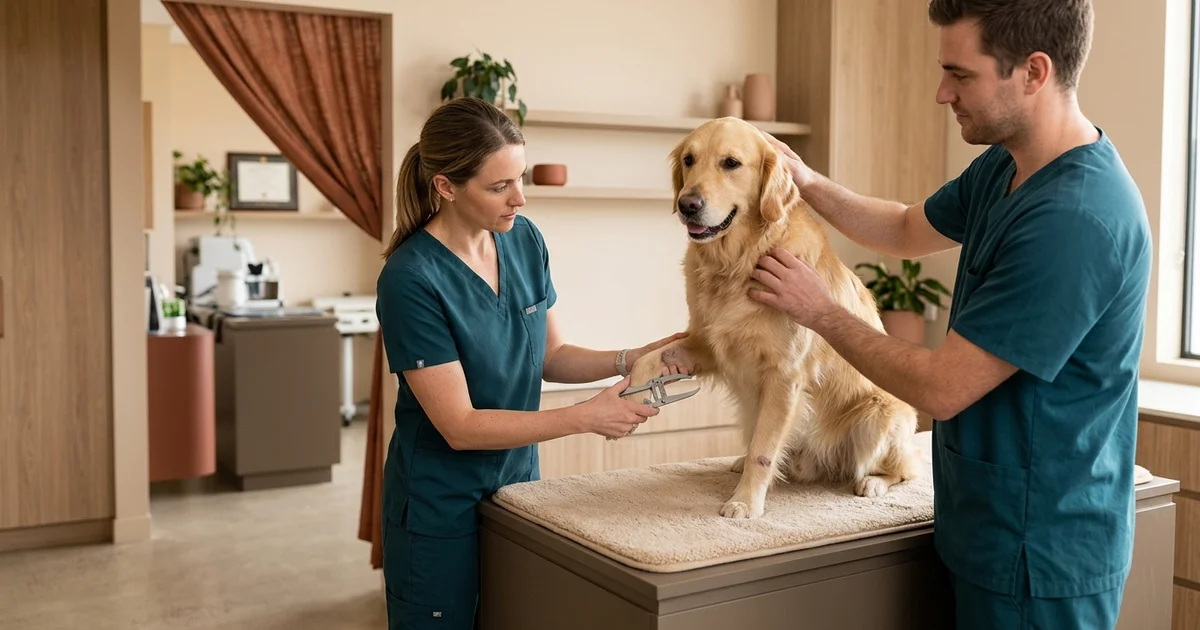
The four questions that decide it
Owners rarely arrive asking whether a lump can be removed. They arrive asking whether it needs to be, and that is the harder question. The answer comes down to four things: what it is, how fast it is changing, where it sits, and whether it is affecting your dog.
Our mass removal service starts every case with those four rather than with a scalpel.
1. What is it?
This is the first question because it changes everything else. A fine-needle aspirate takes moments, needs no sedation, and frequently identifies a lipoma or a mast cell tumor with confidence.
A confirmed benign lipoma that is small and stable can reasonably be monitored. A suspected mast cell tumor should come out, and it should come out with wide margins, because these tumors recur when the excision is conservative.
The version we advise against is monitoring an untested lump. You are watching without knowing what you are watching for, and the point of monitoring is to catch a change — which requires knowing what a meaningful change looks like for that particular mass.
2. Is it changing?
Growth rate is the single most useful signal an owner can supply.
Measure the lump with a ruler or calipers, photograph it next to a coin for scale, and write the date on the photo. Repeat monthly. A mass that is the same size in three months’ time is behaving very differently from one that has doubled.
Change in texture matters as much as change in size. A lump that was soft and mobile and is now firm, or one that has become fixed to the tissue underneath rather than sliding freely, has changed character. That warrants a prompt appointment rather than another month of watching.
3. Where is it?
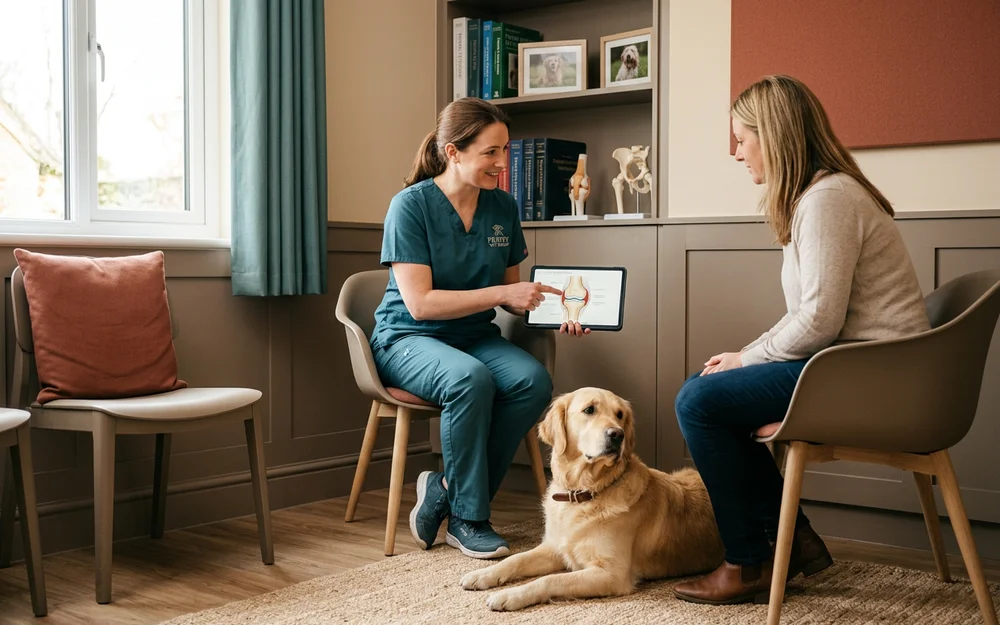
Location determines how much room the surgeon has, and that room shrinks as the mass grows.
- Flank, chest, shoulder — plenty of loose skin, generous margins available, closure straightforward
- Lower leg, paw — very little spare skin, closure difficult, small margins
- Face, eyelid, lip — functionally and cosmetically sensitive, margins tight
- Near a joint — movement affects healing and tension on the closure
- Armpit or groin — constant movement, higher risk of seroma
A lump in one of the difficult locations is usually worth removing sooner, purely because the surgery gets harder and the result gets worse as it enlarges.
4. Is it affecting your dog?
The practical test. Does the lump catch on a harness or collar? Is it big enough to alter how your dog moves or lies down? Does your dog lick or chew at it? Has it ulcerated, started bleeding, or become infected?
An ulcerated or bleeding lump should be seen promptly regardless of what it is.
An open surface on a mass invites infection and makes the eventual surgery harder.
Older, slower dogs are frequently written off as “just being old” when in fact a large lipoma on a hind leg is genuinely getting in the way. Owners are often surprised by how much brighter their dog is a fortnight after removal.
Bringing it together
Remove now if the mass is growing, has changed texture, is ulcerated or bleeding, is interfering with movement, sits somewhere that will make later surgery harder, or has not been identified.
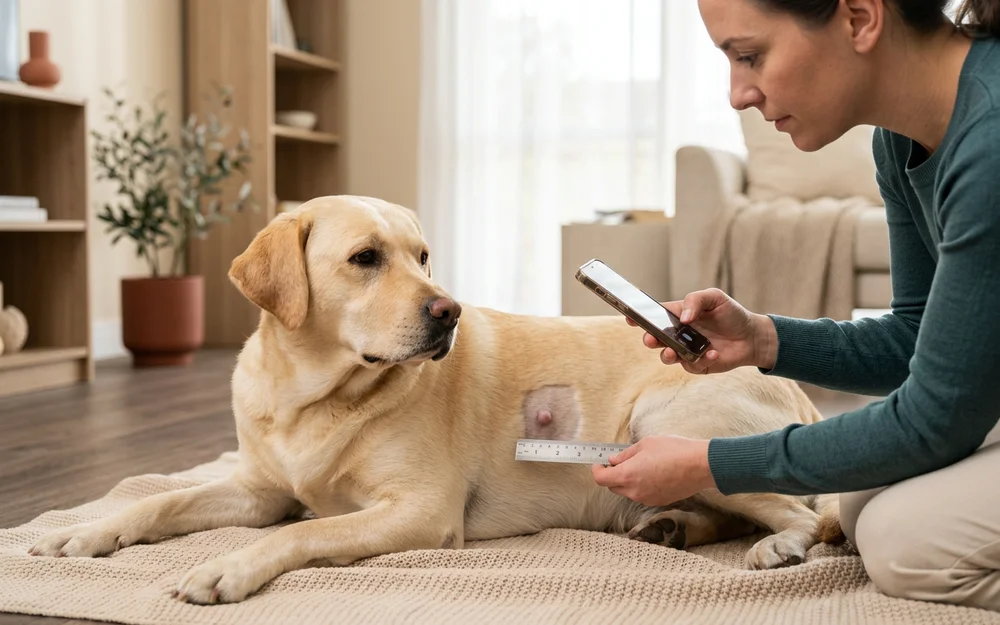
Monitor if it has been confirmed benign, is small, has been stable for months, sits somewhere with plenty of surrounding tissue, and is not bothering your dog — with a measurement and a photograph each month.
If you are not sure which category yours falls into, that is exactly the question an evaluation answers. Schedule mass removal or an assessment and we will give you a straight recommendation, including when that recommendation is to leave it alone.