The first 24 hours
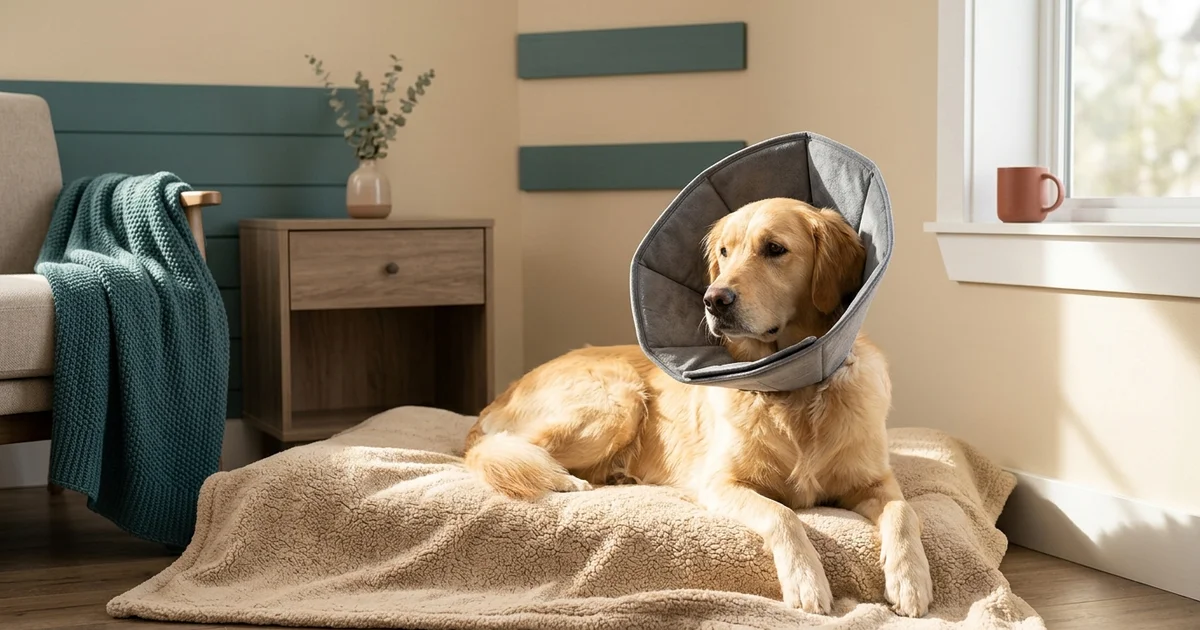
Most dogs go home the same day as mass removal surgery, awake and walking but not entirely themselves. Expect some grogginess, a reduced appetite, and more sleeping than usual on the first evening. That is the anesthetic clearing rather than anything going wrong.
Offer water freely and a small, light meal rather than a full portion. Give the pain relief you were sent home with, on schedule, even if your dog seems comfortable — pain control works considerably better maintained than chased.
Keep the environment quiet. No visitors, no other dogs bouncing around, and no stairs if you can avoid them.
Checking the incision
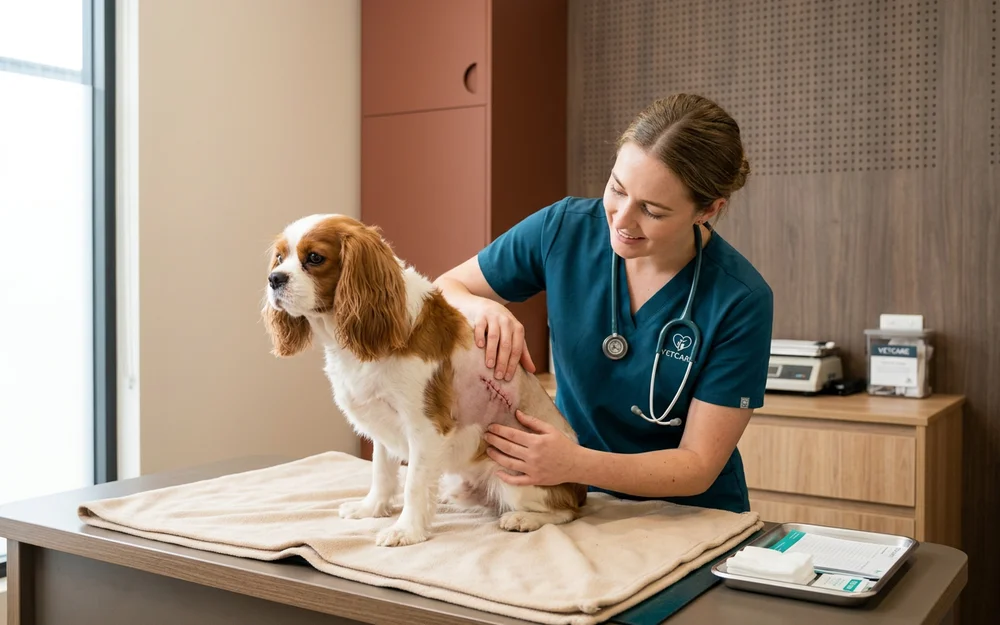
Look at the site once a day, in good light, at roughly the same time so you notice changes rather than absolute appearance.
Normal in the first week: a thin closed line, mild bruising that may spread and change colour, slight swelling along the incision, and a small amount of clear or very slightly blood-tinged fluid in the first day or two.
Call us about: spreading redness or heat, thick or coloured discharge, a bad smell, a gap opening in the incision, marked swelling that is increasing rather than settling, or your dog being lethargic or off food beyond the first evening.
Do not apply creams, ointments, or antiseptics unless we have specifically told you to. Keep the site dry — no baths, no swimming, and a towel-dry after a wet walk.
Seromas: the lump that appears after the lump came off
A seroma is a soft, fluid-filled swelling that forms in the space left behind when a mass is removed. They are common, particularly after larger excisions, and they alarm owners because it feels as though the lump has come back.
It has not. A seroma is sterile fluid collecting in a pocket, and the great majority resolve on their own over a couple of weeks without any intervention. Draining them is usually counterproductive, because it introduces infection risk into a sterile space.
Seroma prevention is almost entirely about activity restriction.
Movement keeps the space under the incision open and lets fluid accumulate. Rest lets the tissue layers stick together and close it.
Tell us at the follow-up if one forms. What needs a sooner call is a swelling that is hot, painful, rapidly enlarging, or leaking.
Activity restriction, honestly
Two weeks of restriction sounds simple and is genuinely the hardest part for most households.
- Lead walks only, short, for toileting
- No jumping on or off furniture or into the car
- No running, no stairs where avoidable
- No rough play with other dogs
- No swimming or bathing
- A cone whenever your dog is unsupervised, including overnight
Dogs feel fine long before the tissue has healed, and a dog that feels fine will do something on day nine that undoes the whole thing. The restriction is not about how your dog feels; it is about what the tissue has actually managed yet.
The follow-up evaluation
The complimentary surgical healing evaluation happens at 10 to 14 days. We check that the incision has closed properly, assess any swelling, discuss the histopathology result if you opted for it, and clear your dog to return to normal activity.
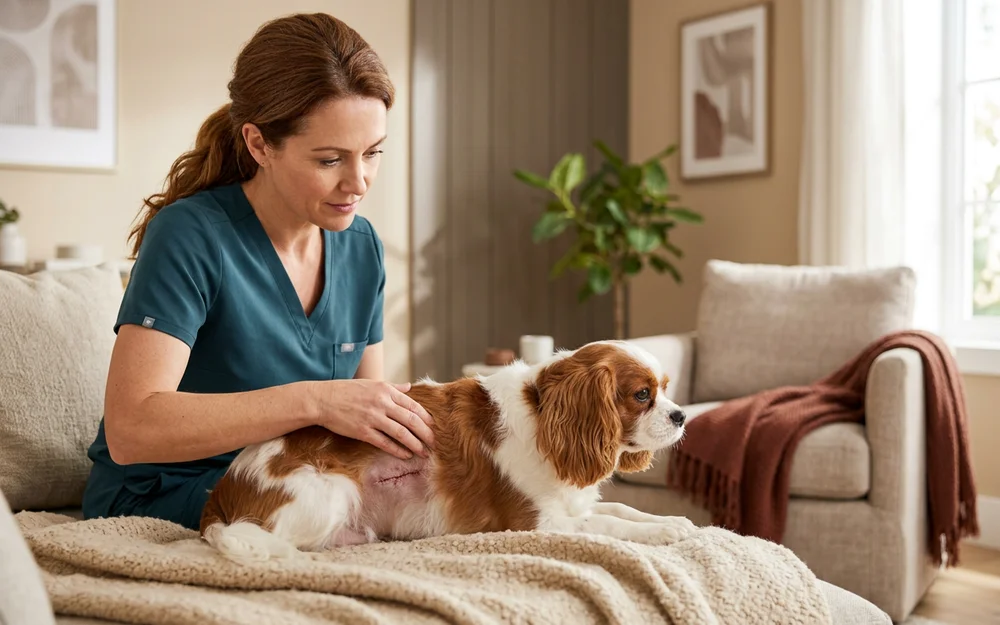
Subcuticular sutures dissolve on their own and do not need removing, so the appointment is about confirming the site has healed rather than a procedure.
If anything worries you before then, the 24/7 post-op recovery text line exists for exactly that. Owners routinely apologise for asking about something minor. There is nothing to apologise for — a photograph of an incision at 10pm takes us seconds to assess and saves you a night of worrying.