What a lipoma is
A lipoma is a benign tumor made of fat cells. They sit under the skin, feel soft and squishy, move freely when you roll them between your fingers, and grow slowly over months or years.
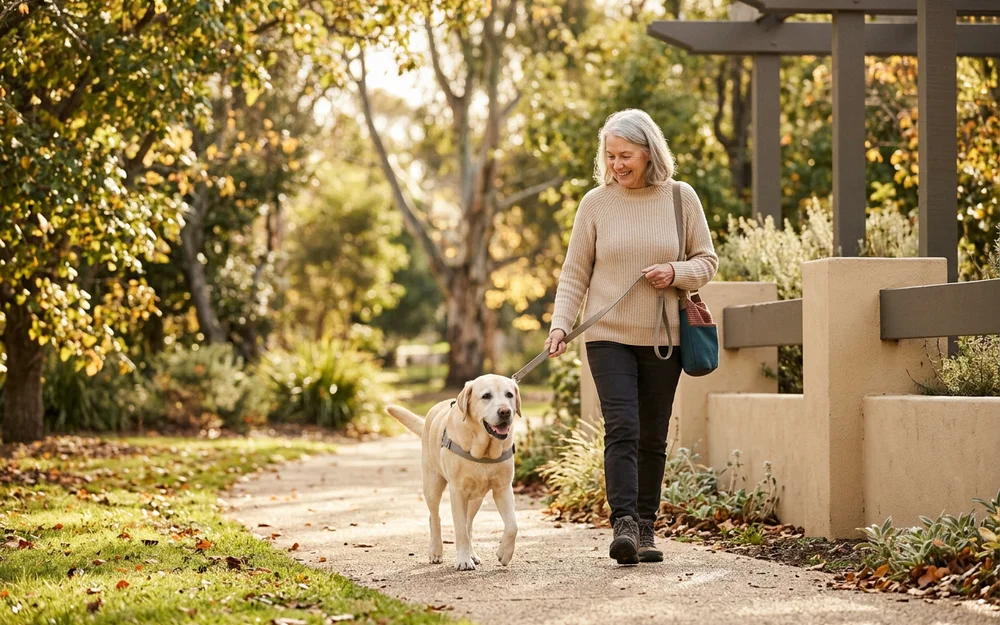
They are extremely common in middle-aged and older dogs, and particularly common in labradors, retrievers, and other larger breeds carrying a little extra weight. Most dogs who develop one develop several. Our lipoma removal service sees more of these than any other single mass type.
Nobody knows precisely why they form. Age, breed, and body condition all correlate, but plenty of lean young dogs get them and plenty of overweight older ones never do.
When a lipoma stops being harmless
The default position on a confirmed lipoma is to leave it alone. Four situations change that.
It is interfering with movement. This is the most common reason we remove them. A lipoma in the armpit, the groin, or high on a hind leg physically gets in the way of the limb. Owners often describe their dog as slowing down with age, then find that dog considerably brighter a fortnight after the mass comes off.
It sits where equipment rubs. A lipoma under a collar or harness strap gets chafed repeatedly, becomes sore, and can ulcerate.
It is growing quickly or has changed. Lipomas grow slowly. One that is expanding noticeably over weeks, or that has become firmer, is not behaving like a lipoma and deserves re-testing.
It might be an infiltrative lipoma. These grow between and into muscle rather than sitting in a discrete capsule. They do not spread to other organs, but they invade locally and keep expanding, and they are considerably harder to remove once established.
“Benign” and “leave it alone” are not the same conclusion.
A benign mass that is limiting how your dog moves is still worth removing.
How the removal works
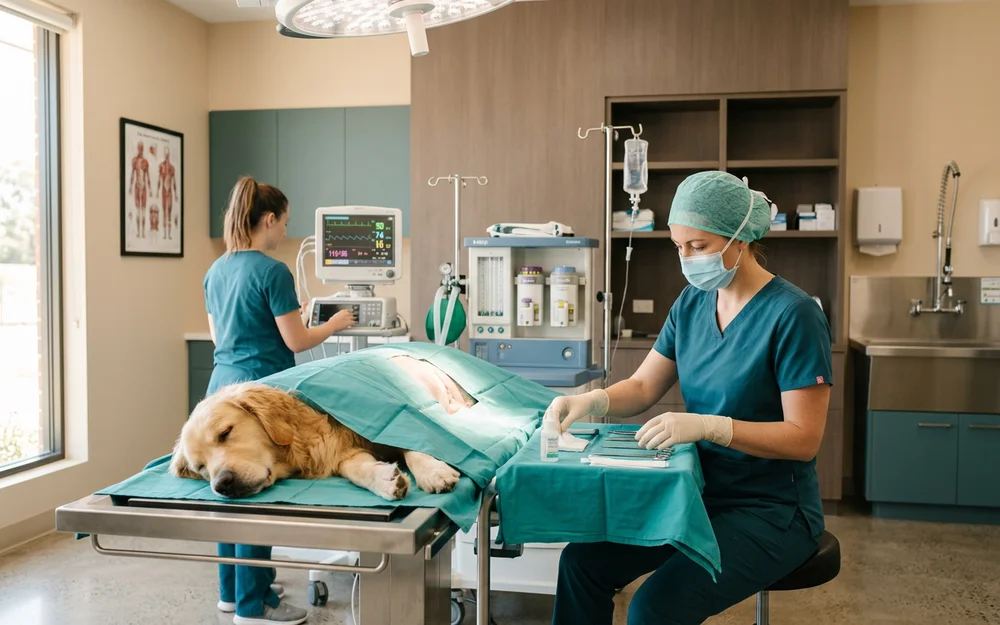
A simple lipoma is usually well encapsulated, which makes the surgery relatively clean. An incision is made over the mass, the capsule is freed from the surrounding tissue, and the whole lipoma is lifted out intact.
The part that takes attention is the closure. Removing a large lipoma leaves a space behind, and that space is where fluid collects. Careful closure of the dead space in layers reduces the risk of a seroma, and we close the skin with subcuticular sutures so there are no external staples to catch.
Before any of that, your dog has pre-anesthetic blood screening, and during it, continuous monitoring of blood oxygen, ECG rhythm, blood pressure, and core temperature. That protocol does not change because the mass is benign.
Recovery
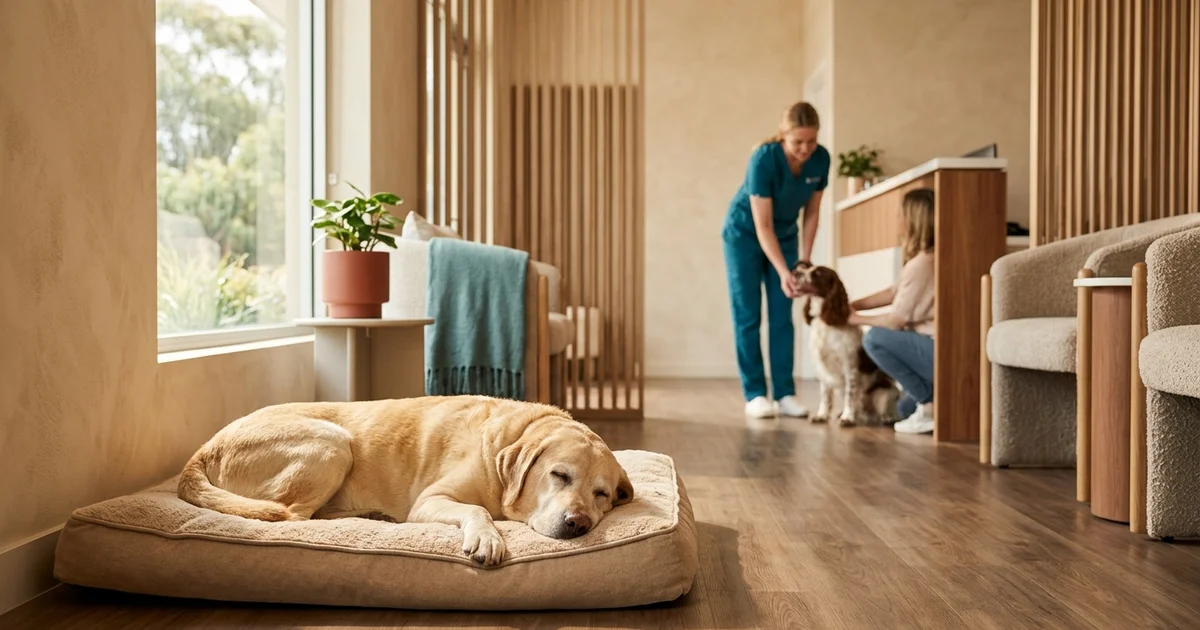
Most dogs go home the same day and are noticeably comfortable within 48 hours.
The fortnight afterwards is about restraint: lead walks only, no jumping, no rough play, no swimming, and a cone whenever your dog is unsupervised. That restriction is doing real work — activity is what keeps the space under the incision open and lets fluid accumulate.
A soft swelling under the incision in the first week is usually a seroma. It is generally harmless and resolves on its own, but tell us at the follow-up. Spreading redness, heat, discharge, or a gap in the incision needs a call sooner.
The complimentary healing evaluation happens at 10 to 14 days, when we check the site and clear your dog to return to normal activity.
What it costs
Lipoma removal starts at $450, rising with size and depth. If your dog has several and you are considering removing more than one, doing them in a single anesthetic is almost always cheaper and safer than separate procedures — and we will tell you which ones genuinely warrant it.