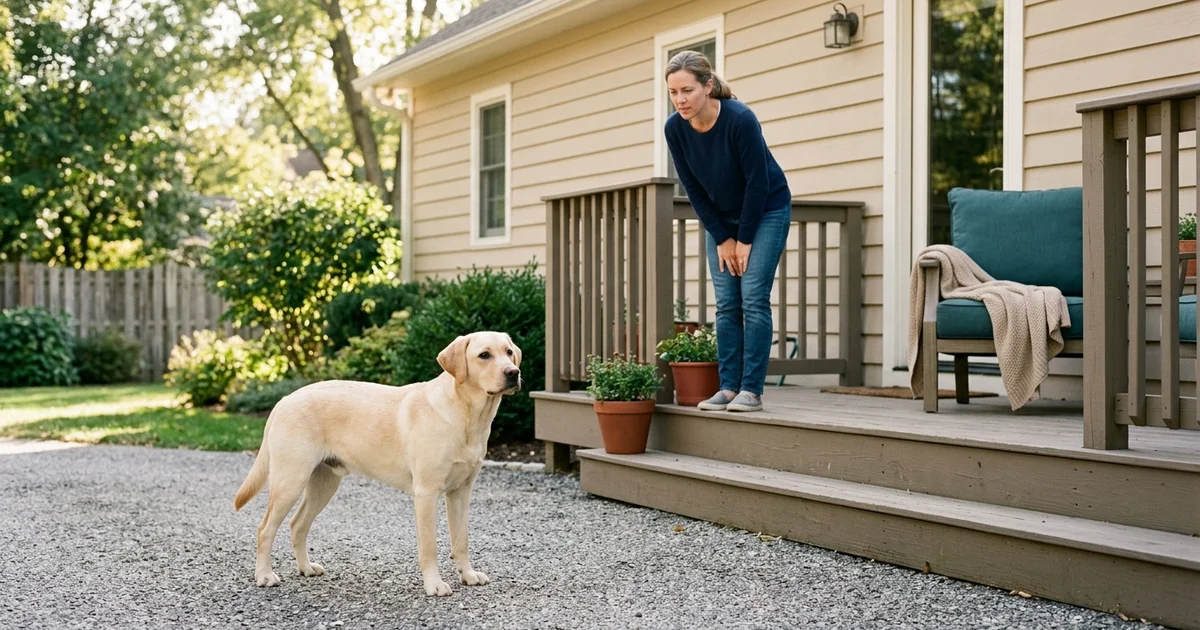
The rock-eating dog is a specific type of dog
Some dogs swallow one unusual thing once in their lives. Rock eaters are different — they do it repeatedly, and they are usually young, energetic, and bored.
The behaviour has a name, pica, and it has several possible drivers: boredom, anxiety, a habit that started as play, and occasionally an underlying nutritional or gastrointestinal issue worth investigating. Whatever the cause, the immediate problem is mechanical, and it is what foreign body removal surgery exists to solve.
The one genuine advantage
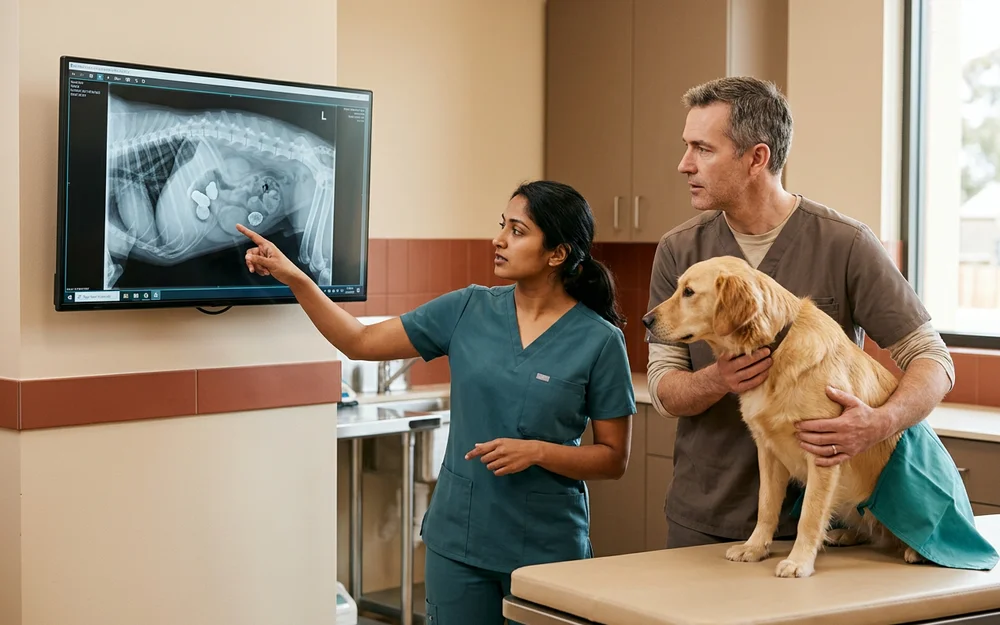
Unlike socks, toys, and corn cobs, rocks are strongly radiopaque. They show up on abdominal radiographs as bright, unmistakable objects.
That makes rock cases the easiest foreign bodies to diagnose. We can see how many there are, how large each one is, exactly where they sit, and — on a repeat film a few hours later — whether they are moving.
It also makes the decision clearer. Where a small smooth pebble is sitting in the stomach of a large dog, monitoring with a repeat radiograph is a legitimate option. Where a large or angular stone has lodged in the intestine, it is not.
Never induce vomiting after a rock.
A stone coming back up can lodge in the esophagus. Call us and get imaging instead — with rocks, the X-ray tells us almost everything we need.
When it is definitely surgery
- The stone is in the small intestine rather than the stomach
- Serial radiographs show it has not moved over several hours
- There are multiple stones
- The stone is large relative to your dog’s size, or angular
- Your dog is symptomatic — vomiting, refusing food, lethargic, straining
The signs
- Repeated vomiting, especially vomiting water back up
- Refusing food, or eating and immediately bringing it up
- Lethargy, hiding, or a hunched posture
- Straining to defecate with nothing produced
- A tense, painful abdomen
- Scraped or damaged teeth, which is also worth checking in habitual rock chewers
Surgery and cost
Removal starts at $1,200, including pre-op abdominal radiographs, pre-anesthetic blood screening, IV fluid support, anesthesia with continuous SpO2, ECG, blood pressure, and temperature monitoring, the procedure, and medications.
Stones in the stomach are retrieved through a gastrotomy, the more straightforward version. Stones in the intestine need an enterotomy, and if the bowel has been under pressure long enough to lose its blood supply, a resection.
We check the full length of the tract by hand afterwards, which matters more with rocks than with almost anything else — dogs who swallow one stone very frequently have several.
Stopping it happening again
Because these dogs repeat, prevention is worth real effort:
- Supervise in gravel areas, or fence them off entirely
- Increase exercise and structured mental stimulation — most rock eating is boredom
- Provide appropriate chew alternatives and rotate them
- Ask us to check for an underlying gastrointestinal or dietary driver
- Consider a basket muzzle for yard time in persistent cases
A second surgery for the same behaviour is a hard conversation, and it is entirely avoidable.
Right now
If your dog is collapsing, cannot keep water down, or has a rigid painful abdomen, go to your nearest emergency hospital first.
Otherwise call us now with your dog’s breed and weight, roughly how large the stone was, how many you think were swallowed, and when. Because rocks image so well, we can usually give you a clear answer the same day.