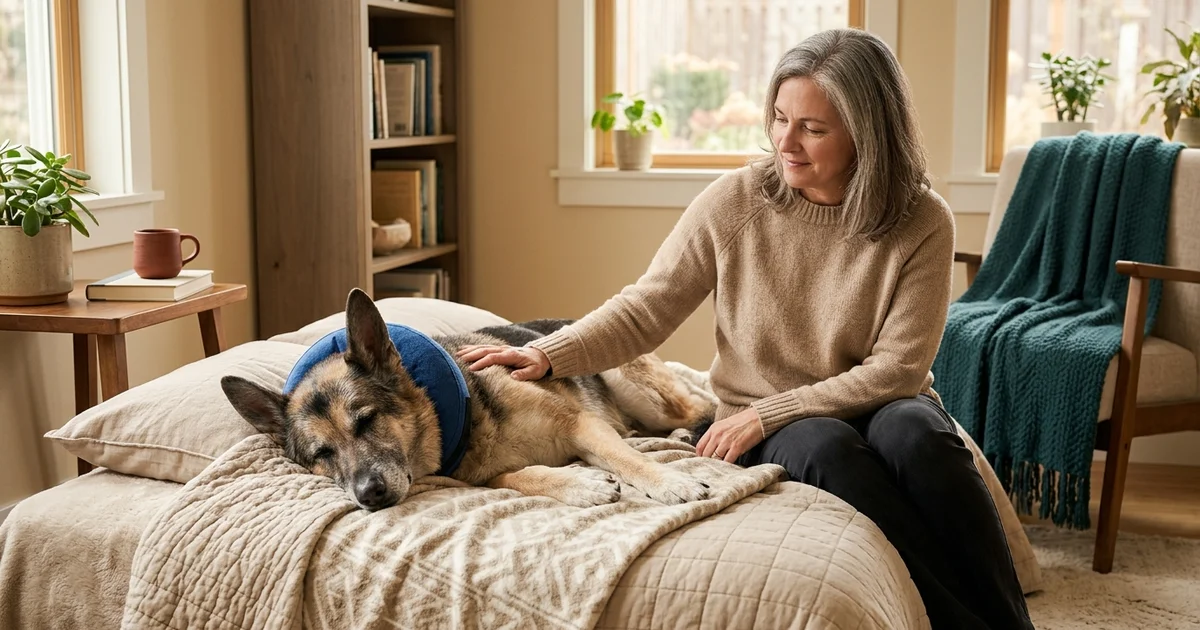
Day 1 to 2: the monitored window
Dogs stay with us after a splenectomy longer than after most soft tissue surgery, and the reason is the numbers rather than the dog.
Packed cell volume and lactate monitoring continue through the early recovery period. A falling PCV signals ongoing bleeding from a vessel ligation, and a rising lactate signals poor tissue perfusion. Both show up in the blood before they show up in how the dog looks, which is the whole point of measuring them.
Continuous ECG also continues into recovery, because ventricular premature contractions are common in splenic cases and can appear in the 24 to 48 hours after surgery rather than during it. Most are self-limiting. A proportion need treatment, and treatment is only possible if someone is watching.
Most dogs go home once those numbers are stable, usually after one or two days.
Days 3 to 7: quiet and watchful
Expect a subdued dog for the first few days, with appetite returning gradually. Feed normally unless we have advised otherwise.
Activity is confined: lead walks for toileting only, no jumping onto furniture or into the car, no stairs where they can be avoided, and no play with other dogs.
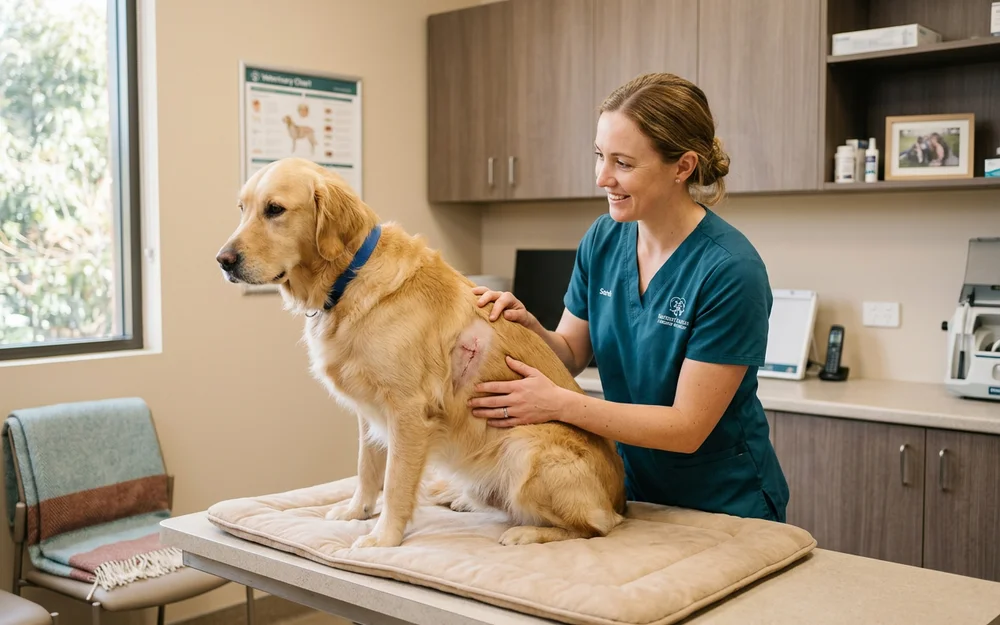
Check the incision once a day in good light. A thin closed line with some bruising is normal. Spreading redness, heat, discharge, a bad smell, or a gap needs a call.
The warning signs that matter most
Contact the 24/7 recovery line immediately if you see:
pale or white gums · weakness, wobbliness, or collapse · a swollen or distended abdomen · refusing food after having eaten · laboured or rapid breathing · lethargy that is worsening rather than improving.
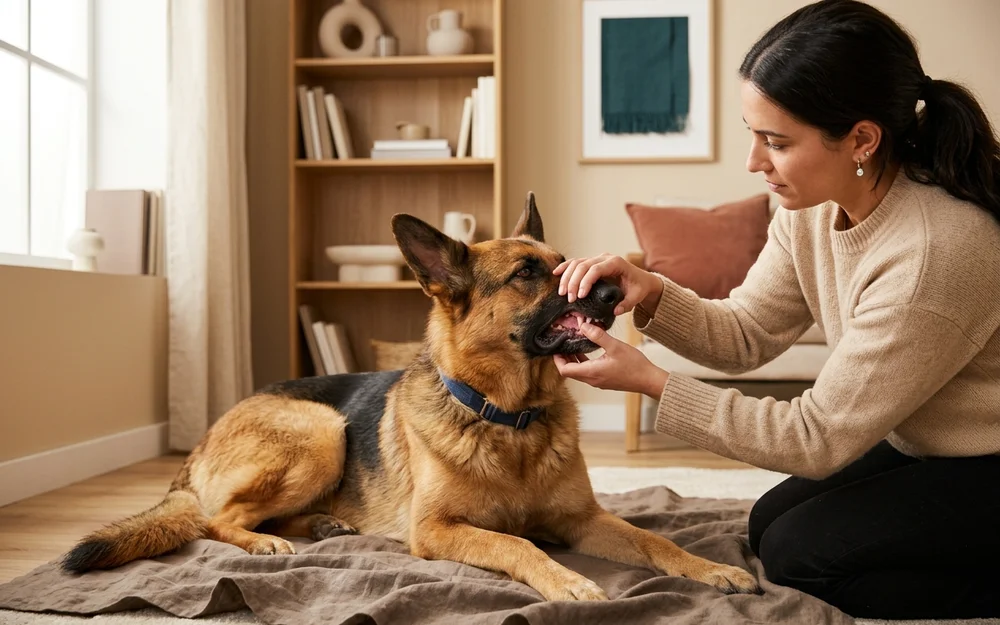
Bleeding from a ligated splenic vessel is the serious post-operative complication, and it declares itself through pale gums and weakness rather than through anything visible at the incision. Press your dog’s gum with a finger: it should blanch white and refill pink within about two seconds. Gums that are pale to begin with, or slow to refill, need an immediate call.
Days 8 to 14: building back
Most dogs are visibly themselves again by the end of the first week. Appetite is normal, energy is returning, and the main challenge becomes keeping them quiet for the remaining days.
Lead walks can lengthen gradually. Still no running, jumping, or rough play until the incision has been checked and cleared.
The complimentary surgical healing evaluation happens at 10 to 14 days. We check the incision, review how recovery has gone, and clear your dog to return to normal activity.
The result conversation
Histopathology usually returns within about a week, and it is the appointment owners dread.
If the mass was benign — a hematoma or nodular hyperplasia, which accounts for roughly half of cases — the surgery was curative and there is nothing further to do beyond finishing the recovery.
If it was hemangiosarcoma, we will explain what that means honestly, including realistic timeframes and what chemotherapy does and does not offer. We would rather have that conversation plainly than manage it with vagueness.
Life without a spleen
Long-term there is nothing to manage. The liver and bone marrow take over the spleen’s roles of filtering blood and storing red cells. Dogs live normal lives with normal energy, no special diet, and no long-term medication related to the missing organ.
The one thing worth doing is the recheck schedule we recommend based on the histopathology result — which, if the mass was benign, may simply be your dog’s normal annual visit.